

With his muted response to the Gaza conflict, President Joe Biden is largely sticking to a time-worn U.S. playbook despite pressure from progressive Democrats for a tougher line toward Israel and from America’s allies for a more active role to end the violence.
By citing Israel’s right to defend itself against a rocket barrage from the Hamas-ruled enclave and only nudging Prime Minister Benjamin Netanyahu toward a ceasefire, Biden has effectively given Israeli forces more time to press their offensive against Palestinian militants there.
Gallery
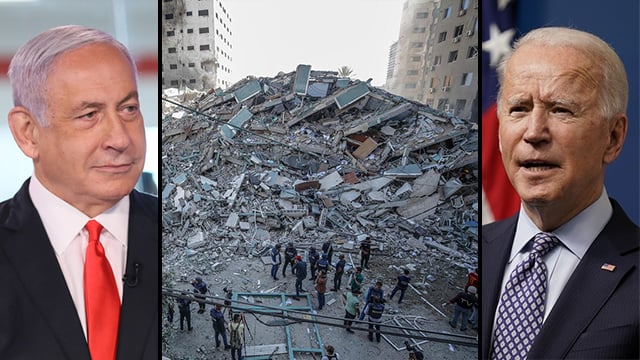
Prime Minister Benjamin Netanyahu, President Joe Biden and the damage in Gaza following Israeli strikes
(Photo: EPA, AP, Ynet)
U.S. officials hope both sides will reach a point when they will be ready to wind down their attacks in coming days and that quiet, behind-the-scenes diplomacy involving regional players such as Egypt will help achieve an end to the hostilities, people familiar with the matter say.
However, Biden’s effort to cautiously navigate the crisis in the Gaza Strip will be put to the test if in the meantime the fighting increases and the civilian death toll rises sharply.
“There’s a playbook that’s being followed,” said Aaron David Miller, a former U.S. Middle East peace negotiator for Democratic and Republican administrations. “But there’s always room for the unpredictable.”

A child in pulled from the ruins of a building targeted in an IDF strike on Gaza on Tuesday
(Photo: Reuters)
When Biden took office in January, he made it clear that he wanted to focus on the coronavirus pandemic and economic downturn at home and challenges such as China, Russia and Iran abroad.
Tackling the Israeli-Palestinian conflict, something that has bedeviled U.S. presidents for decades, was not a top priority, though he had promised to revise some policies of his predecessor, Donald Trump, that were widely considered heavily biased in favor of Israel and which alienated Palestinians.
It was weeks before the new president talked to Netanyahu, a right-wing leader who cultivated strong ties with Trump.
The latest eruption of Gaza violence caught the new administration off guard, and it has responded so far in accordance with a familiar pattern. Biden, a longtime supporter of Israel from his decades in the Senate and the vice presidency, began by backing Israel’s right to self-defense against the cross-border rocket attacks, something successive presidents have always said of Washington’s chief Middle Eastern ally.
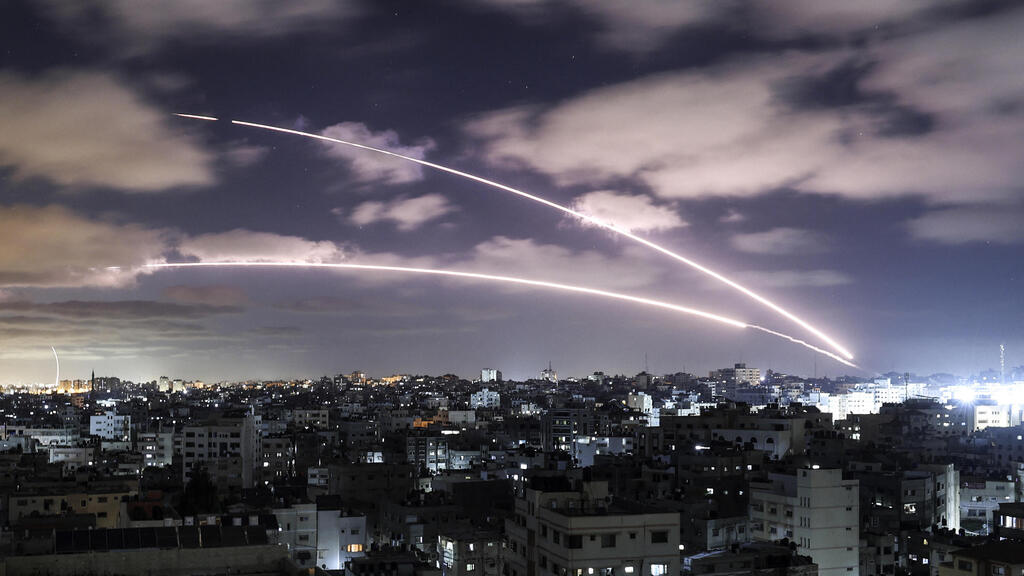
Gaza rockets fired at Israeli communities on Wednesday
(Photo: AFP)
This comes at a time when the Biden administration has sought, to little avail, to assuage Israeli concerns as it negotiates over a possible return to the 2015 Iran nuclear deal.
It took Biden until Monday, after Israel’s destruction of a Gaza high-rise that housed offices of the Associated Press and Al Jazeera news organizations but which Israeli officials said also sheltered militants, to voice support for a ceasefire.
But the White House, apparently reluctant to antagonize, made clear he was not demanding that Israel agree to one.
The current hostilities are the most serious between the militant group and Israel in years, and in a departure from previous Gaza conflicts have helped to fuel violence in Israeli cities between Jews and Arabs.