

On Sunday the cabinet voted for to extend the current lockdown. While Prime Minister Benjamin Netanyahu backed the Health Ministry's outline for a week-long extension, Defense Minister Benny Gantz wished to lift it right away, citing its ineffectiveness. The result is a compromise, which saw the lockdown extended by only four days instead of seven.
On Wednesday, the cabinet is scheduled to meet again to discuss a further extension in the wake of the surging coronavirus infections. That meeting, however, might not happen due to a special coalition agreement the two leaders signed back in April.
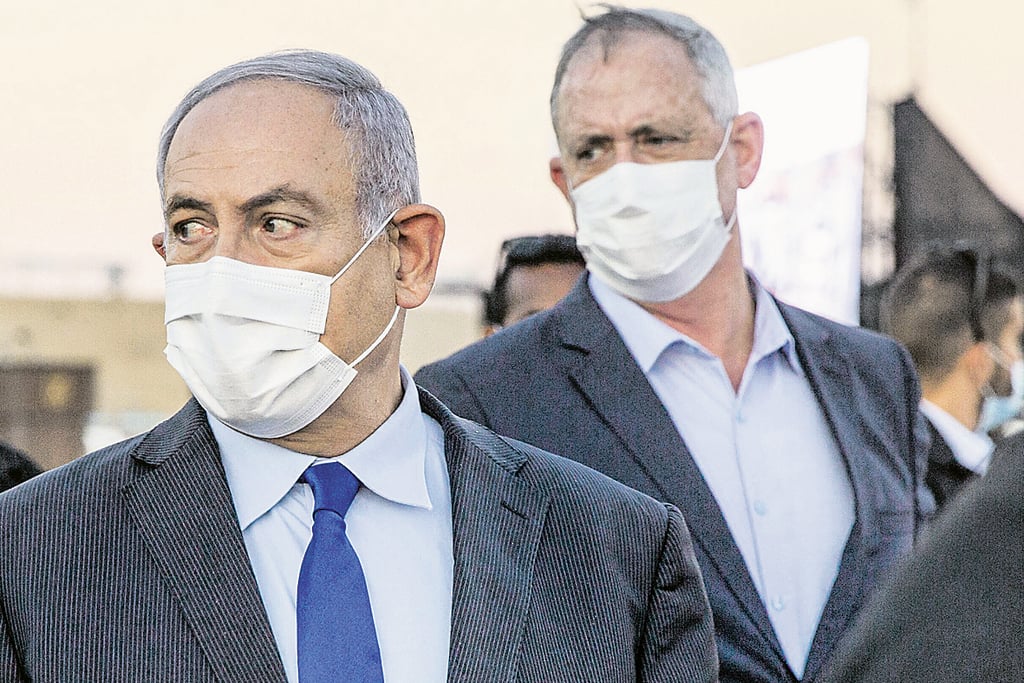
During the cabinet meeting it was agreed that the the government will decide whether the lockdown should be extended based on the latest coronavirus infection data.
If there is no drop in infections or number of ill by Wednesday, Netanyahu is reportedly expected to push for another extension. Gantz has already said that he will object to such measure.
Though the premier and his Haredi allies have a 17 against 10 ministeial majority over Blue & White, Gantz is still able to prevent the extension from being approved.
In order to explain this predicament, we need to look back at a legal opinion on the coalition deal published by former Deputy Attorney General Dina Zilber, which was approved by Attorney General Avichai Mandelblit.

Former Deputy Attorney General Dina Zilber
(Photo: Yuval Chen)
The agreement Blue & White and Likud signed stipulated that there will not be any senior appointments within the first 100 days of the government. In August, Knesset passed the budget compromise proposed by then Derech Eretz MK Zvi Hauser, which extended the government's reign past the 100 days mark.
Likud in response formulated a proposal according to which, a special ministerial committee would handle senior appointments, but that no senior roles will actually be filled in the public sector for the time being. The move would have halted all appointments indefinitely. Blue & White, who at the time was pushing for the appointment of a new state attorney, refused.
This refusal brought up a legal question: what would have happened had the proposal been pushed through by Likud given their ministerial majority in the government? According to Zilber, the answer is hidden in the Basic Law: The Government.
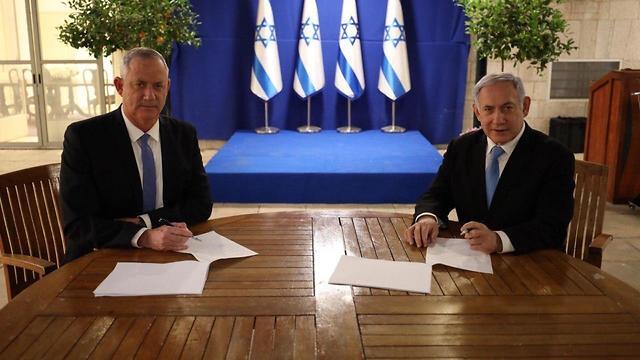
Gantz and Netanyahu signing the coalition agreement following the March 2020 election
Basic Law: The Government, which was amended by Netanyahu and Gantz in order to push the coalition deal through, states that "the number of ministers identified as affiliated to the prime minister will be equal to the number of ministers identified as affiliated to the alternate prime minister."
"However, if the number of ministers is not equal, the government would establish a voting mechanism, according to which the voting power of all ministers affiliated with the prime minister in the government will be equal to the voting power of all ministers affiliated with the alternate prime minister, or rules on how to ensure such treatment."
This mechanism was never implemented since previous efforts by former Justice Minister Avi Nissenkorn were sabotaged by Likud.

Lockdown enforced in Tel Aviv and Jerusalem
(Photo: Alex Kolomoisky, Motti Kimchi )
Zilber's opinion, which as previously mentioned was adopted by Mandelblit, said that it is unconstitutional for the government to pass a decision where there is a partisan disagreement (rather than a disagreement between ministers).
Since the disagreement over the lockdown extension is between Likud, its Haredi allies and Blue & White, Gantz and his party are not obliged to join Wednesday's meeting and debate the overwhelmingly pro-Netanyahu cabinet.
The bottom line is that he only people who will decide what Israel's course will be in the coming weeks in its battle against the pandemic are Netayahu and Gantz and not health or financial experts.