

For years, Israelis have watched the United Nations investigate wars as though only one side has agency, while Palestinian institutions have received at least $40 billion from Western taxpayers since the Oslo Accords and billions more from Qatar and Saudi Arabia.
Yet this extraordinary flow of money was never matched by serious scrutiny of the governments, the agencies and the Hamas-controlled institutions through which it passed.
Israel is examined as a government, an army, an economy and an entire society; every military decision is placed under a microscope, and every allegation is rushed from an anonymous source into a UN statement and NGO condemnations, culminating in a full smear campaign.
Legitimate scrutiny is not the problem provided it is applied with equal rigor in every direction. The problem has never been that the UN investigates the war. That’s what the UN should do. The problem is a very narrow focus in what it chooses to investigate and highlight.
Sudan now exposes the same failure in a much bloodier war.
Since April 2023, the Sudanese Armed Forces and the Rapid Support Forces, both products of the political class that rose under Omar al-Bashir's Islamist regime, have torn the country apart. Twelve million people have been displaced. Famine has ravaged Darfur and Kordofan. Death toll estimates range from the tens of thousands to the hundreds of thousands, yet journalists struggle to confirm the figures, finding the region too dangerous or too removed from the priorities of Western media.
The RSF, created by al-Bashir's security state and later recruited by a Saudi-led coalition to fight the Houthis in Yemen, is accused of mass murder, rape, ethnic persecution and forced starvation. Its fighters must be held accountable and so must every state, company and individual that has armed, financed or recruited them.
That part of the investigation is, at last, underway. On July 29, Reuters reported that a draft report by the UN Panel of Experts on Sudan, expected to be published in September, traces how Boeing aircraft connected to a network of private companies transported weapons, drones and Colombian mercenaries for the RSF. The Panel followed aircraft, companies, contractors, phones, vehicles and foreign recruits. This is precisely the level of forensic rigor an international arms investigation should apply.
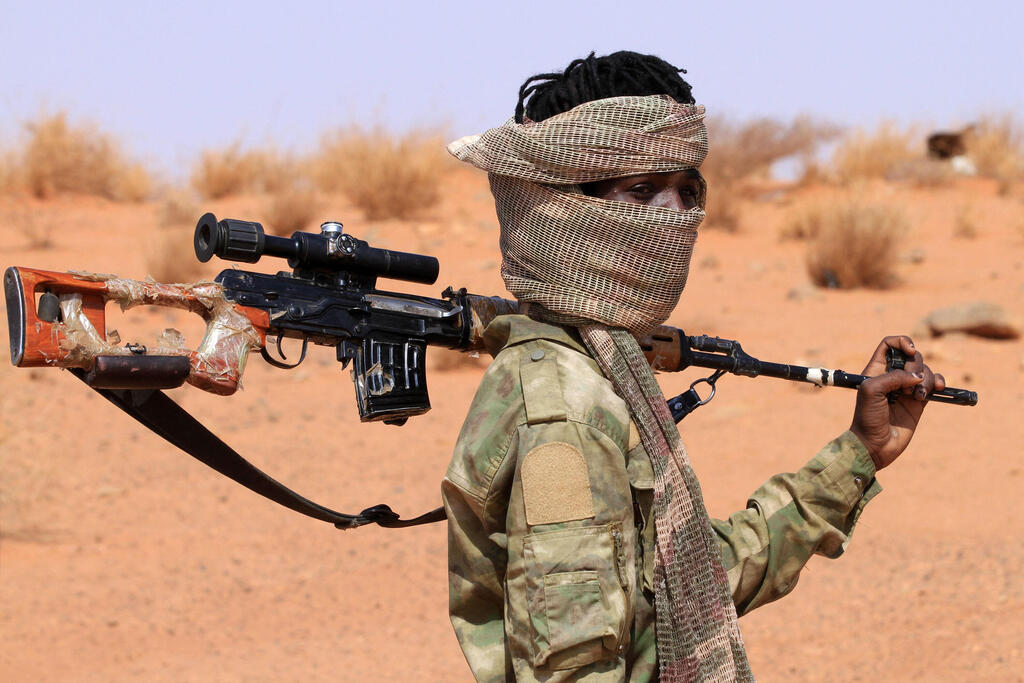
An armed defector from the paramilitary Rapid Support Forces (RSF) arrives as he is believed to be surrendering to the Sudanese military, in the west of Omdurman on August 19, 2026
(Photo: AFP)
But rigor is not the same as balance. As Reuters itself noted, the American veteran connected to the companies has not been sanctioned or accused of wrongdoing, and the available evidence does not establish that he knew what the aircraft carried. A flight path can show where an aircraft traveled. It cannot show who financed the cargo, who ordered the mission or which government, if any, directed it. Association is not responsibility, a distinction one wishes the Panel applied in every direction.
Investigating the RSF alone, however, addresses only half the war.
Iranian and Turkish-made drones have bolstered the Sudanese army's campaign to reclaim Khartoum. Egypt has provided decisive political backing and is reported by the New York Times to be producing drones for Sudan's Islamist-aligned military. Beyond drones, Turkish weaponry and Pakistani-made armored vehicles have appeared on the front lines.
Reporting from Critical Threats and others has noted TPLF-affiliated foreign fighters alongside the SAF against the RSF. Islamist brigades, mirroring the structure of the armed Islamist movements that have defined this region's modern conflicts, have mobilized alongside the army.
Qatar's long-standing, opaque ties to Sudan's Islamist establishment, and Russia's strategic pursuit of influence in the Red Sea, complete a picture of foreign involvement that no one honestly believes Sudan's leaders created alone.
Sudan's war is not the work of a single foreign actor; it is a regional proxy conflict involving states, intelligence services, commercial networks, Islamist movements and armed factions on both sides of the battlefield. The UN's own annual report on children and armed conflict lists the Sudanese Armed Forces alongside the RSF, and at least six allied militias, for grave violations against children. The foreign footprint thus runs in both directions: alongside the army fight Eritrean and Chadian contingents, among others.
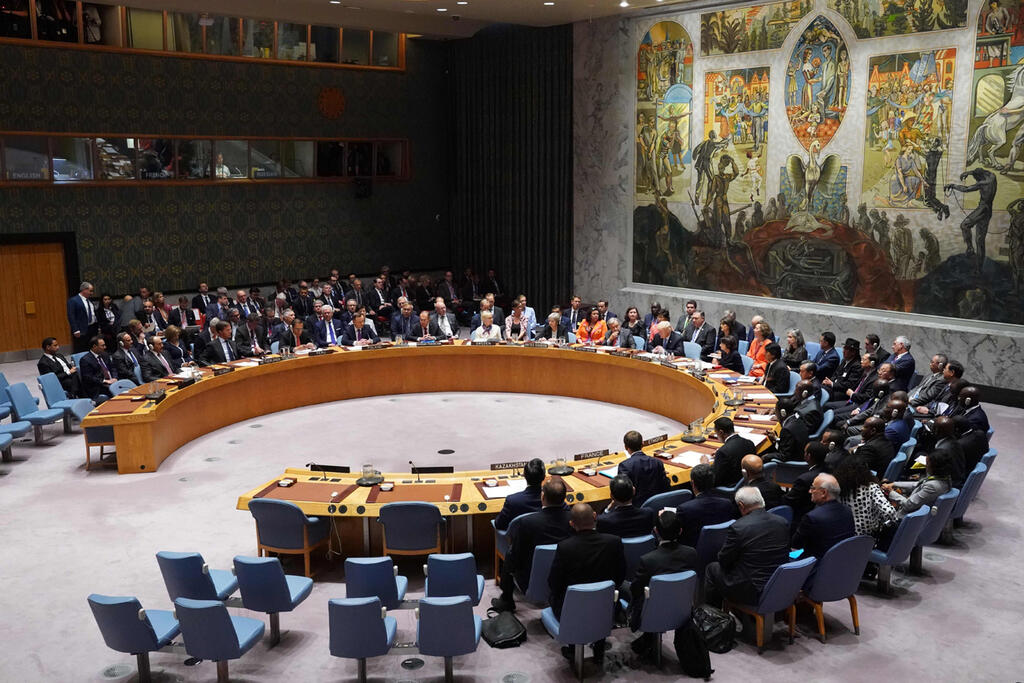
The UN Security Council
(Photo: AFP)
On August 24, the Security Council was given the opportunity to change that. At its 10,211th meeting, chaired by Danish Foreign Minister Lars Løkke Rasmussen, United States Presidential Advisor Massad Boulos formally tabled a draft resolution that in a single stroke would:
Extend the Darfur arms embargo to all of Sudan, so that the entire country, not one region, is covered; explicitly apply the embargo to unmanned aerial vehicles, drones and related technologies, closing the gap that has allowed a drone war to fly above the sanctions; increase the number of Panel of Experts on the 1591 Committee, so that investigative capacity matches the scale of the networks it must trace; and require strengthened cooperation with other regional sanctions panels, so that a lesson learned in Khartoum is not forgotten in Tripoli.
These four elements are not radical. They are the minimum that a credible sanctions regime in 2026 demands and, in effect, they are the "one standard for every side" applied in resolution form.
Enough is enough.
If every member of this Council genuinely wants a ceasefire and a durable peace in Sudan, as each has repeatedly declared, why would any of them oppose a measure that stops the arms on which this war depends, in every direction, for every side? Let every vote be recorded. Speakers who call for peace and then vote against stopping arms to one side will have to explain themselves with their own record. Their choice will reveal whether they are protecting peace or protecting their clients.
Adoption would hand Sudan the tool it lacks: a sanctions regime that applies the same thresholds to both sides of the war. Blocking would do something else: it would write into the official record the answer to who, among all the voices calling for peace, actually means it and whose weapons they are shielding.
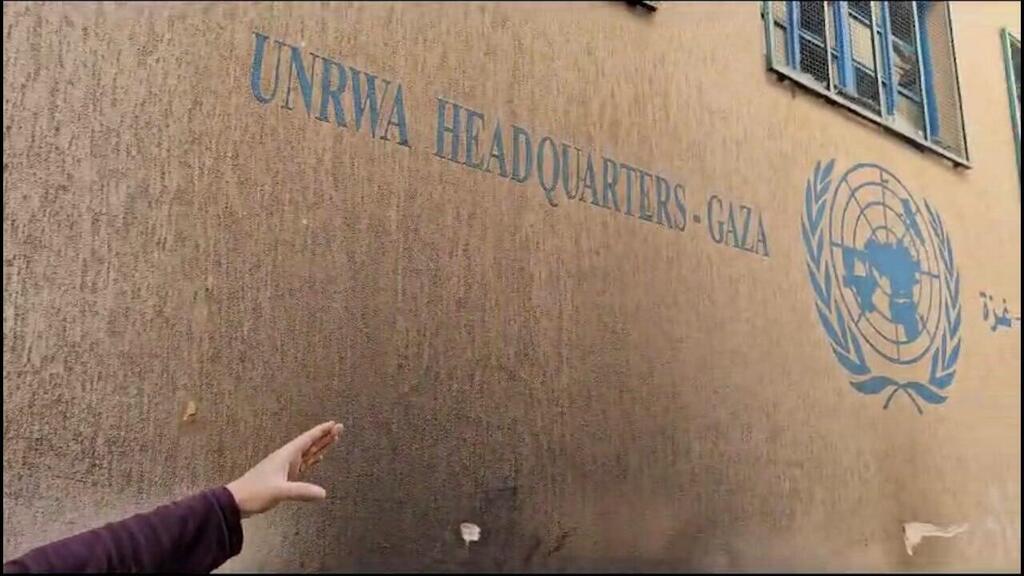
UNRWA headquarters in Gaza used by Hamas to conceal terrorist activity
(Photo: Elisha Ben Kimon)
This is not only a question of fairness; it is a question of the very function of the sanctions. A regime that systematically ignores half the supply chain of a war does not weaken that half; it emboldens it. Weapons, drones, fuel, gold and fighters continue to cross into Sudan from directions the world is unwilling to name, and the Sudanese people pay for institutional selectivity with more years of war.
The same half-war pattern was on display in Gaza. There, the United Nations for years drew on the information environment of a movement that had absorbed the schools, charities, municipalities and humanitarian machinery of a territory, and at its limit, it could dismiss nine employees rather than confront the command structures they served. The UN's failure was never the individuals; it was the institutional capture that decided which facts the institution would allow itself to see.
A genuinely investigative United Nations would not have to choose. It would announce one standard and apply it to every party the Rapid Support Forces and the Sudanese Armed Forces and their foreign backers alike and then go where the evidence goes: aircraft registration, corporate ownership, banking trails, drone supply chains, in both directions, with identical determination. If the evidence justifies action against one side's patrons, it must be pursued with equal rigor against the other's. That is the standard the UN was built on and that is what we should demand of this institution, or what remains of it.
The United Nations was created to investigate the worst of war impartially, or not at all. When the institution investigates only half the battlefield, it is not documenting a war; it is choosing which belligerents are given legitimacy and a new lifeline. And with the 10,211th meeting behind us, and the vote ahead, every member of the Council will have to answer a single question that no procedure can dissolve: if you truly seek peace, why do you protect the arms that feed the war?
- Chama Mechtaly is a writer and policy advisor pioneering the bottom-up movement of the Abraham Accords. She leads initiatives that turn the Accords from a diplomatic framework into a living ecosystem of cultural collaboration, de-radicalization and regional integration.