


In recent weeks, media outlets and social media channels have circulated growing warnings about a “dark conspiracy” emerging from Egypt, ranging from alleged violations of the peace treaty to massive, unilateral military buildups in Sinai and even preparations for a potential war with Israel.
A closer look reveals a troubling finding in both the sources and reliability of these claims. Most of the journalists and commentators (including former Israeli security officials) issuing these warnings are clearly affiliated with Israel's political right wing.
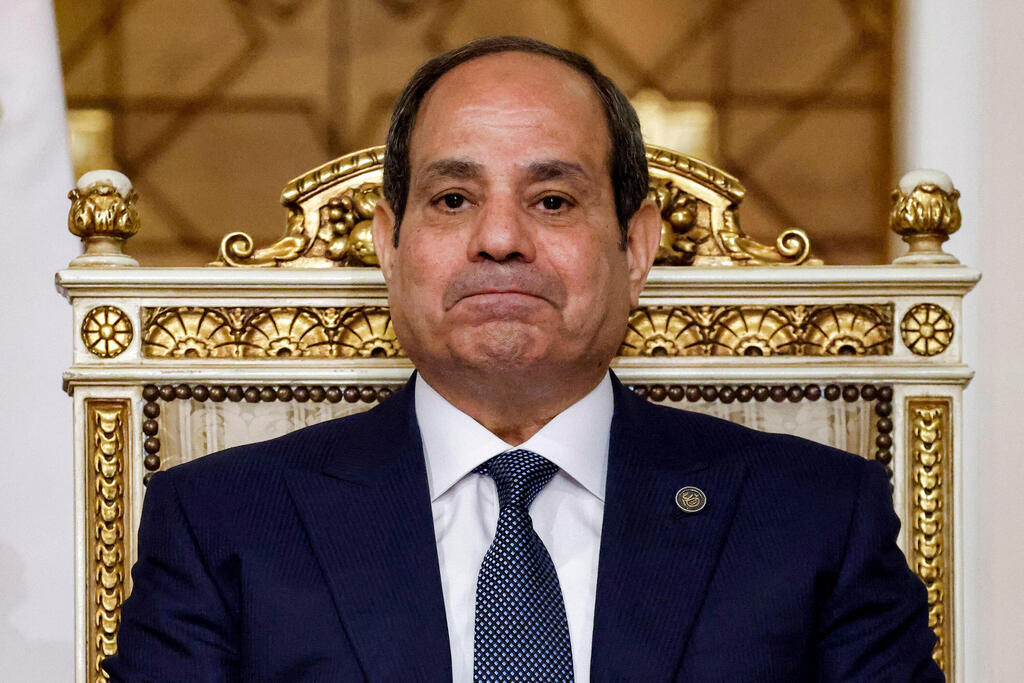
El-Sisi
(Photo: REUTERS/Benoit Tessier/Pool)
Their analyses are vague and notably lacking in citations from official diplomatic or military sources. What appears instead is a classic echo chamber, where individuals quote one another without questioning the origin or credibility of the information.
Many of those raising the alarms claim they are applying the lessons of October 7, calling the current situation with Egypt the “new Conception". Ironically, many of these voices failed to sound any such alarm before the Hamas-led October 7 attack and, in some cases, had even praised the Gaza arrangement (before Oct. 7) and argued that Hamas had been effectively deterred.
The real danger here is not necessarily a looming Egyptian attack but rather a concerted effort to manufacture tension between Cairo and Jerusalem, driven by questionable motives.
A recent historical parallel offers a reminder that involves the so-called “Qatargate affair”. Qatar was seeking to bolster its image as a successful mediator by undermining Egypt, spreading false claims about Cairo’s alleged military intentions against Israel.
These "reports", including "stories" about "Egyptian drills to strike Israel’s nuclear reactor in Dimona", were later turned out to be fabricated fake news or the recycling of outdated information misrepresented as new evidence of preparations for a military campaign.
In reality, Israeli-Egyptian relations are indeed worsening, though not for the reasons suggested in these reports, but rather Cairo's concern that Israel may seek to resolve the Gaza crisis at Egypt’s expense by forcing Gazans into northern Sinai.
That concern has deepened in light of Israel’s stated goal to conquer Gaza City and relocate most of the population to a confined area in the south of the Strip.
Tensions were further fueled as Prime Minister Benjamin Netanyahu expressed enthusiasm for a pendant featuring an outline of the biblical “Promised Land,” which includes territory in neighboring Arab states, including Egypt.
Adding to the strain was an "interview" of Netanyahu with the Telegram channel Abu Ali Express, in which he accused Egypt of blocking Palestinian migration from Gaza. This led to a sharp diplomatic exchange between the two countries.
Compounding the issue is a proposal by Minister of Science and Technology Gila Gamliel, floated early in the war and even before it, to establish a Palestinian state in Sinai, an idea viewed in Cairo as a serious threat.
Fragile ties and deep mistrust
The current crisis in Israeli-Egyptian relations is marked by fragile relations and profound mistrust between the two countries' leaderships. This is a recipe for tragic miscalculation, a dangerous dynamic that can escalate into war even when neither side intends confrontation.
Egypt’s heightened military readiness, especially in anticipation of extreme scenarios (such as a mass breach of the border with Gaza and an influx into Sinai), is likely perceived in Israel as preparation for an offensive. This, in turn, prompts Israeli vigilance and threats, setting off a snowball effect that risks direct friction, including security clashes, potentially undermining the peace treaty between the two countries.
All this comes despite a recently signed gas deal between Israel and Egypt, an agreement that, in theory, should have helped curb a deterioration in ties.
Amid these tensions, it is important not to lose sight of genuine, not imagined threats coming from Egypt, mainly the intensified smuggling of weapons from Sinai into the Gaza Strip and Israel, often using drones.
As with the Philadelphi Corridor, once a key route through which Hamas transformed itself into a military force prior to the October 7 attack, today’s smuggling is enabled by a combination of negligence, willful blindness, and possibly the collusion of local Egyptian actors profiting from the trade.
Close coordination and trust between the governments could help suppress this threat. As always, U.S. involvement, as the sponsor of the peace agreement, remains vital.
In both October 1973 and October 2023, Israeli political and military leaders were marked by overconfidence and a dismissive attitude toward their adversaries, conditions that led to strategic surprises and national traumas.
Now, in October 2025, a different but equally dangerous challenge is emerging: a determination to invent threats. This stems from a mix of questionable interests and post-traumatic actions, involving an overreliance on exercising force and operating based on analysis of the other side's capabilities without any real effort to assess their intentions.
This new “conception” is a uniquely Israeli mix of emotional yearning, ideological rigidity, and paranoia. All these highlights once again the troubling fact that the conceptual failures leading up to October 7 were never duly investigated in Israel.
The increasingly dangerous tension with the Arab world’s most powerful military demands clarity - both from the prime minister and from the IDF. While ambiguity and behind-the-scenes coordination are often useful, in a situation where Egyptian war readiness is treated as fact and the risk of direct confrontation is growing, a public response is urgently needed. That message should aim to calm tensions, not inflame them.
Israel’s recent pivot from complacency and containment to a show of force in every situation has become, in effect, its strategy over the past six months. But this shift could drag the country into yet another conflict, one in which Egypt has no clear interest, and risk one of Israel’s most vital strategic assets of the past 50 years.
 Dr. Michael Milshtein
And all this is unfolding as Israel is already deeply entangled in protracted conflicts, increasingly isolated on the international stage, and struggling to maintain domestic consensus, particularly in regard to the war in Gaza.
Dr. Michael Milshtein is the Head of the Palestinian Studies Forum at the Moshe Dayan Center at Tel Aviv University