

The government is set to decide on new restrictions due to the spread of the newly discovered Omicron coronavirus variant.
These restrictions, also affecting travel in and out of the country via Ben Gurion Airport among other things, came as a swift response to the discovery of the first Omicron case in the country and were accompanied by a warning from Prime Minister Naftali Bennett, who claimed we may be on the precipice of a “state of emergency.”
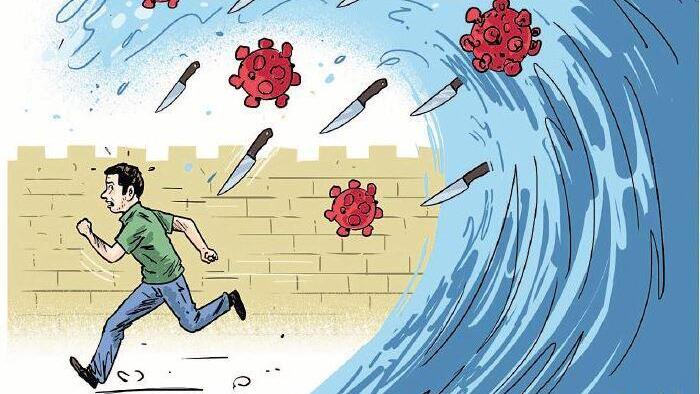
Today, though, we have information on the variant that shows that Omicron does not cause a more serious illness, nor does it have the capability to bypass the COVID-19 vaccines currently in use.
Proof for that was provided by White House chief medical adviser Dr. Anthony Fauci, who said that preliminary data on the Omicron was “encouraging”, and that the variant was looking less virulent than the previously known Delta strain.
Further proof was brought to us from South Africa, the Omicron’s believed place of origin, which showed that the variant does not cause severe illness, as well as from Pfizer that announced that its vaccine is indeed effective against Omicron.
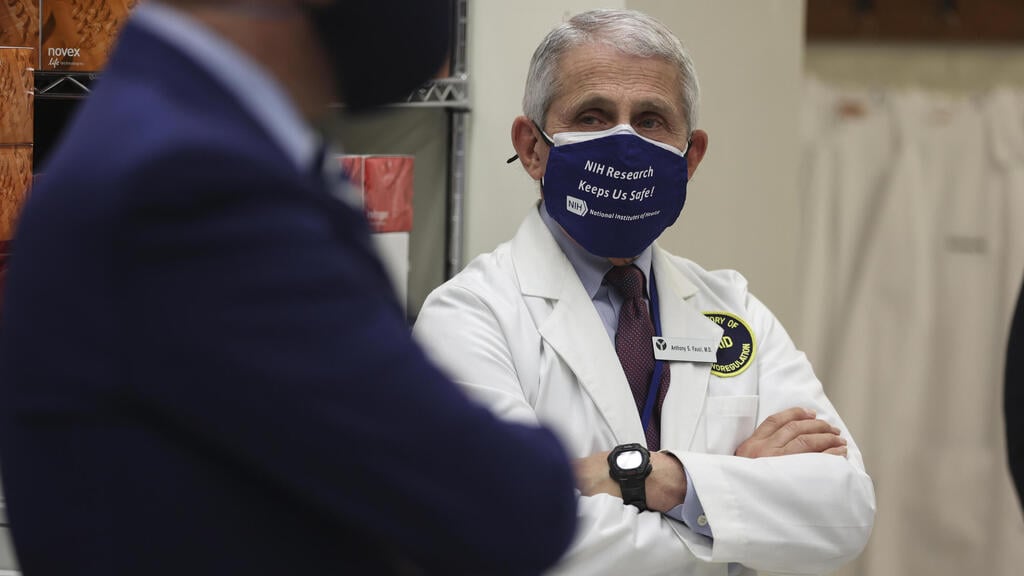
White House chief medical adviser Dr. Anthony Fauci
(Photo: EPA)
And while it seems today like there was no real justification to the apocalyptic atmosphere that was prevalent around the emergence of Omicron, when Bennett first delivered his warning — the lack of significant information on the variant at the time necessitated extreme caution, as well as a set of new, stringent restrictions.
Even today, we are not in the clear just yet: Careful monitoring of data from around the world, along with the detection of new verified Omicron cases must continue.
But the time has come to reconsider our strategy.

Prime Minister Naftali Bennett speaks with world leaders via video link following the discovery of the Omicron variant, November 30, 2021
(Photo: GPO)
A stringent policy without proper justification simply won’t work, and may even harm the country’s efforts to up its immunization rate.
In other words, eliminating incentives like exemption from isolation for those fully vaccinated will cause those still on the fence regarding the vaccine to choose to remain unvaccinated.
Evidence of this was brought to us last August when Health Ministry officials announced an exemption from isolation for those vaccinated with the third dose — which in turn caused the state’s booster uptake rate to skyrocket.
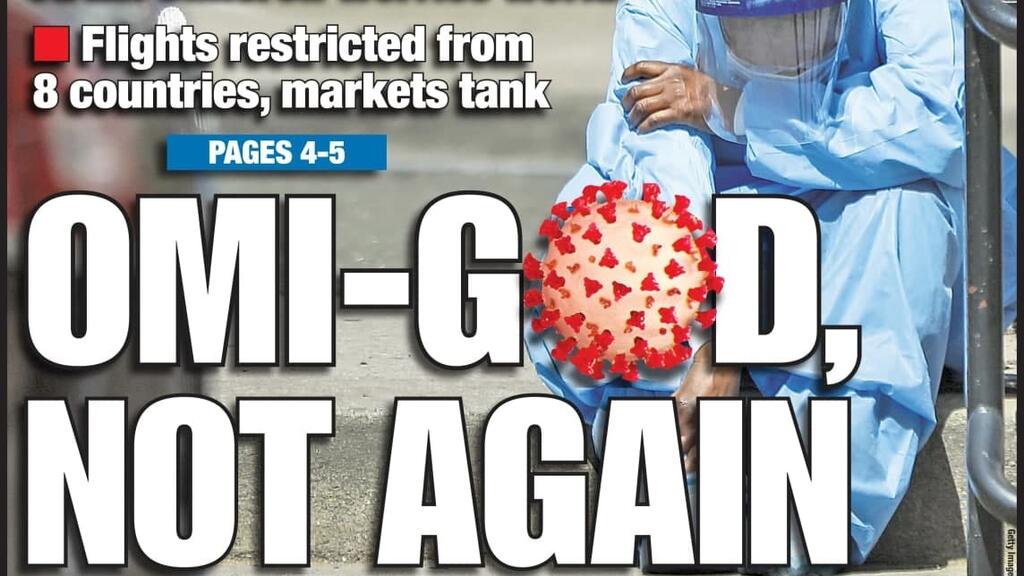
The New York Time's cover following the discovery of the Omicron variant
The message is clear: Provide incentives that allow the public to lead a sane and normal life and people will respond accordingly and get vaccinated.
This is especially critical now, when the children's vaccination campaign is faltering, and when hundreds of thousands who had received the first and second doses have yet to receive the booster.
Despite the warranted caution and the disappointing pace of Israel's pediatric vaccination campaign, it seems that the government's decision to allow Hanukkah shows to continue as usual was the right call.

A child receiving a coronavirus vaccine
(Photo: Yoav Dudkevitch)
Recent data show that coronavirus infections among children remain almost nonexistent, meaning the ramifications of the shows on the public’s health were minimal, thanks in part to the mask mandate and the Green Pass, meant to limit such shows only to those vaccinated and those who recovered from the pathogen.
This only serves as further proof that the public responds extremely well to policies born out of rationality instead of unbridled panic.
(Photo: Shutterstock)
The discussion around restrictions is ongoing, and save any new and shocking data on the variant, the government must already start formulating a well-thought exit strategy from the Omicron saga.
The government must not close its eyes to the potential dangers though. It must look to the horizon and decide on a strategy to further protect us, mainly by increasing the country’s immunization rate in general, and among children in particular.