

CNN reported that the Trump administration has already finalized a draft agreement allowing Saudi Arabia to enrich uranium on its own territory for civilian nuclear energy, with negotiations on the deal effectively completed last October.
According to documents and sources cited by the network, the draft does not require Saudi Arabia to sign the International Atomic Energy Agency's (IAEA) Additional Protocol, which would limit the agency's ability to conduct short-notice inspections in the kingdom. The completed agreement is now awaiting President Donald Trump's final signature before being submitted to Congress for approval.
The report came immediately after the sudden death of Sen. Lindsey Graham, who has not yet been buried, but it appears that large parts of his broader regional vision are being buried with him.
Graham, who was the chief architect and driving force behind regional mediation efforts dating back to the period when he led a bipartisan initiative alongside Democratic Sen. Richard Blumenthal, firmly believed that expanding the Abraham Accords and bringing Saudi Arabia into a U.S.-backed defense alliance with a civilian nuclear program represented Tehran's greatest strategic nightmare and the only path to ending the conflict.
But under current circumstances, that ambitious framework has begun to unravel, even as it has become increasingly clear that the initiative's real potential lay in being part of a much broader regional agreement rather than a standalone move.
Just last weekend, Nadav Eyal, a senior columnist for ynet’s parent newspaper Yedioth Ahronoth, reported what he described as Israel's major political missed opportunity.
According to the report, Saudi Crown Prince Mohammed bin Salman was prepared during the war to pursue a dramatic framework that included full normalization with Israel, a ceasefire, the return of all hostages and the deployment of Saudi troops to help administer the Gaza Strip, in exchange for an Israeli commitment to a credible pathway toward a Palestinian state within five to seven years.
Prime Minister Benjamin Netanyahu, however, rejected the proposal, missing what the report characterized as a historic opportunity for an agreement.
Gallery
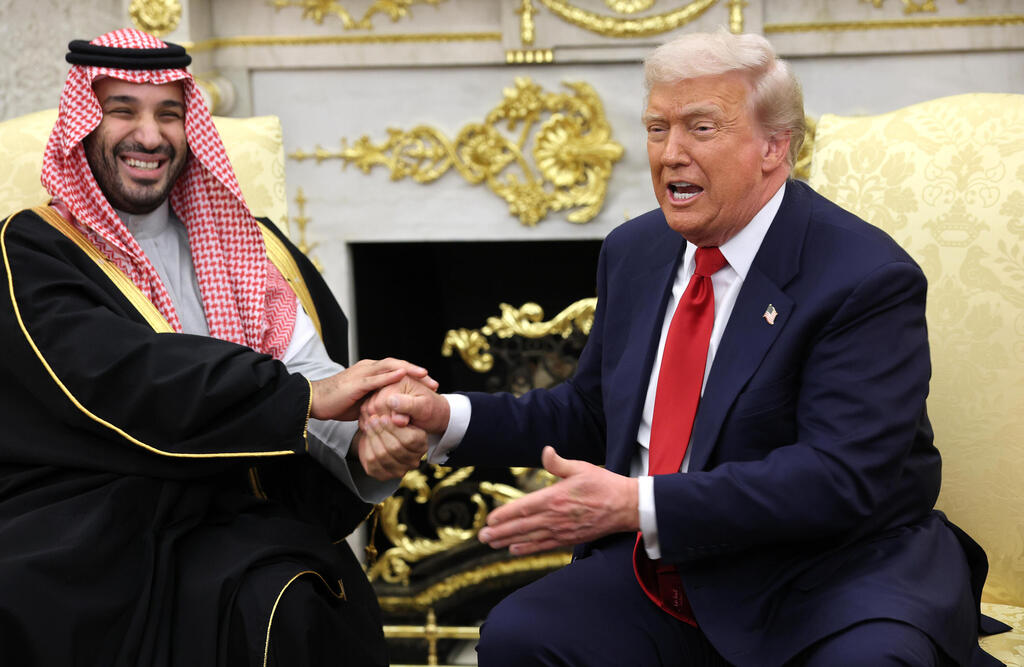
Saudi Crown Prince Mohammed bin Salman and President Donald Trump
(Photo: Win McNamee/Getty Images)
The cost of that missed opportunity, according to Eyal, extends beyond diplomacy to broader strategic and economic interests. He reported that while Israel has been left behind, the India-Middle East-Europe Economic Corridor (IMEC) — an ambitious initiative designed to connect Asia, the Persian Gulf and India with Europe — continues to move forward without Israeli participation.
IMEC's significance is considerable. Beyond a planned rail network that was expected to extend to the Port of Haifa, the project has expanded into a broader regional infrastructure initiative that includes fiber-optic networks for digital connectivity and cybersecurity, green hydrogen infrastructure, automation, artificial intelligence and other advanced technologies.
According to the report, that network is now being developed quietly through meetings in Washington, while Israel is no longer on the route of the envisioned "peace corridor" and is being excluded from the region's emerging economic and technological architecture.
A profound shift in thinking at the White House
Alongside that missed opportunity, CNN's report that the nuclear agreement has already been finalized and is awaiting only a signature points to a profound shift in thinking at the White House, one that also stems from earlier concessions.
In practice, the U.S. retreat from its key demands began last year, when the Trump administration made a dramatic policy change by dropping a condition that the Biden administration had insisted upon: making a civilian nuclear agreement and a defense pact contingent on normalization with and formal recognition of Israel.
That decision, which left Israel outside the immediate framework, paved the way for the current draft agreement, tailored to Riyadh's needs. It would allow Saudi Arabia to enrich uranium domestically without signing the IAEA Additional Protocol, thereby avoiding the agency's more intrusive inspection regime.
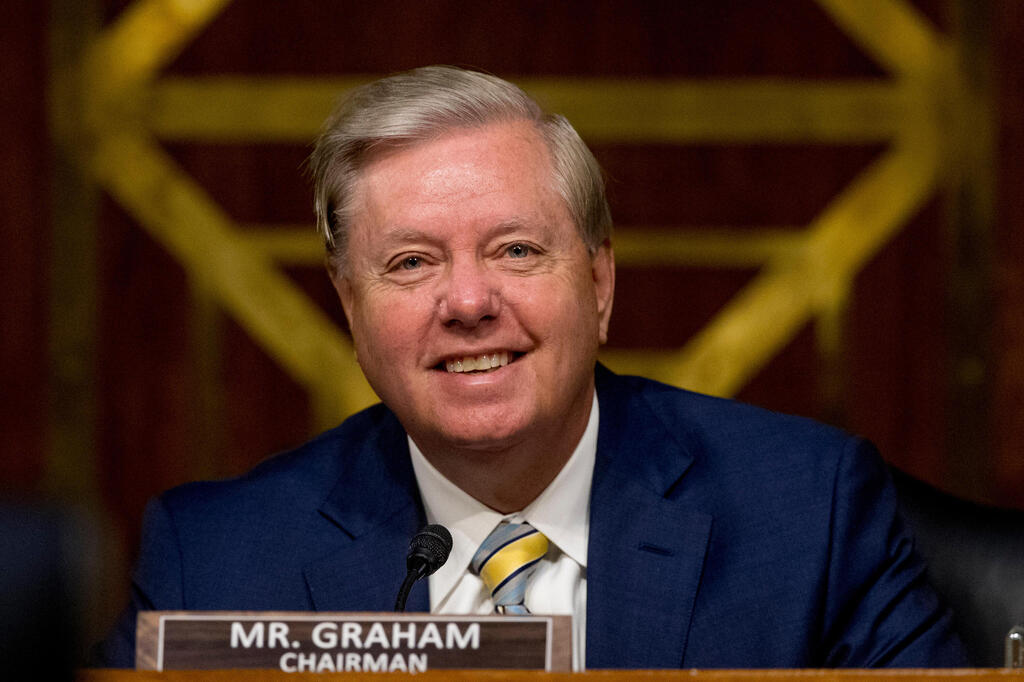
US Sen. Lindsey Graham
(Photo: AP Photo/Andrew Harnik)
Saudi Arabia now finds itself at a strategic crossroads. Although the technical negotiations have concluded, Trump's signature has reportedly been delayed amid the ongoing war with Iran and concerns over congressional opposition. Graham's sudden death has left the administration without the chief advocate who was capable of securing the votes on Capitol Hill needed to pass such a controversial agreement.
There is now deep bipartisan skepticism in Congress over granting Saudi Arabia civilian nuclear capabilities, particularly if they are not tied to a much broader regional diplomatic initiative. That broader framework was precisely what the Biden administration and Graham sought to advance, with the late senator pledging to work personally to assemble the constitutionally required supermajority of 67 senators — two-thirds of the Senate — needed to ratify a historic defense treaty and civilian nuclear agreement while also integrating Saudi Arabia into the IMEC economic corridor.
Amid this uncertainty, the article argues that it is of paramount importance for Israel to leverage these developments and prevent its exclusion from the emerging diplomatic and economic framework. For Jerusalem, the goal should not be to oppose Saudi Arabia's growing influence but rather to support its integration as part of a much larger comprehensive package.
The key to regional stability is to return the nuclear agreement to the broader regional negotiating table and once again link it to initiatives such as the IMEC corridor and normalization with Israel.
 Dr. Kobby BardaPhoto: Tal Givoni
Only by integrating Israel's security, diplomatic and economic interests into this broader initiative can a strong and effective regional coalition be built that is capable of harnessing Saudi Arabia's influence to contain the Iran-led regional axis.
The White House now faces an all-or-nothing dilemma. Without the agreement's chief architect in the Senate, and with the deal detached from its broader regional context, Trump will have to decide whether to risk a direct political confrontation with a skeptical Congress or freeze the kingdom's nuclear ambitions at the height of the confrontation with Tehran in order to recalculate and pursue the broader agreement that the article argues is needed.
- Dr. Kobby Barda is a faculty member at the Holon Institute of Technology (HIT) and a senior fellow at the Jewish People Policy Institute (JPPI).