

On the eve of what may become a limited military campaign against Iran’s ayatollah regime, the architecture of the international order appears more fragile than at any point in recent decades. Even during periods of prolonged crisis, the global system was long understood to rest on a foundation of historical alliances, shared norms and commonly accepted rules. President Trump’s second term has unsettled that foundation. What once seemed solid now looks precarious, as though a tropical storm has turned a carefully built structure into a house of cards.
This shift is not merely a tactical pivot or a stylistic quirk of American diplomacy; it is a profound philosophical divorce. The United States is signalling its resignation as the world’s moral anchor. Where shared values once served as a compass, we now find a void filled by unpredictability. Where the security umbrellas of NATO and traditional alliances once provided a predictable climate, a cold front has moved in across the Atlantic. Trust has been supplanted by tariffs; long-term doctrine has been replaced by the volatility of social media declarations. The longtime guardian of the free world is turning its gaze inward, building walls while the partnerships it once nurtured begin to fray.
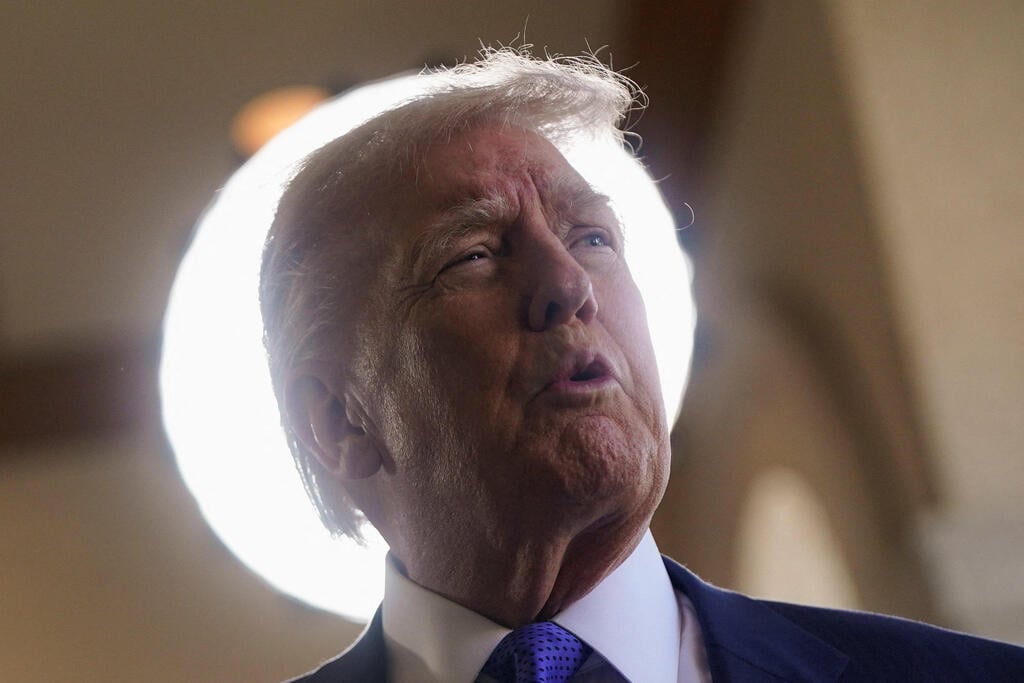
President Trump
(Photo: Nathan Howard/ Reuters)
As the geopolitical landscape darkens, the international arena is increasingly resembling a jungle rather than a regulated forum. In this new reality, power is the only currency that retains its value. The transition from a rules-based order to a doctrine of pure coercion - where allies are viewed as liabilities unless they provide immediate, quantifiable dividends - has opened a dangerous fissure in global security. While this "America First" posture may offer Washington the illusion of short-term gain, it risks a deeper, more permanent isolation in a world that is becoming less restrained and more prone to rapid escalation.
Under the aegis of the U.S. president, the transition from diplomacy rooted in values and international rules to a doctrine of power and coercion - where alliances are treated as liabilities unless they deliver immediate economic or security benefits has opened a serious fissure in global stability. This shift poses risks for actors more exposed to regional and international upheaval, Israel among them. Through unilateral decisions and transactional diplomacy, Trump has accelerated the erosion of America’s standing, weakening its long-held role as leader of the free world.
While this inward-looking approach may yield short-term gains for the United States, it risks leaving Washington increasingly isolated in a far more dangerous international environment. Undermining traditional alliances in both Europe and Asia encourages allies to seek independent security arrangements, while simultaneously accelerating conventional and unconventional arms races. The cumulative effect is a world that is less predictable, less restrained and more prone to escalation.
The domino effect of undermining alliances could negatively affect the willingness to advance toward a “Middle Eastern NATO,” as key players such as Saudi Arabia seek to explore additional pillars of support
The weakening - or outright sidelining - of the United Nations framework, including proposals to create rival bodies such as a so-called “Peace Council,” further destabilizes the very institutions the United States helped build after World War II. Those institutions enjoyed consistent bipartisan support from every American president, from Harry Truman through Joe Biden. Their erosion marks a paradigmatic shift in U.S. foreign policy: from a rules-based international order to a transaction-based world order.
For Israel, this "Great Unravelling" presents a unique and acute set of perils. The ideological foundation of the "special relationship" is shrinking as Washington swaps democratic solidarity for narrow, transactional calculations. As the U.S. retreats from its role as a global guarantor, Israel finds itself increasingly exposed. The erosion of international law in Washington's calculus may offer a temporary veneer of tactical freedom, but it simultaneously weakens the frameworks that prevent non-conventional arms races and regional anarchy.
The weakening of international law and norms in Washington’s strategic calculus could complicate Israel’s efforts to preserve the IDF’s freedom of action. At the same time, Trump skepticism toward arms-control regimes may accelerate nonconventional arms races, weaken non-proliferation frameworks and further diminish prospects for a negotiated nuclear arrangement with Iran—an issue that demands patience, persistence and multilateral coordination, all of which appear in short supply.
The domino effect is already visible. Regional players, sensing the withdrawal of the American umbrella, are exploring alternative pillars of support, casting doubt on the future of initiatives like a "Middle Eastern NATO." The hard truth is that long-standing assumptions about American guarantees are no longer operative. In this reality, the absence of an updated and coherent national security doctrine is glaring. Crafting such a strategy is no longer a matter of long-term planning but an urgent necessity - one that demands clarity, decisiveness, and a sober assessment of a world in which the old rules no longer reliably apply, and the old maps become blur.
First published: 13:29, 02.13.26