


It starts, as these things tend to, with a translation "error." A nuance. A "slightly different phrasing". A missing line between versions. In this case between the Farsi versions of Iran's ceasefire proposal and the English (translated) versions. Nothing dramatic, except that the missing line happens to be the whole story!
It happens to be recognition of Iran's right to uranium enrichment! It happens to be Point 1 on the ceasefire agreement. Not Point 7. Not buried in a footnote. The very first sentence of the very first demand. The thing Iran considered so fundamental it opened with it, and so explosive it had to vanish before anyone with a pen could read it.
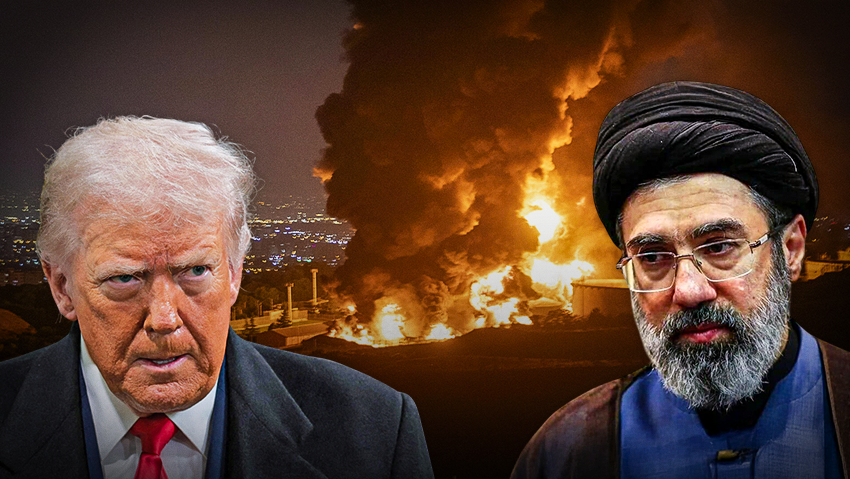
(Photo: Anna Moneymaker / AFP, Stringer / Getty Images)
In one language, it's the main condition. In the other, it doesn't exist. Lost in translation? Naivety is not something we can afford right now.
Here is what the Western world received, Point 1 of Iran's 10-point ceasefire plan: "A binding guarantee that the U.S. and allies will not strike Iran again." Clean. Reasonable. Something you could almost sign.
And here is what Iran's Supreme National Security Council published in Farsi, the same Point 1: "A binding guarantee that the U.S. and allies will not strike Iran again"- with one critical phrase added: the "acceptance of enrichment," signaling that any deal must recognize Iran's right to continue enriching uranium.
It wasn't a single slip. Across every Farsi version released, the line was there. Across every English version handed to diplomats and journalists, it was missing. One point. Two realities.
Why? Firstly, if you put that line in the English version, there's no negotiation. The ceasefire collapses before it starts. By leaving it out, you buy time, goodwill and a two-week pause in the bombing. By keeping it in the Farsi version, you tell your own people: we never surrendered. We never gave up the program. We won.
(Let's not forget the majority of Iranians were counting on Trump-jun and Bibi-jun to rid them of their regime. Their regime's formal Farsi ceasefire agreement is also meant to crush them; to tell them: Forget it! Nobody will ever save you from us!)
But the real genius of this tactic is… The moment you have two versions of the same reality, you also have the perfect alibi for what comes next. Because when this fails, and I'm not a prophet, I've simply lived long enough to know that it most certainly will, each side will reach for its own text.
"This was the deal."
"That was never the deal."
"They agreed."
"They're lying!"
What strikes me is not the gap between the languages. It's the comfort with the gap. This isn't a failure of diplomacy, but its most refined form. A system designed not to resolve reality, but to blur it enough so that when reality explodes, literally, no one can be held fully responsible.
Meanwhile, the foreplay continues: Endless statements. Careful wording. Strategic omissions. Each side speaking not quite to the other, but to its own audience, its own future defense. Because while the statements were flying and the translations... diverging, someone was keeping score.
Iran has thousands of scientists. It has the knowledge. It has nearly half a ton of uranium enriched to 60%, one short sprint from weapons-grade, sitting in underground tunnels that even the most advanced bunker-busters couldn't fully reach.
Yes, the facilities are damaged. But the material is still there. And the motivation is even higher. The new supreme leader, Mojtaba, Khamenei's son, is vowing revenge.
 Hadar Galron
After this round, Iran declared total victory! America, they said, has suffered "an undeniable, historical defeat." Trump, too, declared total victory. The nuclear program, he said, was "completely obliterated." Ever seen a chess game with two winners? So who won this round?
America destroyed what it could see. Iran kept what matters. And walked away more convinced than ever that next time, it needs the one thing that makes countries untouchable. Ask North Korea.
And where do we stand? The people, the pawns in this war? For most of us, war is where life stops. Everything freezes: plans, routines, the fragile illusion of control.
But for those leading it, war is a tool. A stage. Something that can be stretched, managed, made useful. Maybe that's the darkest translation of all, because while we experience war as rupture, there are those for whom it produces power, leverage, relevance. Something to gain.
For how long… when will this foreplay end? Because it's nu-clear: at some point, a red button is going to be pushed. And for that there will be no competing texts. No Farsi version or English version. No winners. Just one language, understood by all.
Hundreds. Thousands. Maybe more, God forbid. Dead bodies need no translation.