

The new nuclear deal between Iran and world powers seems closer than ever, and the ball is in the Iranians' court. Tehran managed to achieve a lot more than it expected and still expects to achieve a lot more.
Meanwhile, Israel has sharply criticized the Biden administration, and Prime Minister Naftali Bennett warned the agreement will create a "more violent, more volatile Middle East."
Gallery
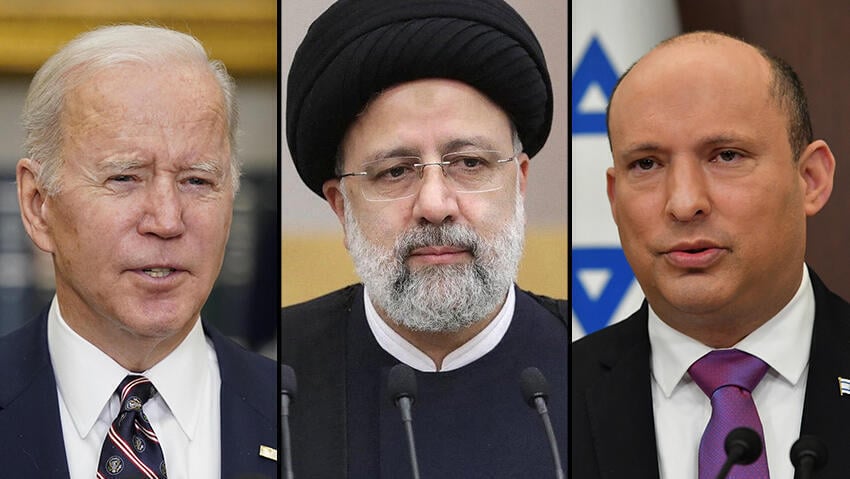
U.S. President Joe Biden, Iranian President Ebrahim Raisi, Prime Minister Naftali Bennett
(Photo: AP, Yoav Dudkevitch)
The events unfolding in Ukraine may accelerate the nuclear talks in Vienna between Iran and the powers, but other than that, there is no direct link between them. The powers may want to put this issue behind them because they think we are approaching war in Ukraine.
Despite the tensions, the Russians and Americans are able to work together on the Iranian issue and there is no bad blood between them.
How close are the parties to reaching a new deal? Very close. But the ball, as mentioned, is in the Iranians' court.
Tehran just has to decide whether it wants it or not. It has already received much more than it thought it would get, including sanction waivers on its frozen assets and for its senior officials. The West's willingness to make concessions to the Iranians in that regard was very significant.
Tehran is still hesitant, owing to its Supreme Leader Ayatollah Ali Khamenei's innate distrust in the West in general, and the U.S. in particular. That's why he remains undecided.
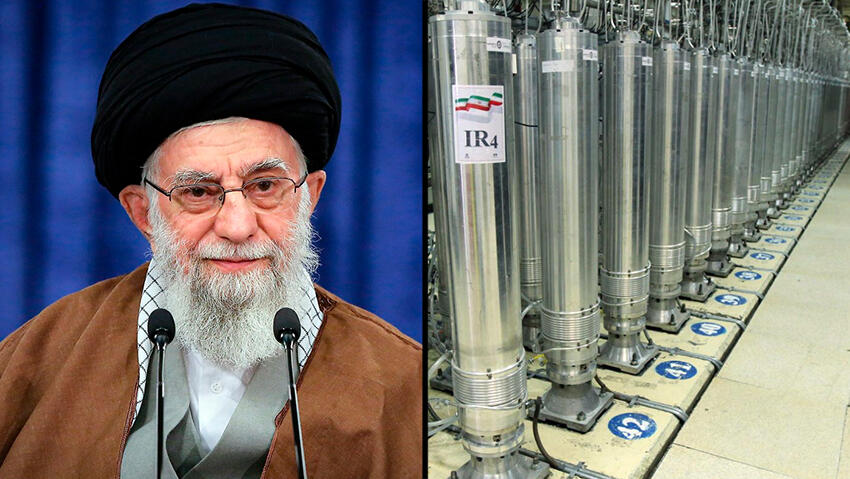
Iran's Supreme Leader Ayatollah Ale Khamenei
(Photo: AP, EPA)
Tehran believes the West was still not at the end of the rope and it can keep slow-walking the talks. It realizes that while talks go on, its nuclear program keeps going full steam ahead, putting them in a better position at the negotiation table.
According to estimates, a prisoner swap deal is also in the works alongside the nuclear agreement. The Iranians will release the Western hostages they hold, in return, they will immediately receive several billion dollars in cash.
While this deal will probably not be formal, in practice it will act as a precursor for the real thing. The U.S. assumes this move would build some kind of goodwill between the parties before they begin implementing the nuclear agreement itself.
This is essentially a return to the same deal from 2015. The idea behind that agreement was to keep Iran one year from a "nuclear breakthrough" — enriching uranium to a level of 90%.
If the current agreement does end up materializing, it will not leave Iran a year away from a bomb, but much less. Estimates talk about seven to nine months.
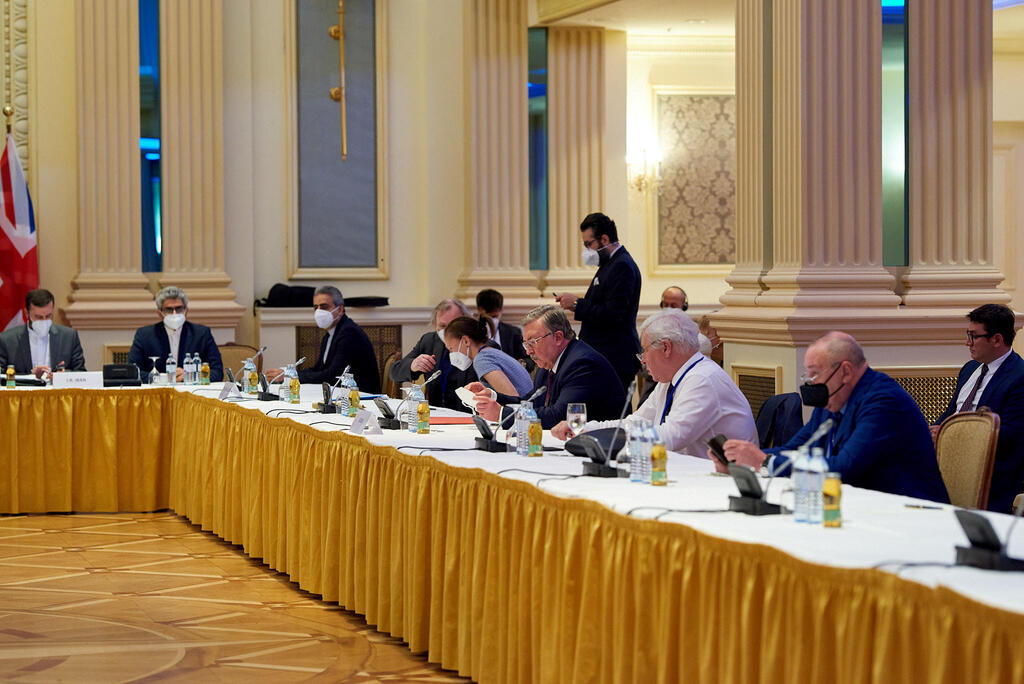
World powers meet in Vienna with Iranian delegation on U.S. return to nuclear deal, last June
(Photo: Reuters)
The current agreement is non-binding, which is a significant change from the previous one. The Biden administration will not be able to pass the agreement through Congress because Israel opposes it, and therefore the Republicans will oppose it too. The Iranians also cannot get any guarantees that sanctions won't be levied against them in the future.
The Biden administration comes under fire
Israel sharply criticizes the Biden administration and says that in the name of erasing Trump's legacy, the Americans are doing everything to return to a bad agreement, which over time has become even worse.
According to Israel, the Iranians already got much more than they initially thought they would, and are now just stalling for time to get even more waivers.
Meanwhile, Jerusalem conceded that there is not much to do to get in the way of an agreement, but it could try to influence other factors down the road. It still hasn't given up its wish to find a long-term, permanent, stable and comprehensive solution to the Iranian nuclear threat.
If and when Iran and world powers do end up reaching an agreement, Israel would have to reevaluate its course of action and find another way to get rid of the Iranian nuclear threat once and for all. Jerusalem believes that a return to the agreement makes its job much more complicated, but it has not yet given up.
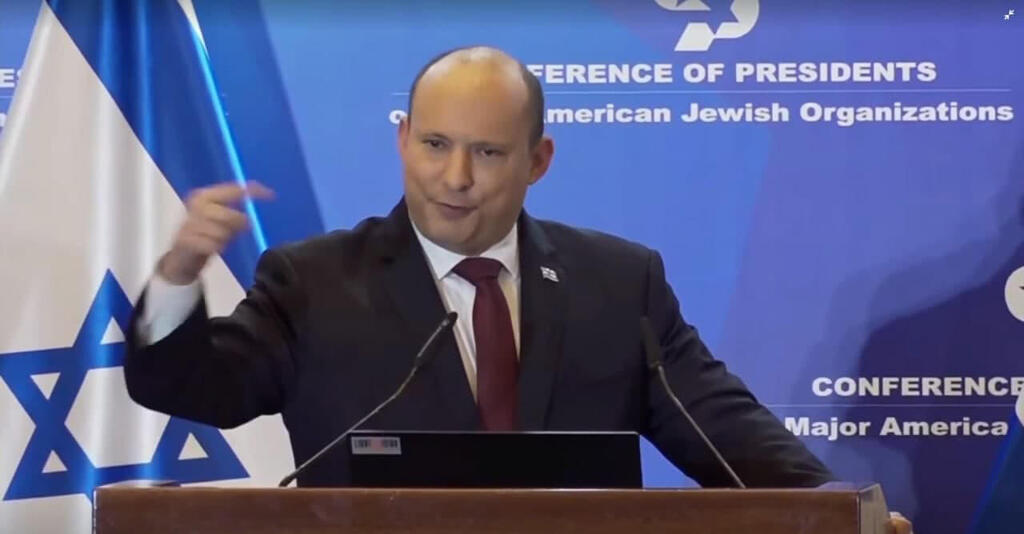
Prime Minister Naftali Bennett speaks before the Conference of Presidents of Major American Jewish Organizations, February 20, 2022
(Photo: Go-live)
Israel has made it clear to the Americans it does not consider itself bound by any agreement.
Speaking at the Conference of Presidents of Major American Jewish Organizations on Sunday, Prime Minister Bennett said, "the emerging deal as it seems is highly likely to create a more violent, more volatile Middle East. While there is no doubt that America is the greatest and most powerful ally, in the end, it is us who live in the region, and it is us who will face the consequences."
According to the premier, the Iranians have presented a set of unusual demands from world powers, including closing ongoing the International Atomic Energy Agency's ongoing probes into transgressions it made in its nuclear program.
"Iran was hiding and is still hiding materials linked to nuclear arms, it was caught red-handed, and now demands that the inspectors who caught them pretend they forgot what they saw," he said.
Another one of Tehran's demands is removing its Revolutionary Guards Corps from the sanction list. Bennett described the organization as "the world's largest terrorist group" and added that lifting sanctions from it would "create a set of new challenges for Israel's security."