

The recent exchange on the war in Gaza published by The Lancet—one of the most prestigious and influential medical journals in the world—is less revealing for the conclusions it reaches than for the editorial logic it embodies. What is at stake is not simply a disagreement over data or terminology, but a broader question: what happens when a scientific journal no longer presents itself as a forum for inquiry, but as a platform for moral positioning?
The sequence is by now well known. On August 16, 2025, The Lancet published the correspondence by De Vogli R., Montomoli J., Abu-Sittah G., and Pappé I. “Break the selective silence on the genocide in Gaza” (vol. 406, no. 10504, pp.688-689). The title itself signals a departure from the usual conventions of scientific communication. A legally and historically contested term — “genocide” — is introduced not as a hypothesis to be examined, but as a premise that frames the entire discussion. The reader is not invited to evaluate the claim; it is asked to accept the vocabulary in which the claim is already embedded.

This editorial choice matters. Scientific journals do not merely transmit information; they structure legitimacy. By selecting language, sources and tone, they shape what counts as a reasonable question and what falls outside the boundaries of acceptable discourse.
That boundary was briefly reintroduced on January 24, 2026, when Benedict Nobile and Philippe Courtet published “Gaza: the urgent need for rigour over rhetoric” (The Lancet, vol. 407, no. 10526, pp.336-337), a commentary regarding the previous article. Their intervention was modest in scope. It did not offer an alternative narrative, nor did it minimize civilian suffering. It simply asked whether the standards of terminology, source evaluation and analytical distinction normally expected in medical literature were being upheld.
In a journal committed to pluralism, this would have been the beginning of a methodological exchange. Instead, the authors’ reply, published in the same issue, marked a decisive editorial turn. The concerns raised were not treated as part of legitimate scholarly debate, but reframed as “genocide denial.” With that move, the discussion shifted from evidence to intent, from method to morality.
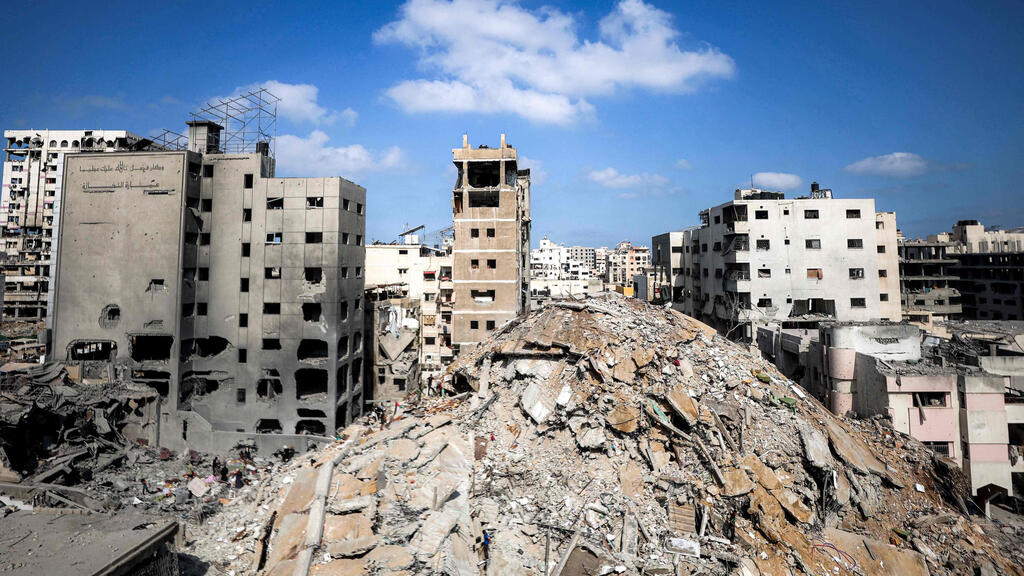
Destruction in Gaza City
(Photo: Omar Al-Qattaa / AFP)
This is the crucial meta-editorial moment. Once disagreement is recoded as ethical failure, the space for scientific inquiry effectively closes. The journal no longer curates a debate; it enforces a moral frame.
For Israeli readers, this sequence is significant not because Israel is criticised — criticism is neither new nor inherently problematic — but because Israel appears as the case in which editorial restraint is relaxed. The journal does not simply take a position; it naturalises that position through the authority of medicine, transforming contested claims into quasi-clinical facts.
The broader implication is uncomfortable. If scientific journals assume the role of moral adjudicators, their authority ceases to rest on openness and verification, and begins to resemble that of advocacy institutions. The risk is not only bias, but a redefinition of what scientific legitimacy means.
Israel, in this context, is not just the subject of the debate. It is the testing ground for a model of scientific communication in which editorial framing replaces inquiry, and moral certainty displaces analytical doubt. Whether this model will remain confined to Israel or extend to other conflicts and contexts remains an open question.
What is clear is that when journals stop asking questions, science loses one of its defining virtues: the willingness to remain uncertain, especially when certainty is most politically convenient.
Dr. Daniel Radzik, member of the Italian Jewish Medical Association