

The message, 1,000 days after October 7, is that the U.S. administration has decided to give up on Hamas disarmament as a condition for rebuilding the Gaza Strip.
Disarming Hamas was part of President Donald Trump’s 20-point plan, which paved the way for the ceasefire agreement in Gaza. Israel’s government approved the plan in October 2025. The first stage of the plan, the return of the remaining hostages, both living and dead, and the release of 250 terrorists, most of them murderers with blood on their hands, along with 1,700 Gazan civilians, was carried out. Hamas disarmament was supposed to be the key to what came next.
Since then, the paths have diverged. The Trump administration has followed the route laid out for it by Qatar, Turkey and the economic interests of its senior figures in the Middle East. Israel’s government has been left behind, isolated and neutralized.
Three years after the start of the war, Gaza is both a growing problem on the ground and a metaphor for what is happening to Israel in other arenas, from Iran to Lebanon and Syria: America is no longer with us. In historical terms, this is the gravest outcome of the war.
The details sharpen the picture. The Americans have moved from indirect negotiations with Hamas, through mediators, to direct negotiations. Envoy Steve Witkoff is negotiating with Khalil al-Hayya, a senior Hamas official in Qatar. Kan 11 diplomatic correspondent Gili Cohen first revealed the contact. Confirmation reached me from a reliable source.
Breaking the boycott is part of the process of laundering Hamas, in which Qatar plays a central role. Had Hamas changed, the process might have been tolerable. But the only side that changed was the Americans.
In the negotiations, the Americans are trying to secure agreement on partial disarmament: heavy weapons would be dismantled, light weapons would remain. Nine months of talks have passed, and there is still no agreed definition of what counts as heavy weapons. Are mortars heavy weapons? Anti-tank rockets? UAVs? Drones? Hamas representatives are in no hurry.
Although the weapons have not been dismantled, the Americans have decided to move to phase two: the gradual reconstruction of the parts of Gaza under Israeli control. Israel will withdraw; an international force will enter in its place; cities will be rebuilt; population will move. The project is expected to be completed within 10 years.
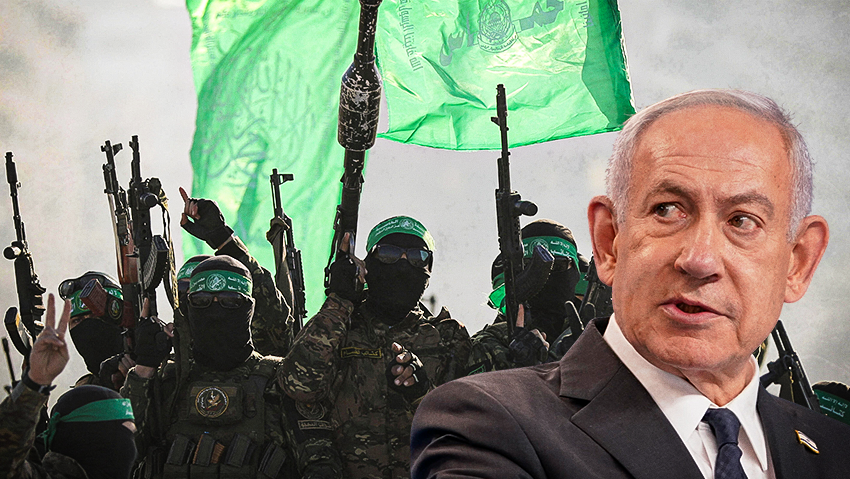
(Photo: REUTERS/Dawoud Abu Alkas, Nathan Howard/Pool/Photo via AP)
When the ceasefire agreement was signed, the assumption was that Hamas would collapse on its own. The opposite happened. Hamas’ control over the population stabilized and strengthened. As in Iran, the question is not what every Gazan thinks privately about the regime. The question is whether he has an alternative. If and when the population moves eastward, to the rebuilt Gaza, Hamas will move with it.
Israel’s government hoped for an explosion that would restart the war. War is good for elections. Reports published in recent days greatly exaggerated the military threat from Gaza. If there is no fire, at least there should be smoke.
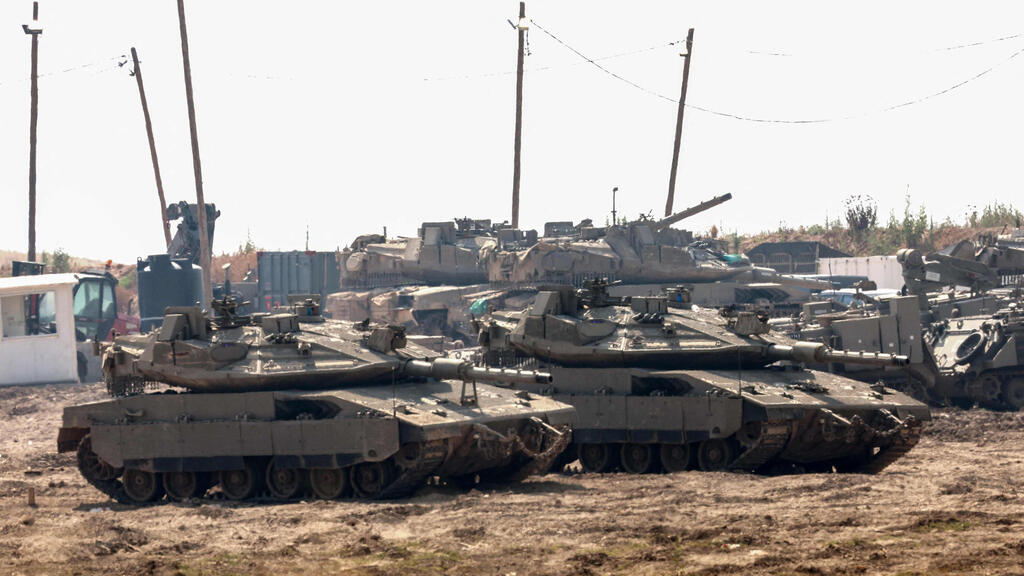
The military threat is currently the least worrying issue. The IDF is positioned in fortified compounds along the chain of hills inside Gaza, overlooking Hamas’ kingdom from above. It controls 60% of the territory, not 70% as Netanyahu insists, and surrounds Hamas from all sides, including the Philadelphi Corridor. The problem is the future.
Meanwhile, Hamas leaders are basking in the glow of Iran’s glory. In talks with their partners in Iran, they are seeking to equate their status with Hezbollah’s. Iran, they want, should make clear to the Americans that if Israel dares attack in Gaza, it will block the Strait of Hormuz.
First published: 16:24, 07.03.26