


Less than a year after the failed Gaza Humanitarian Foundation project was buried in the sands of Gaza, another Israeli wartime concept appears to be heading toward the same fate: the network of local militias Israel established and cultivated as a counterweight to Hamas.
The question of what will happen to those groups receives relatively little attention in Israel. In Gaza, however, it has become increasingly central, particularly after Hamas succeeded in inserting into the 15-point framework a demand that the militias be disarmed and that their members be barred from joining the security forces of a future technocratic government.
Prime Minister Benjamin Netanyahu continues to insist, including after Jared Kushner’s visit this week, that Israel will keep acting against Hamas and will not withdraw from areas of Gaza until the organization is fully disarmed.
Even so, U.S. pressure to move toward the second phase of the plan does not appear to have disappeared and could intensify, particularly as President Donald Trump looks for a diplomatic achievement after mounting frustration over the confrontation with Iran.
The militia project was supposed to offer Israel something it has repeatedly sought in Gaza: a local Palestinian force willing to challenge Hamas without requiring Israel to directly administer the territory. That vision now appears increasingly detached from the political and social reality on the ground.

Mansi’s Popular Army
There are five main armed groups, together numbering at most several thousand members, operating in areas under IDF control. Most of their commanders and members are identified with Fatah and previously served in Palestinian Authority security forces.
The largest is the Popular Forces, operating in eastern Rafah and composed largely of members of the Bedouin Abu Shabab clan. It is now led by Ghassan Dahini, who replaced the group’s founder, Yasser Abu Shabab, after he was killed in an internal militia assassination.
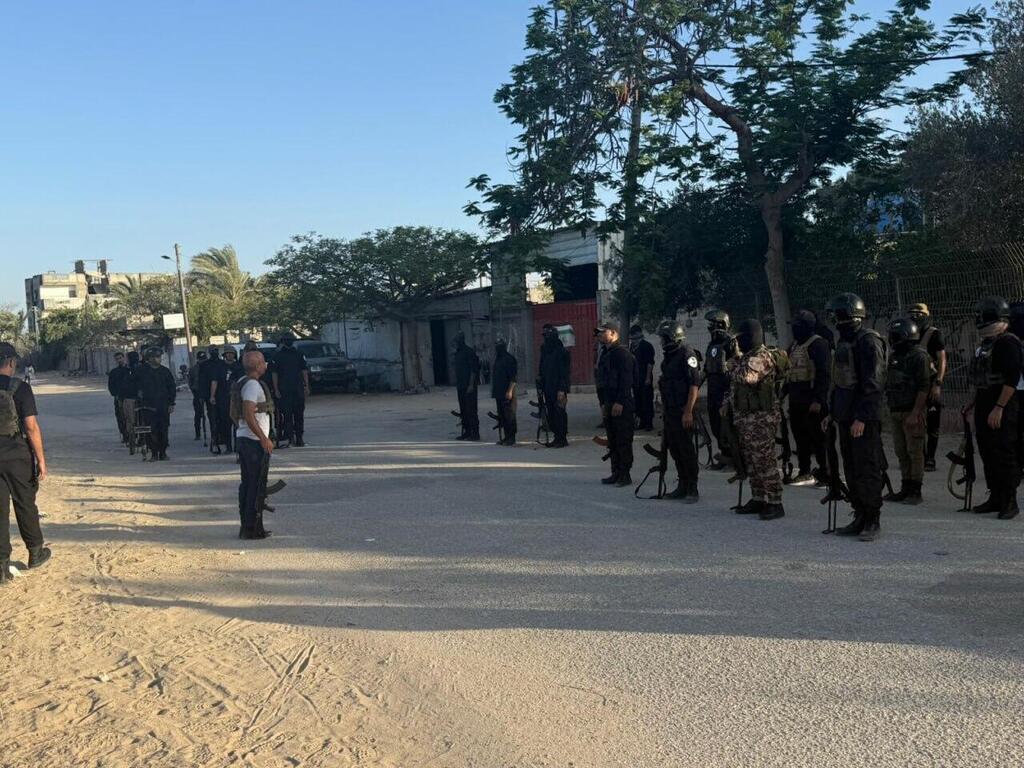
Alongside it are the Counter-Terrorism Strike Force led by Hussam al-Astal in Khan Younis; the Popular Army led by Ashraf al-Mansi in northern Gaza; the Popular Defense Forces led by Rami Halas in eastern Gaza City; and the Free Homeland Forces led by Shawqi Abu Nseira in central Gaza.
From the beginning, Israel emphasized the advantages of the groups while paying far less attention to their weaknesses.
Reports highlighted operations in which Abu Shabab’s men captured Hamas members in tunnels around Rafah, as well as attacks by militia members against Hamas personnel. A school project in Rafah, presented as promoting deradicalization under militia protection, was also touted as evidence that such groups could provide an alternative social order.
But other aspects received less attention. Some militia members had previously been involved in criminal activity and even terrorism against Israel, while some had links to Islamic State-affiliated elements. Israel transferred weapons and money to the groups, including large drones.
Militia members were also implicated in looting humanitarian aid, smuggling involving members of security forces, and harassment and theft from people passing through the Rafah crossing. Most importantly, their public legitimacy remained extremely weak. Gaza’s major clans largely distanced themselves from the militias and continued to express loyalty to Hamas.
Palestinian commentator Ezz al-Din Abu Aisha said Hamas’ success in inserting the militias’ disarmament into the 15-point framework amounted to a significant achievement. He said Hamas convinced the Board of Peace and mediators, in part by presenting documents and recorded testimony, that the Israeli-backed groups were contributing to chaos and would have to be eliminated if any stable arrangement were to emerge in Gaza.
According to Abu Aisha, the militias are increasingly isolated both socially and internationally and are already nearing collapse.
At the same time, clan and tribal leaders, together with Hamas officials, are trying to persuade militia members to “repent,” effectively meaning defect, while promising to guarantee their safety.
A Palestinian source familiar with the unusual meeting earlier this week between Kushner and Khalil al-Hayya, head of Hamas’ political bureau, said Hamas made clear that any discussion of disarming the organization would also have to include dismantling all of the militias.
According to the source, Kushner showed full understanding of that demand. Among Gazans, the source said, there is broad consensus that the groups resemble the “Lahad Army,” a reference to the South Lebanon Army under its final commander, Antoine Lahad. The phrase carries a particularly toxic meaning: not merely collaboration with an enemy, but an association with crime, violence and eventual abandonment.
Hamas is also conducting an active campaign against the militias, particularly their commanders. Its Radaa, or “Deterrence,” force is leading operations that include intelligence collection, ambushes and assassination attempts even inside areas held by Israel.
In recent months, Israel has arrested dozens of Hamas members who crossed the Yellow Line with the aim of infiltrating militia ranks and targeting their leadership from within. For Hamas, the Abu Shabab group remains the primary target.
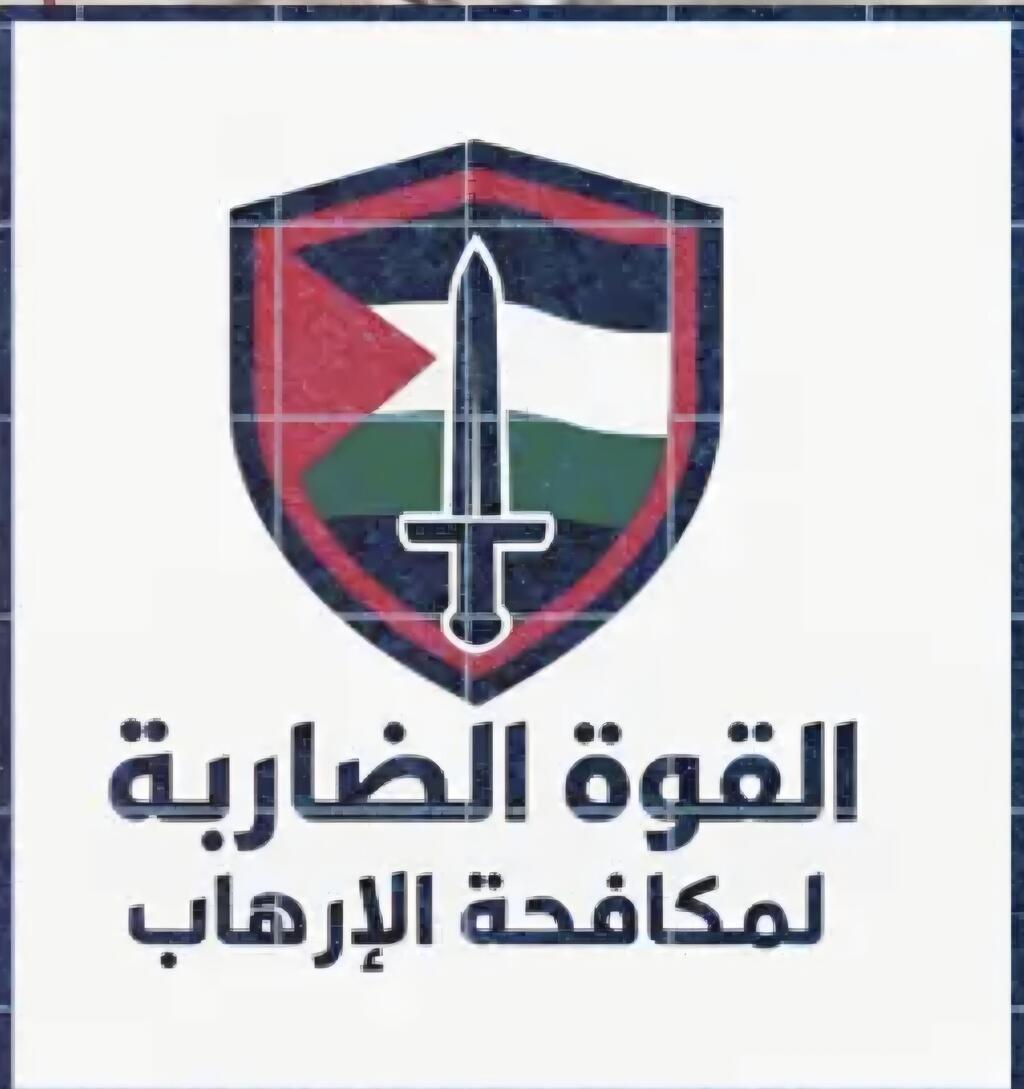
Al-Astal’s Counter-Terrorism Strike Force
Gazan researcher Rajab Khudari believes the groups will weaken further as negotiations advance over the deployment of a multinational force and the reconstruction of Gaza.
Their economic power, he argued, depends partly on activities conducted under Israeli protection around border crossings. If that income dries up, the militias will struggle to continue paying their members and could begin to fracture internally.
Khudari believes the decisive moment will come if Israel withdraws beyond the Yellow Line. At that point, he said, the militias are likely to disappear.
Their rank-and-file members could be arrested, and many may face execution, as happened to suspected collaborators in Gaza City about a year ago. Their commanders would likely retreat alongside Israeli forces and could later attempt to reorganize or operate terror cells inside Palestinian-controlled territory.
From the moment the militias were established, there were obvious warning signs. Yet Israeli political decision-makers and parts of the security establishment largely dismissed them. When the existence of the groups became public in June 2025, Netanyahu brushed off criticism with the remark: “What’s wrong with that?”
Others presented the militias as an attractive alternative to Hamas, reflecting an old Israeli fantasy of fragmented Palestinian communities focused on civilian interests, stripped of meaningful political or national aspirations and therefore easier to manage.
There is plenty wrong with that assumption. Beyond the practical failures, including the GHF project that the militias were supposed to help manage, the experiment reflected a persistent refusal to learn from history.
The precedents are both recent and old. In 2024, clan leaders who held contacts with COGAT were assassinated. Decades earlier, Israel promoted Village Leagues in the West Bank and neighborhood committees in Gaza in the 1970s, hoping local structures could bypass broader Palestinian political movements. Those experiments did not produce the durable alternative Israel sought.
The same mistake appears to have returned in Gaza. Clans are powerful institutions in Palestinian society, but they are not raw material that Israel can simply reshape at will. Nor can they fulfill the recurring fantasy of creating a kind of “Palestinian United Arab Emirates,” a collection of locally governed enclaves stripped of national politics.
The deeper problem is that the conceptual failures behind October 7 were never fully investigated. Many of the same decision-makers continue shaping Israeli policy while retaining assumptions that repeatedly generate similar failures, from the militia experiment in Gaza to ideas about overthrowing the Iranian regime.

Abu Shabab’s Popular Forces
Once the fantasy is stripped away, Israel has several practical questions to confront.
First, it must prevent a “Taliban model” in which a force armed and supported by an outside power later turns its weapons against its former patron.
Second, Israel may have to prepare to absorb militia members and their families, just as it took in members of the South Lebanon Army after the IDF withdrawal from Lebanon.
And finally, it must consider what the collapse of these groups would do to Israel’s regional image.
A country that recruits local partners but cannot protect them when political conditions change risks being seen as an unreliable patron.
That may be the most damaging lesson of all: not merely that another Gaza project failed, but that Israel encouraged others to join a strategic vision that was never grounded firmly enough in the reality of the society it was meant to reshape.
Dr. Michael Milshtein is a senior researcher at the Moshe Dayan Center at Tel Aviv University