

Could the most resolute opposition to what many are calling not Russia’s war but Putin’s war in Ukraine be inadvertently creating the conditions for a leadership crisis in the Kremlin? While Estonia, Latvia and Lithuania have no stated strategy to unseat the Russian president, their principled stance may be forging a dilemma for which Vladimir Putin has no easy answer.
The result is a 21st-century version of Leon Trotsky’s famous "no war, no peace" paradox—a stalemate where Russia is spending nearly a third of its national budget on defense, yet the front lines remain largely static. This raises profound questions about the long-term stability of Putin’s rule.
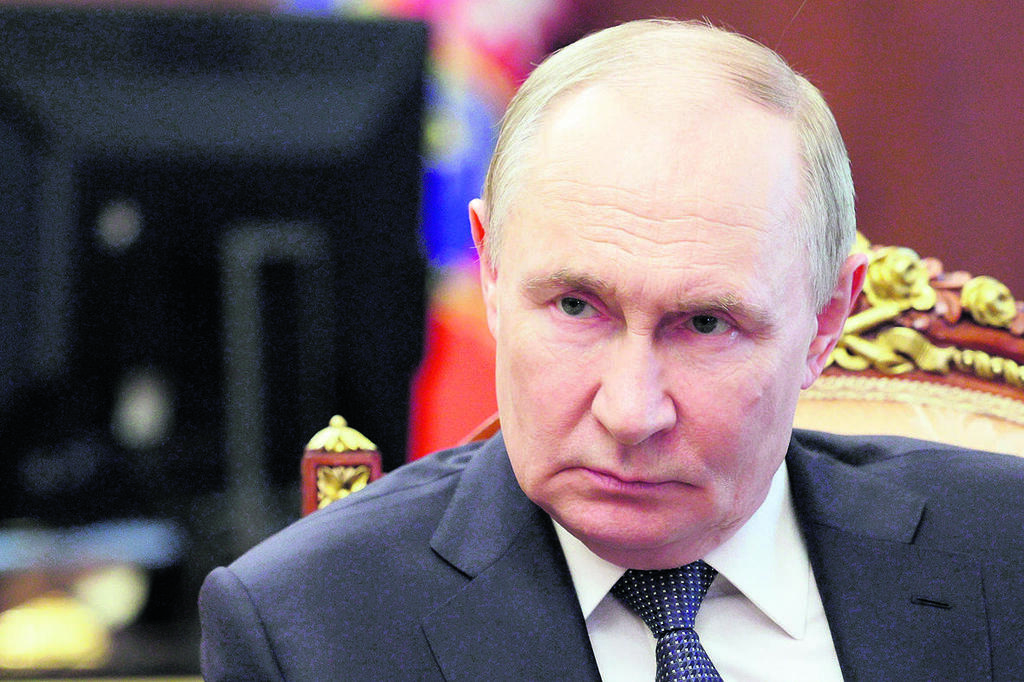
At the heart of this dynamic is a career miscalculation in Vladimir Putin’s own history. One might look to his experience as a KGB officer in Dresden in 1989, when his pleas for military backup against protesters were met with the now-famous reply: “Moscow is silent.” This moment is widely portrayed as instilling a belief that hesitation is a liability.
Yet, this reliance on force may have led to a critical error in thinking. According to intelligence documents leaked to outlets such as the Royal United Services Institute (RUSI), the Kremlin’s pre-war strategy for the Baltics relied on political subversion, suggesting a failure to anticipate the potential of their ideological and material resistance.
The Baltic response, cultivated from a painful history with Russian imperialism, has been resolute. Their material support for Ukraine, which, relative to their economic size, sets a global standard, has helped deny Russia a swift victory. By sponsoring initiatives like Latvia’s co-leadership of the international drone coalition to deliver one million drones to Ukraine, they have moved beyond simply donating old stock and are actively shaping the future of the battlefield.
This confident posture is underwritten by a profound strategic victory at home. In a historic move, all three nations fully disconnected their electrical grids from the Russian-controlled system in early 2025, achieving complete energy independence. By systematically dismantling this primary lever of coercion, they have made their economies sanction-proof from Russian energy blackmail, allowing them to act without fear.
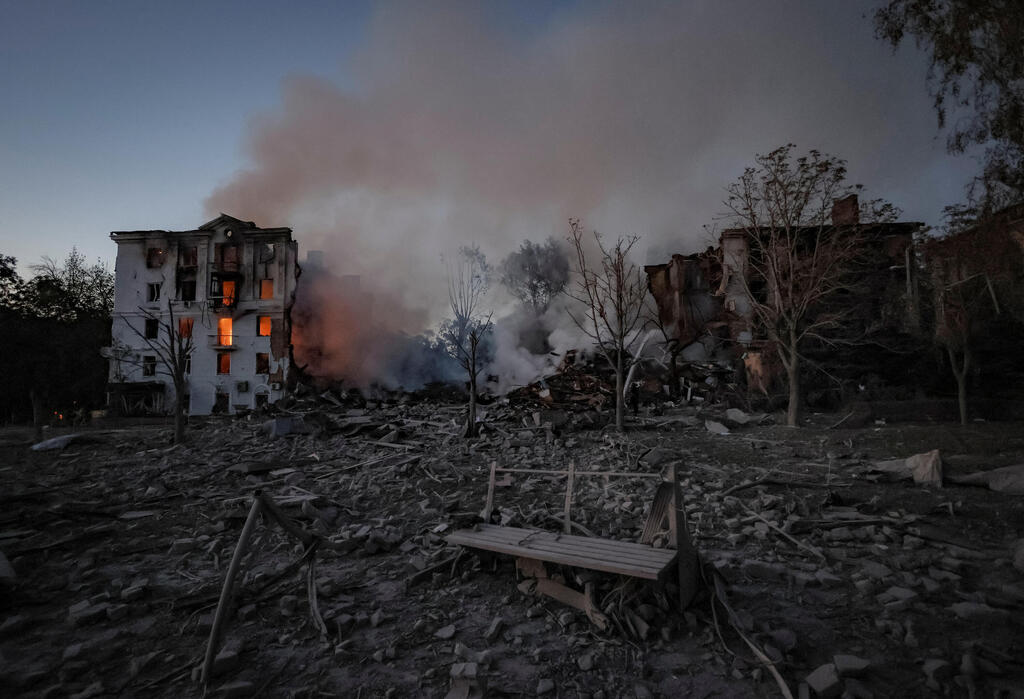
Firefighters work among the rubble of buildings destroyed in a Russian missile strike in Kramatorsk, Ukraine, Aug. 1, 2025
(Photo: REUTERS/Yevhen Titov)
Perhaps the most potent element of their resistance, however, is not found on the battlefield or in energy grids, but in the successful societal models they are building. While Russia pivots to a permanent war economy, the Baltics are fostering future-proof societies built on deep-tech innovation, with recent breakthroughs in fields from gene therapy to space technology.
This has yielded a powerful social victory: for the first time in three decades, Lithuania’s population is growing, and it was recently named the world’s happiest country for people under 30. This starkly contrasts with Russia’s demographic decline and demonstrates a successful, attractive alternative that directly refutes the Kremlin’s worldview.
Get the Ynetnews app on your smartphone: Google Play: https://bit.ly/4eJ37pE | Apple App Store: https://bit.ly/3ZL7iNv
What, then, is the cumulative effect of the Baltic position? It has arguably shaped the conflict in a way that makes any Russian battlefield retreat a significant personal humiliation for its president, whose legitimacy is entwined with the war’s outcome. This raises a critical question: has the conflict evolved to a degree where Vladimir Putin himself has become the obstacle to its resolution?
We can observe recent shifts in Moscow and wonder about their significance. The appointment of career economist Andrei Belousov as defense minister, replacing a career general, likely signals a pivot from planning for military victory to managing a permanent war economy.
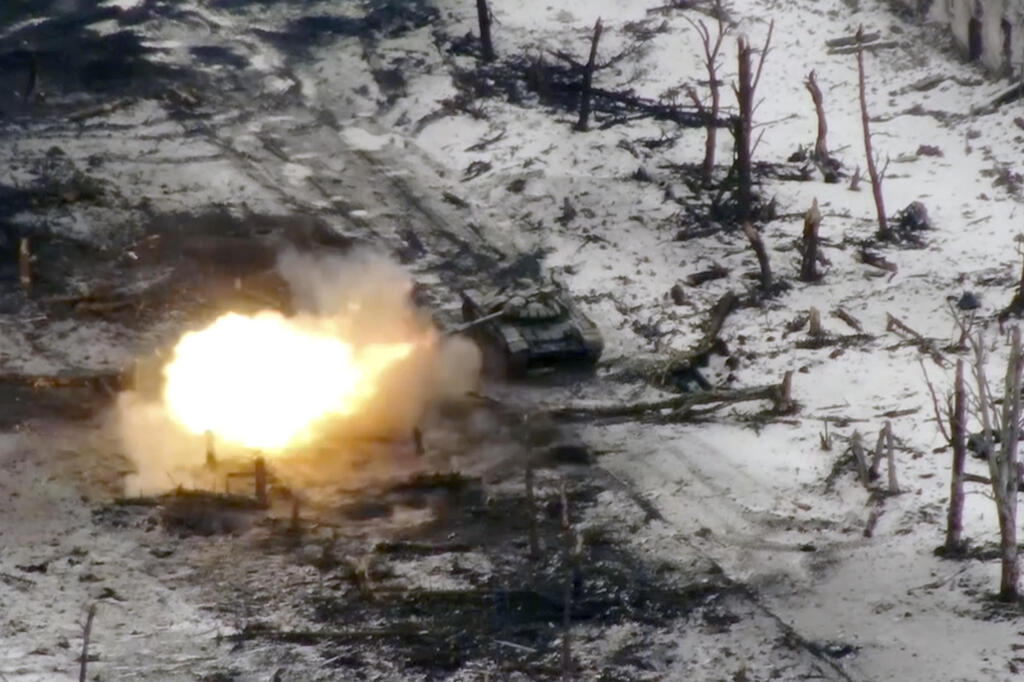
A Russian tank fires in the city of Marinka in Ukraine’s Donetsk region during fighting on Feb. 19, 2025, in this drone image
(Photo: AP)
At the same time, the Kremlin’s actions toward the Baltics seem less like diplomatic pressure and more like desperate reactions. The elimination of border buoys on the Narva River with Estonia and the widespread jamming of GPS signals over the Baltic Sea do not indicate the actions of a power operating from a position of strength, but rather from an aggressor testing the limits in a predicament of its own making.
This leads to a most critical question, one that touches the pillars of the Russian regime. For the powerful Moscow elites, could a perpetual war become a greater threat than the leader who initiated it? After all, sanctions and international isolation have severed their access to Western capital and luxury, breaking a promise of the Putin era. As Latvian President Edgars Rinkēvičs has observed, Russia might only change its course when the “internal stability of the regime is threatened.”
This brings the core dilemma into sharp focus: could a point be reached where the Russian elite view Putin not as their guarantor, but as the primary risk to their own interests? Over a century ago, Trotsky’s “no war, no peace” was a deliberate, high-stakes gambit that ultimately failed. Today, we see a similar consensus emerging, not from a strategic plan, but from the principled defiance of Russia’s neighbors.
The ultimate question, then, may not be one of external plans, but of internal calculus. Could the actions of the Baltic states inadvertently create a scenario where, for the sake of the regime’s own survival, “Moscow is silent” once more—this time, for its leader?
- Jeshurun Hight is an academic intern at the Moshe Dayan Center and a graduate student in government at Reichman University; he studied diplomacy at the University of Oxford.