

Israel's citizens did everything they could. They turned out to vote in huge numbers. They persuaded others, volunteered, boarded flights, drove people to polling stations and went to extraordinary lengths to make their voices heard. Election Day is a moment of maximum expectations, when every doubt, dream, effort and fear comes together. That stage, with all the adrenaline and hope it brings, is now over. As the results come into focus, it is time to work within the rigid political reality Israeli voters have created.
This is not an ideal moment. By definition, it is a disappointing and incomplete one. Voters arrive at the ballot box with all their hopes and aspirations, but governments are formed from the best options available. An essential, almost tragic part of that process is political cooperation between bitter rivals who were running vicious campaigns against one another just days ago. It is a moment that demands serious moral reflection: Which principles are worth defending at any cost, and where is compromise not only possible but necessary?
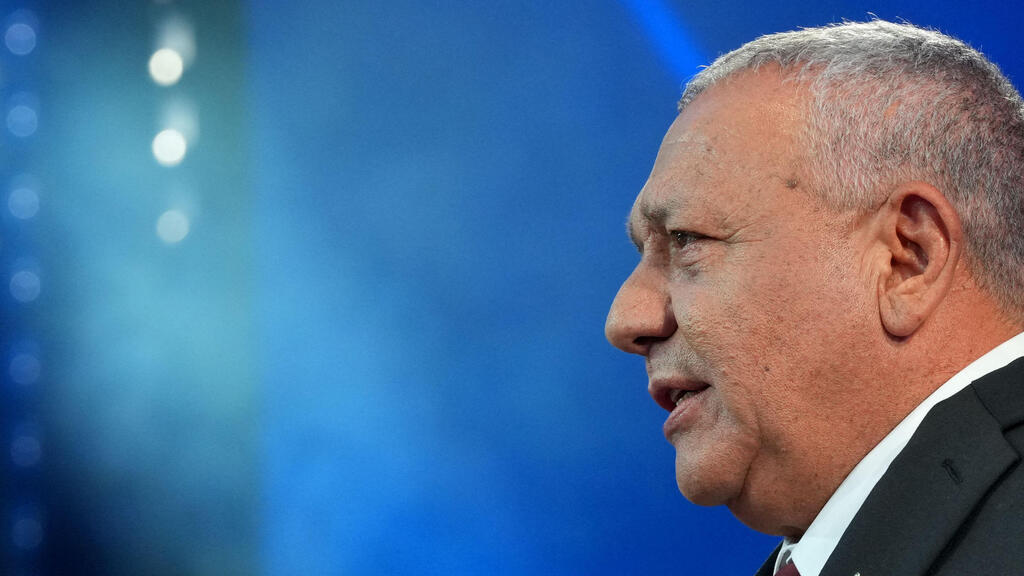
Israel's election produced no winner, but there is a way forward
(Photo: Maya Levin/ AFP)
Israeli society is trapped in echo chambers, another curse of political tribalism. Anyone whose world extends no further than their Instagram feed, or who has become addicted to a single television channel, is captive to the illusion that a minority government or another election could provide a magical solution. But the actual results reveal reality in all its complexity. Love it or hate it, this is what we have. And this is what we must, and can, work with.
Another election would accomplish nothing beyond political paralysis, billions in wasted public money and the continuation of Israel's national bleeding. Even if another round were to produce a narrow, technical majority of 61 seats for one side, the numbers would not heal the fundamental reality that Israel's Zionist majority has been bitterly divided since 2019.
Countless elections have failed to change that. The previous all-right-wing government demonstrated the limits of its abilities. Even the October 7 massacre and a prolonged, bloody regional war failed to bridge the divide. We can repeat the same experiment again and again, but the outcome will remain the same. Many bear responsibility for this failure, with Benjamin Netanyahu's conduct foremost among them. But settling accounts with the past is not a roadmap for the future. This is the reality we must confront.
That does not mean the situation is predetermined. Even if the divisions remain, the public has certainly shifted. People have changed their minds. The outgoing governing coalition has suffered substantial electoral losses. That matters enormously. There is no majority, or anything approaching one, for another exclusively right-wing government marked by glaring incompetence, exemptions from military service or an assault on the judiciary. That remains true regardless of how hard the coalition tries to portray the election as a victory.
A closer examination of the results reveals a shift toward the political center, even within the traditional blocs themselves. The ultra-Orthodox Shas party collapsed from 11 seats to six, attracting 93,000 fewer votes than in 2022. A significant part of that decline occurred in Israel's geographic and socioeconomic periphery. This is particularly important because Shas had previously been uniquely capable of drawing voters from the Zionist political camp into a party traditionally identified with the non-Zionist ultra-Orthodox bloc. This time, many of those traditional Jewish voters did not rally behind it.
Bezalel Smotrich and his policies fared little better. Without his alliance with Moshe Feiglin's Zehut party, he would have been hovering near the electoral threshold. Meanwhile, although virtually every poll had predicted a double-digit number of seats for Itamar Ben-Gvir, his party finished with just seven. Apparently, it is easier to sit in opposition than to deliver results in government.
Measured by vote share, the figures are even more striking. In the 2022 election, Religious Zionism, Ben-Gvir's faction and the Noam party together received 10.8% of the vote. This time, the same political camp, even with the addition of Feiglin and the supposed electoral magnet that is Tally Gotliv, secured just 10.5%. The voters have spoken.
The outgoing coalition is broadcasting a message of victory because its expectations were relatively low to begin with. But its leaders know perfectly well that they have nothing resembling a parliamentary majority. The new Knesset could also advance consequential measures against Netanyahu and his government. That gives his opponents significant leverage.
Ultimately, whichever way one looks at it, a unity government is a necessity. Not because of grand dreams, not out of prejudice against Arab political participation, and certainly not because Netanyahu has somehow abandoned his bad habits. A unity government is essential because only such a coalition can establish a governing program that reflects the common ground shared by most Israelis.
Sustained public pressure must push the leaders of the anti-Netanyahu camp to recognize the gravity of the moment and help Netanyahu break free of his traditional political partners while holding him to his word. Israel's growing diplomatic isolation, security challenges on multiple fronts, the reconstruction of communities in the north and south, soaring inflation, the crisis in education and the urgent dispute over military conscription will only worsen under a paralyzed, unaccountable caretaker government. Without a functioning government that enjoys broad public legitimacy, Israel simply will not be able to endure.
Given the cohesion of the right-wing bloc around Netanyahu, the opposition enters any such negotiations from a vulnerable position. That is precisely why Avigdor Lieberman, Naftali Bennett and Gadi Eisenkot must set aside their personal rivalries, stand together as a united political force and establish nonnegotiable conditions for joining such a government. These must include an effective and equitable military draft law, an emergency plan to rebuild the education system and decisive action against the separate systems that allow certain sectors of Israeli society to operate according to their own rules.
Netanyahu has proved countless times that he is an unreliable political partner. But given the current balance of power, alongside his legal and political circumstances, he too will have to choose between yielding to political blackmail and entering a partnership that might allow him to salvage something of his legacy.
There is another important development in this election. Israeli democracy recorded an impressive achievement this week when Arab citizens exercised their democratic power to deliver a clear and painful message. It is a message that must be heard. After two years in which Arab communities were abandoned to rampant crime, treated with contempt and subjected to daily political incitement, Arab voters turned out in large numbers and made it clear that they would no longer accept being invisible.
Yet the fantasy entertained by parts of the center-left, that "the Arabs will save the Jews from their troubles," is wishful thinking without a realistic political plan. That is true both practically and morally. A Jewish-led minority government dependent on outside parliamentary support from Ra'am and the Hadash-Ta'al faction of the Joint List would not survive even a few weeks in the middle of a complicated regional military confrontation. Its inevitable collapse would immediately send the political pendulum swinging in the opposite direction. The next election could then produce a clear far-right majority. That is a risk Israel cannot afford to take.
On a moral level, the mistake is just as serious. Treating Ra'am and the Joint List as interchangeable is every bit as racist as categorically rejecting the possibility of Arab participation in Israeli governments.
Israelis endlessly discuss the differences among Jewish communities, yet somehow Arab citizens have become little more than a political label. Both Netanyahu and the Democrats party, despite their opposing agendas, have an interest in blurring the distinctions between Ra'am and the Joint List and presenting Arab political representatives as a single, undifferentiated group.
Netanyahu uses Arab society to frighten voters and discredit his political opponents. The Democrats, meanwhile, seek to use Arab political power to remove Netanyahu, presenting Arab lawmakers as though they were all liberal representatives simply waiting to march together toward a shared political future. It is time to move beyond these simplistic assumptions and begin doing the serious work of understanding the people involved.
First, we must stop speaking about "the Arabs" as though they were a single political and social entity. After nearly 80 years of statehood, it is time to understand the different forces operating within this enormous and diverse community, the distinctions between them and what they actually want.
Jewish Israelis know how to identify every Jewish group, subgroup and subgroup within a subgroup, along with their particular dreams and challenges. Every individual is treated as a unique snowflake, and every 10,000 people constitute a community deserving their own political classification. Yet Arab society is no less diverse than Jewish society. Understanding it requires serious engagement with its internal differences and with the political frameworks capable of representing them. I have written extensively before about the courage demonstrated by Ra'am leader Mansour Abbas in this regard.
This is an urgent task for both the Israeli right and left, but not for politicians alone. The Israeli media, which has largely failed to engage with this issue, must begin bringing these voices into the national conversation. Education and the study of Arabic can help bridge the divide of mutual unfamiliarity, while culture can provide a more nuanced understanding of the stories and experiences within Arab society.
Arab citizens of Israel know Jewish Israeli society extremely well. We, however, have never made a comparable effort to understand them. Treating this population as a single, homogeneous bloc, regardless of which side of the political spectrum does so, is not only racist. It is also politically foolish.
Amid an ongoing war, the trauma of the October 7 massacre and the years of Ben-Gvir's influence over public security, distrust has reached extraordinary levels. Nevertheless, the question of what Israel does for and with its Arab citizens is fundamental to the country's future, even if the results of that engagement cannot be realized in the current political cycle.
It is only a matter of time before some political camp learns how to translate genuine partnership into meaningful political action. In a normal world, Netanyahu himself would appoint former deputy public security minister Yoav Segalovitz as national security minister in response to the outcry from a community representing roughly a quarter of Israel's citizens. Unfortunately, we do not live in a normal world.
Israel is not alone in experiencing political upheaval. Democracies across the Western world are confronting crises of democratic governance, populist leadership and the rise of far-right movements. Sometimes there is little comfort in knowing that others share our troubles. At other times, it provides much-needed context and perspective.
Israel's fully right-wing government has been shown the red card. Bringing it back a year from now in an even more extreme form would be folly. Sometimes stability, reconstruction and the basic ability to govern are worth infinitely more than the fantasy of total victory.