


In the hours when we can barely breathe, following every update with trembling hands, it feels almost impossible to talk about anything else.
Yet precisely in these moments - when public grief and relief choke our throats at once (and still there’s no word in any language for that feeling when hostages return) - we can no longer pretend the personal and political are separate.
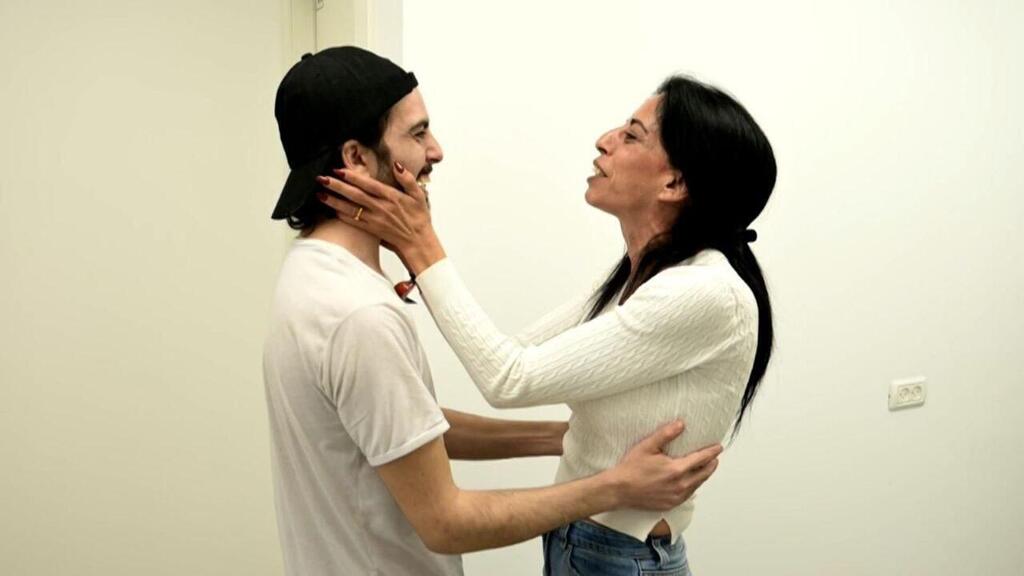
“Being a mother” became political the instant women had to fight not only Hamas but also their own government for their children. Every parent of every hostage is political now- like it or not.
Two mothers, Einav Zangauker and Iris Haim, became symbols without choosing to. Each simply tried, in her own way, to survive the unbearable. Neither sought the spotlight; it found them - because when the state fails its most basic duty, maternal love becomes the most political act there is.
Einav Zangauker: When your political identity dies with your son’s kidnapping
Einav Zangauker was a lifelong right-wing voter, a devoted supporter of Benjamin Netanyahu. When her son Matan was kidnapped from Kibbutz Nir Oz on October 7, she stayed silent for two months, trusting “Mr. Security” to bring him home. But faith dies quickly when your child is in a tunnel.
Believing in a leader is easy when your child isn’t being used as a bargaining chip. What transformed Einav was realizing that those who truly stood by her were the very people she had been taught to distrust - the judicial-reform protesters. Ideology evaporates fast when you discover who actually shows up while your child is dying in captivity.

Prime Minister Benjamin Netanyahu
(Photo: GPO)
“I once believed there was a contract between the state and its citizens,” she said, “but that illusion shattered on October 7. Parents don’t put a price on their children’s lives - and neither should the country.”
But she learned the government does exactly that. Apparently, the social contract had fine print, unread until too late.
When fellow hostage Edan Alexander was about to be released, Einav said, “If Matan is left alone in the tunnel, Netanyahu is deciding to murder my boy. Instead of releasing all of the hostages, he’s become my private angel of death.”
Later, at Hostages Square, she declared, “Instead of being a great leader, he chooses to be an angel of death. Netanyahu chose Ben-Gvir and Smotrich and his coalition’s stability over our families.”
Since February 2024, Einav has led demonstrations, been attacked by passersby, kicked by police; her daughter Natalie was hospitalized after an assault.
She never wanted to be political. She wanted to be a mother whose son came home. But the government made those two things incompatible. So she became an activist by default - probably not what she envisioned when she voted Likud.
Iris Haim: When forgiveness becomes the most radical act
Yotam Haim, 28, was kidnapped from Kibbutz Kfar Aza on October 7. After sixty-five days in captivity, he escaped with two others. They hid for five days, writing “Help 3 hostages” on scraps of fabric using leftover food.
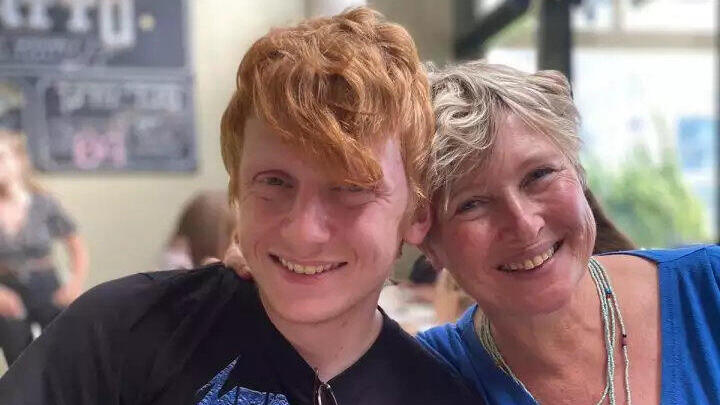
Iris and Matan Haim
(Photo: Courtesy of the family)
When they finally approached IDF soldiers - shirtless, waving a white flag - the soldiers, so traumatized by everything, believed anyone in the area was a threat and opened fire. All three were killed.
Yotam survived Hamas, captivity and escape. He did everything right - wrote SOS messages, waved a white flag, followed every protocol. And then he was killed by the army meant to save him. If there’s a crueler irony, I don’t want to know it.
Days later, his mother Iris recorded a message for the soldiers who killed him: “I love you very much, and I hug you from afar. I know everything that happened is absolutely not your fault, and nobody’s fault except Hamas.” She added, “I wasn’t angry at the IDF for even a minute.” This is not denial. It’s an emotional clarity that makes most of us look like toddlers in tantrums.
“I don’t want to give up these emotions,” she explained. “I want to feel Yotam and the pain.” She feels everything - and still refuses to let pain mutate into blame.
Iris founded Yotam’s Life, a safe space for people struggling with mental health issues like her son. In perhaps the most intimate act of defiance, she had Yotam’s sperm harvested within 24 hours of his death and is fighting in court for the right to have a grandchild using it. “Something can be born out of everything - if you want it to,” she said.

Yotam Haim
(Photo: Courtesy of the family)
Where Einav channels maternal love into political fury, Iris channels hers into radical compassion - the refusal to let death have the final word. Both are resistance. Both are political. Neither woman ever imagined she’d become a case study in surviving the unsurvivable.
When the body votes before the mind decides
On October 7, I understood something about these mothers, though I couldn’t name it then. When my greatest fear materialized - that I couldn’t keep my children safe, that love isn’t enough - my menstrual cycle stopped. And it never came back.
My body reacted before my mind could. Even my ovaries, it turns out, are political activists. They took one look at the situation and said, “Game Over.”
It isn’t just biology; it’s protest. A somatic form of conscientious objection. My body saying, "Not in this world. Not under this leadership." Apparently, my ovaries read the room better than most politicians.
Across Israel, therapists report women with disrupted cycles, sudden menopause and fertility struggles. Our bodies staging a collective protest against abandonment. Reproductive systems showing more integrity than parliaments. Because how do you bring children into a world where the basic promise - we will keep you safe - has been shattered?
My uterus seems to have decided it’s not renting out space until the landlord, the state, fixes the security system.
The day after: Feelings we don’t yet have words for
We talk now about “the day after.” We hold our breath as hostages return. We feel public grief and relief intertwined - crying and cheering at once, celebrating some families’ reunions while others still wait, or worse.

Einav Zangauker
(Photo: Ziv Koren)
There should be a word for it. Maybe the Germans already have one - Freudenangstschmerz - that mash of joy, terror, guilt and grief when someone else’s relief deepens your own despair.
When hostages were released, Iris asked people to rejoice quietly: “Celebrate within your homes, not in the city squares.” She knew that jubilation without awareness is another kind of cruelty.
The day after isn’t one day - it’s thousands. Each family lives in its own timeline: Einav still waiting for Matan; Iris building something from loss. And the rest of us - unsure whether we’re allowed to feel happy, sad, both or neither.
My body is still waiting too, still on strike, refusing to cooperate with a world that’s unsafe for children. My ovaries remain unconvinced by political promises. They’re waiting for policy changes, not press conferences.
The day after won’t erase what our bodies know. Not mine, not Einav’s, not Iris’s. The question is whether we can transform that knowledge into something other than trauma - into accountability, into change, into a society that learns from catastrophe instead of issuing statements about it.
Where do we go from here?
Soldiers found a note from Matan Zangauker in a Gaza tunnel - written in Hebrew, English and Arabic—alongside bottles of his urine, later identified by DNA.
That’s what motherhood looks like when it becomes political: celebrating your son’s urine as proof of life. When the bar sinks that low, you take victories where you can.
What will motherhood look like the day after? Will mothers still need to become activists to protect their children? Will forgiveness remain a political statement? Will our bodies keep bearing witness to state failure? Will my ovaries ever come back from exile?
Einav, now on the BBC’s 100 Most Influential Women list and recipient of the 2024 Truth to Power award, represents every parent who refused silence. Awards for being a mother whose son is still in hell - there’s no category for that. “Best Supporting Role in a National Reality Tragedy” doesn’t fit on a trophy.
But symbols don’t get to be human. “I live from one day to the next,” Iris said. “I don’t think long-term.” That’s the truth behind every icon: women surviving moment by moment because there’s no alternative.
The question facing Israel isn’t only about governance; it’s whether we can build a country where mothers don’t have to become activists or saints just to be heard. Where children aren’t political pawns but people. Where the social contract is rewritten. Where ovaries can go back to being ovaries instead of protest organs.
 Hadar Galron Photo: Roni Tarnovsky
Our bodies already know the answer: disrupted cycles, chronic anxiety, the inability to imagine futures. The body politic is sick because the political body failed. We are all symptoms of the same dysfunction.
Einav’s rage and Iris’s forgiveness are both forms of love - and both indictments of a system that values power over life. They show that the most radical political act can be simply refusing to give up: whether by protesting, forgiving or creating grandchildren from frozen sperm.
My ovaries have standards now. They’re waiting - like Einav, like every hostage family - to see if the day after brings real change or just new faces on the same betrayal.
Iris said it best, “Something can be born out of everything - if you want it to.”
So the question remains: Do we? Do we truly want to birth a different country from these ashes - one that honors both rage and forgiveness, both mothers and children, both grief and life?
The body knows. The mothers know. Even the ovaries know. We’re still holding our breath, waiting for the day after to bring something worth breathing for. But hope isn’t enough. The question is - what will we do with it?
And seriously - can someone please invent a word for that grief-relief-terror-joy-guilt feeling? We need it.