

History offers a chilling reminder of how violence can overshadow an Israeli election. In 1988, just 36 hours before the vote for the 12th Knesset, Rachel Weiss and her three children were murdered in a horrific terrorist attack when firebombs were thrown at a bus traveling toward Jerusalem, north of Jericho.
Now, with Israel preparing to elect its 26th Knesset on October 27, questions are once again being raised about whether the vote will take place as scheduled, given the tensions on nearly every front surrounding the country.
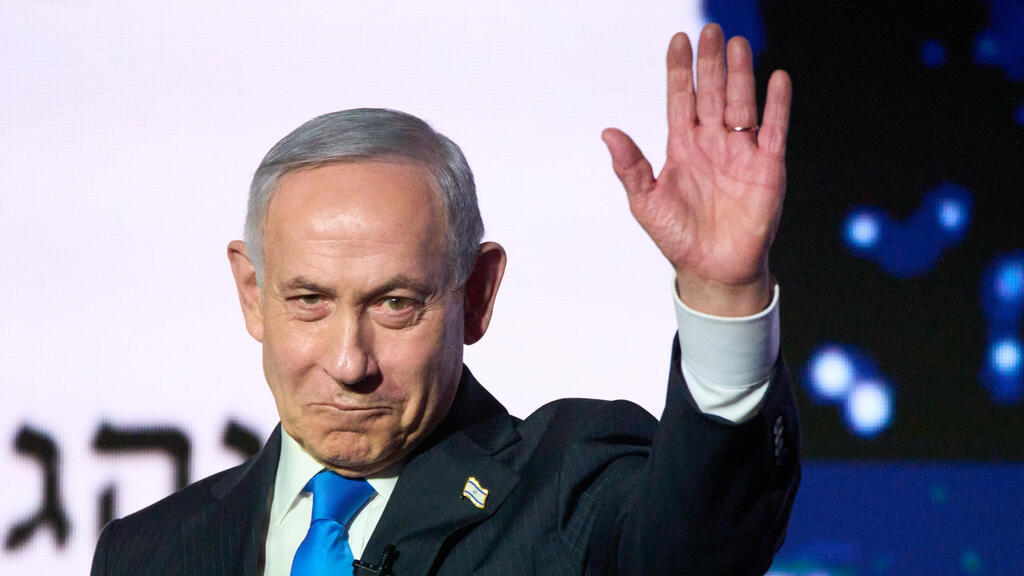
Allow me to offer some reassurance. As far as I know, U.S. President Donald Trump will not allow Prime Minister Benjamin Netanyahu to initiate military moves that could drag the United States into another confrontation with Iran's clerical regime or trigger fresh fighting elsewhere in the region.
But consider what might happen if Netanyahu remains in power. I can almost imagine the first Cabinet meeting after the election, with the prime minister asking his ministers to approve two resolutions. The first: that the Earth is flat. The second: that the Israel Defense Forces must finish the job against Iran, in Gaza, Lebanon and Syria.
The ministers, many of them eagerly awaiting their new portfolios, would probably compete to praise Netanyahu as "the greatest leader of our generation."
But I suggest we put that scenario aside. I do not believe it will happen. I am convinced Netanyahu will leave office after October 27, handing his successor a country that needs far more than repairs. It needs to be freed from a crushing burden of political constraints, institutional failures and governance that has fallen below any reasonable standard.
For a glimpse of the political culture I hope we can leave behind, consider the case of Ofer Winter, a former senior Israeli military commander who has found himself at odds with Netanyahu and his political allies. Winter is now complaining that they are treating him in ways he recognizes from stories about the mafia.
To that, I have only one response: Welcome to the club.
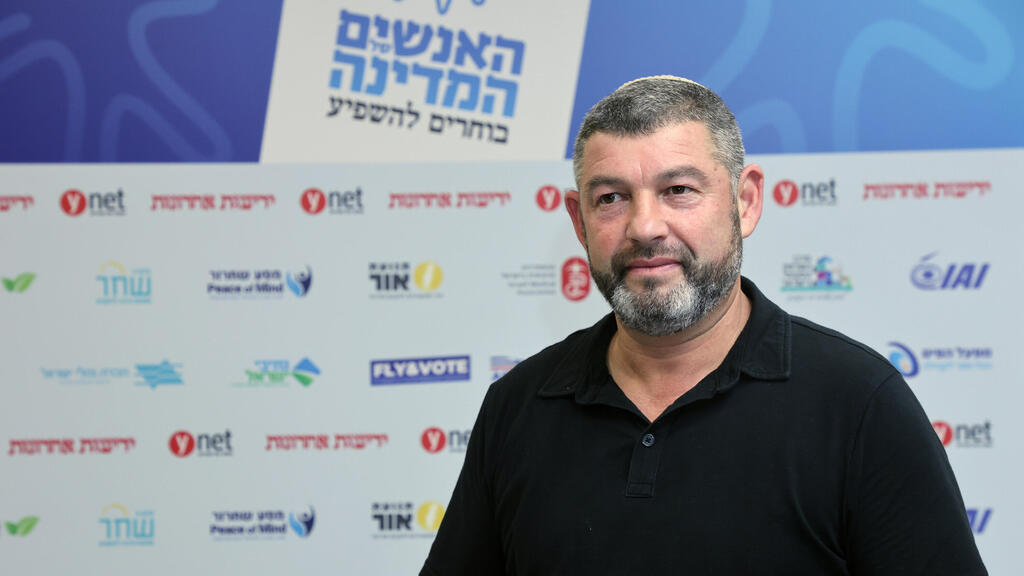
Ofer Winter
(Photo: Reyan Preuss)
Winter has now joined the long list of people targeted by what I regard as the political smear machine that has become a hallmark of Netanyahu's treatment of his opponents.
If Winter wants to understand just how far such attacks can go, I suggest he speak to Gideon Sa'ar, the veteran Israeli politician who has experienced firsthand what Netanyahu's political camp is capable of doing to a rival's family.
And the ugliness of this political culture extends far beyond the treatment of individual rivals. It has become increasingly difficult even to engage in a meaningful conversation across Israel's political and ideological divides.
In The Human Crisis, a collection of reflections on World War II and Nazism, French philosopher Albert Camus explored one of humanity's deepest problems: the inability to persuade another person.
We like to believe, Camus argued, that if we approach someone with humanity, we will receive a humane response. Yet experience teaches us that some people simply cannot be persuaded.
In the final stretch of this election campaign, we have been given another ugly reminder of just how deeply divided Israeli society has become.
Aryeh Deri, leader of the ultra-Orthodox Shas party, made deeply offensive remarks about the sexual orientation of Knesset Speaker Amir Ohana, who is openly gay. Deri suggested that Ohana's sexual orientation was the reason the governing coalition had been denied siyata dishmaya, or divine assistance, in its efforts to secure military draft exemptions for ultra-Orthodox yeshiva students.
It is the sort of rhetoric that reveals the ugliest side of Israeli politics. I can only hope that when the election is finally behind us, we will emerge from it a little less scarred.
Fortunately, there are still moments that remind me of another Israel, one that remains creative, vibrant and capable of looking beyond the bitterness of politics.
Last Tuesday, not a single seat was left empty at Tel Aviv's main concert hall, where an event called PechaKucha brought together artists and performers in a format originating in Japan. Each participant had exactly six minutes and 40 seconds to present their work.
It was an extraordinary evening, one that left me with a renewed sense of hope. Despite everything this country has been through, we are still living in a remarkably fertile and exciting period of artistic creativity.
One of the evening's highlights came from Oli Danon and Yonatan Blumenfeld, whose wonderfully inventive musical satire, Songs and Villains: Guilty of Song, featured giant images of Mao Zedong, Joseph Stalin, Ali Khamenei and Saddam Hussein.
Among the songs they performed was one addressed to Saddam Hussein. A few lines have stayed with me:
"Let go, brother, let go. So many years have passed. We change. You're allowed to live, to be happy, to love. Let go, brother. Let go and move on."
And as I listened, I found myself quietly wondering whether perhaps we, too, might soon be approaching our own long-awaited release, a chance to finally break free from everything we have endured.
Of course, anyone who sees a connection between those words and what has been happening in Israel does so at their own risk.
That thought of liberation brings me back to Leonard Cohen, whose Book of Longing, as I wrote last week, brought together thoughts and reflections accumulated over many years.
In 1973, when Cohen joined Israeli military units fighting in the Sinai during the Yom Kippur War, he wrote:
"The flood is coming / The waters are rising / It will cross valleys / It will strike rooftops / The body will drown / And the soul will blossom / I have written all this / But none of it is proven."
I can only hope I'm right.