

In 1919, in the Hall of Mirrors at the Palace of Versailles, an agreement was signed that was meant to seal the horrors of war. In practice, it planted the seeds of disaster that helped lead to World War II.
More than a century later, U.S. President Donald Trump, seemingly without any deep historical awareness, dares to sign an agreement in the same symbolic space with a vengeful regime of ayatollahs.
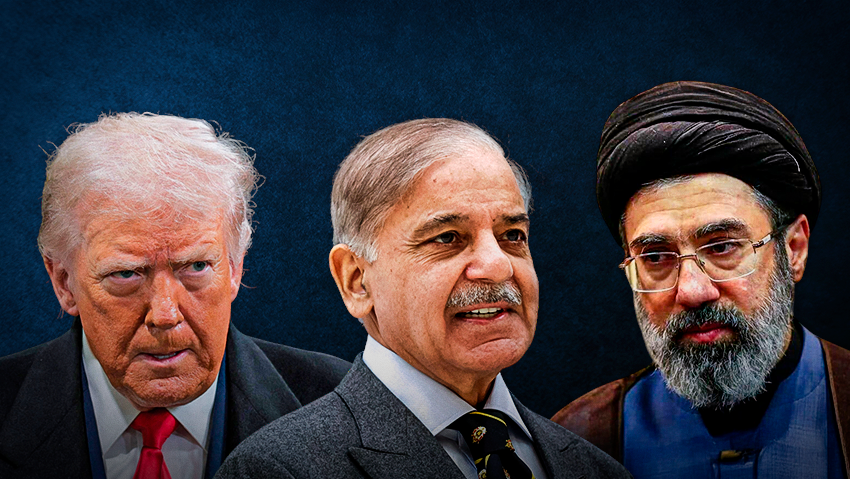
The Iran deal built on dangerous illusions
(Photo: Anna Moneymaker / AFP, ATTA KENARE / AFP, Sputnik/Alexander Kazakov/Pool via REUTERS)
Then as now, behind the ink, or more precisely behind the digital signature, lie gaps, illusions and political pressures that could make the memorandum of understanding dangerously fragile. It may be signed with a click, but it could accelerate negative regional trends and transformations ignited by the war in the Gulf.
The positive point in the process lies in Iran’s apparent willingness to dilute the enriched uranium it holds, although the mechanism that would make that possible has not yet been presented. This is also an indication that the memorandum is not an arms-control agreement, but rather a bilateral framework based, God help us, on the goodwill of the ayatollahs.
Unlike former President Barack Obama’s 2015 JCPOA, which froze Iran’s nuclear program, the memorandum does not address the role of the International Atomic Energy Agency. That is a troubling point given Iran’s bargaining power.
Without tools, the document remains more a political declaration than an effective regulatory framework that could serve as a real barrier to nuclear violations. The fact that the thin memorandum looks more like an outline for a Manhattan real estate deal reflects a certain professional gap in the president’s working environment, similar to what is taking place in the aquarium in Jerusalem, as well as a difficulty in dealing with complex, long-term challenges in a realistic, controlled and procedural way.
The JCPOA, which absorbed torrents of venom in Israel and led Prime Minister Benjamin Netanyahu to improperly undermine a sitting president before Congress, led among other things to the removal of the overwhelming majority of Iran’s enriched uranium at various levels until 2030.
That gave Israel breathing space to reorganize and redirect security attention to other arenas. On the eve of the U.S. withdrawal from the deal, many in the intelligence community, including the writer of these lines, opposed the move out of fear that the genie would be let out of the bottle.
But the political vector was stronger, as was the fact that the defense establishment became increasingly enslaved to new narratives that may have been shiny, but did not deliver the desired result.
It must be said honestly: If a future agreement struggles to distance Iran significantly from a nuclear weapon, then the U.S. withdrawal from the agreement in 2017, encouraged by Netanyahu, may amount to one of the gravest diplomatic misconceptions in our history.
Unlike the intelligence failures of 1973 and 2023, the responsibility for the strategic and diplomatic spiral into which Israel and the United States fell after leaving the nuclear agreement now rests entirely with Netanyahu and Trump.
 Photo: Avi KaloPhoto: Aloni Mor
The fact that Trump is running away from the announcement, placing his vice president at the front of the agreement, distancing Israel from the negotiations, belittling the ballistic threat and absorbing harsh criticism from his Republican colleagues in Congress over the memorandum does not bode well. It shows that the U.S. entry angle into negotiations with Iran is problematic and dangerous.
This is another bleak allegory, and probably also the jarring final chord of Netanyahu’s legacy, this time around the issue he repeatedly defined as his “life’s mission.”
A capricious decision-making process driven by personal and political considerations, failed management and the absence of balance between the military tool and the diplomatic component have eroded Israel’s standing in the United States and distanced us from a position of influence on the most fateful issue for our existence.
It is a grave series of failures that may seal the Netanyahu era on the road to the greatest danger of all: a nuclear Iran.