

American Jews and Israelis speak often about the ties that bind us. We share a history, a people and a future, and particularly over the past several years, we have repeatedly demonstrated how deeply we care about one another. Yet for all that connects us, there is an uncomfortable reality we do not acknowledge often enough: too many Israelis and American Jews simply do not know one another very well.
American Jews may learn about Israel, follow events there and feel deeply connected to the Jewish state without having meaningful relationships with Israelis. The same is true in reverse. Many Israelis have little firsthand understanding of American Jewish life, including the diversity of religious practice or the experience of maintaining a Jewish identity as a minority.
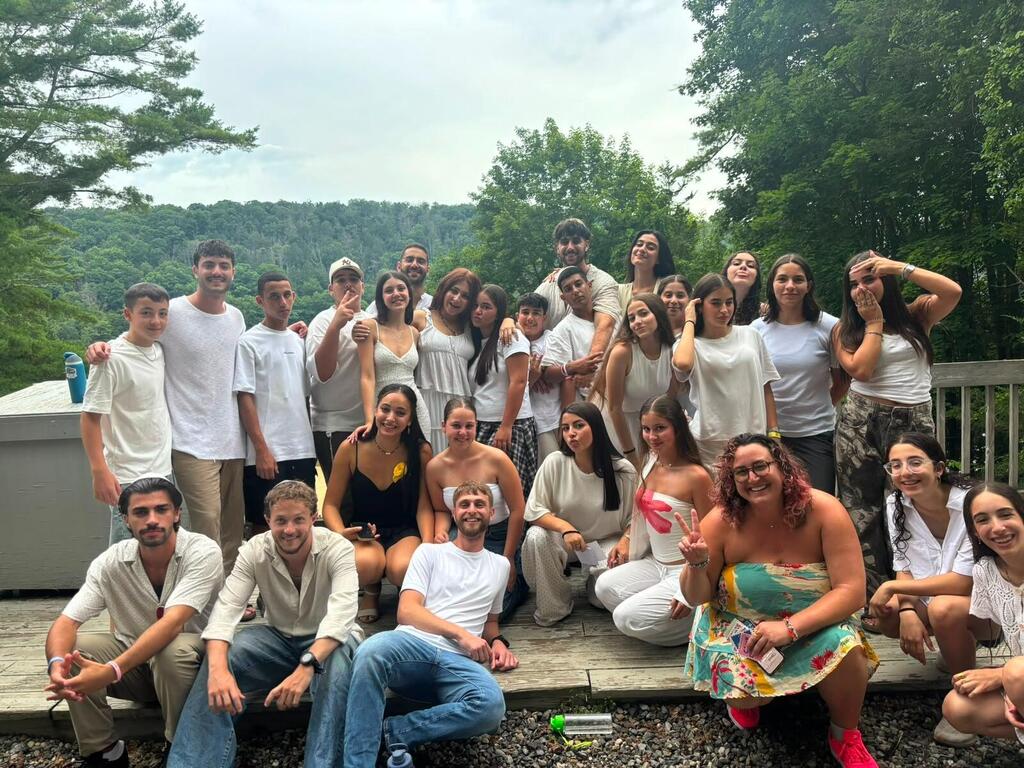
Jewish summer camp Ramah in the Berkshires
(Photo: Ramah Berkshires)
I was reminded of how important bridging this divide is recently while visiting Jewish summer camps in the United States, including Camp Ramah in the Berkshires and URJ Eisner Camp, where Israeli teenagers were participating in The Jewish Agency for Israel's Campers2Gether program.
Created in the aftermath of October 7 to provide Israeli teenagers affected by war with an opportunity for respite at Jewish summer camps abroad, the program also creates something with potentially lasting importance: the opportunity for Israeli and Jewish teenagers around the world to spend meaningful time together as peers.
Many of these teens have spent the past several years amid war and an uncertainty that few young people should have to experience. Camp gives them a chance to leave some of that behind for a few weeks while being welcomed by Jewish peers who may live thousands of miles away but care deeply about them and what they have been through.
For decades, The Jewish Agency's shlichim (emissaries) have built similar bridges throughout the Jewish world. I know that program particularly well, having spent years closely involved with it. At summer camps, shlichim become counselors, educators and role models, bringing Israel into the everyday lives of young Jews while gaining a deeper understanding of Jewish life outside Israel.
Campers2Gether creates a different kind of encounter. These teenagers are not trained emissaries. Many have never traveled abroad, some speak limited English, and they have not been prepared to explain or represent Israel. They arrive simply as teenagers meeting other teenagers.
An American Jewish teenager can learn about Israel in Hebrew school, sing Israeli songs at camp and celebrate Israeli culture. Those experiences matter, but they are different from developing a friendship with an Israeli of the same age. Israel then becomes connected to someone who listens to the same music, enjoys the same sports and, despite growing up thousands of miles away under very different circumstances, is navigating many of the same experiences of adolescence.
The learning goes in the other direction as well. Israeli teenagers can grow up with a limited understanding of the diversity of Jewish life outside Israel. For some of the teens I met, encountering Conservative and Reform Jewish practice in an American camp setting was genuinely unfamiliar. Practices commonplace in American Jewish life could initially be surprising because they were so different from the Judaism these teenagers knew in Israel.
That experience illustrates why these encounters matter. It is one thing to have an abstract conception of "Reform Jews," "American Jews" or "Israelis." It is another to live alongside someone, eat meals together, play sports together and gradually understand how that person experiences his or her Jewish identity. Familiarity does not erase differences, but it makes it much harder to reduce another community to a category or stereotype.
This is particularly important when so much of what young people learn about one another comes through social media. Israelis and American Jews are constantly exposed to sweeping claims about what the other community thinks, believes or values, often stripped of context and amplified because they are provocative. Since October 7, Israelis and American Jews have lived through many of the same historic events, but often from very different vantage points and with different fears and priorities.
No communications strategy can correct every misleading post or simplistic characterization a young person will encounter. Personal experience, however, can provide a kind of vaccination against that environment. When an American teenager encounters stories about Israel online, Israel is no longer a faceless place or an abstract idea. It is a country made up of actual people they know and care about, and that personal connection shapes how they understand what they see and hear. Likewise, when an Israeli teenager hears a sweeping judgment about American Jews or a particular Jewish denomination, there is now a lived experience against which to measure it.
During my visit to the camps, the Israeli campers had only recently arrived, so I was seeing these relationships at their beginning. Yet even then, I saw teenagers participating together in camp activities and already speaking about one another as friends.
I was also struck by the extraordinary dedication and professionalism of The Jewish Agency staff in Israel and on the ground at the camps, who worked tirelessly to ensure that every participant felt supported and had a meaningful experience. Seeing the care and commitment that went into making these encounters possible was remarkable. Over time, those initial encounters have the opportunity to deepen into relationships that can continue after everyone returns home.
These encounters help address a knowledge gap on both sides. American campers leave with a more textured understanding of Israelis and Israeli society, while Israeli campers return home with firsthand exposure to forms of Jewish identity and community life they may rarely encounter in Israel. Shlichim, too, bring those perspectives home, carrying with them a deeper understanding of Diaspora Jewish life.
The Jewish world has rightly invested enormous energy in strengthening the relationship between Israel and world Jewry through education, travel, advocacy and efforts to combat misinformation. Those efforts remain essential, but they cannot substitute for the human relationships on which a sense of shared peoplehood ultimately depends.
If we want the next generation of Israelis and American Jews to remain connected, we cannot assume that a shared history will automatically produce mutual understanding. We need to create more opportunities for them to encounter one another directly, build friendships and experience the complexity of Jewish life on both sides of the ocean. In an age when algorithms increasingly shape what we know about one another, Jewish peoplehood must still be built person to person.
Diana Anderson sits on the Board of Directors for the Jewish Agency for Israel – North American Council.