

Breaking news. Mattel, the giant toy manufacturer that brought the legendary Barbie into the world, has launched an autistic Barbie doll. A savvy move. One in 36 children in the United States is diagnosed on the autism spectrum. Sales of the new toy are guaranteed.
At Mattel, they thought of everything. Everything an autistic person is “supposed” to be. Autistic people have difficulty with eye contact, so the doll’s eyes are angled to the side. Many autistic people flap their hands, so the doll was given especially flexible joints so she can flap freely. Many are sensitive to the feel of clothing on their skin, so she was dressed in a short-sleeved dress that does not cling to the body.
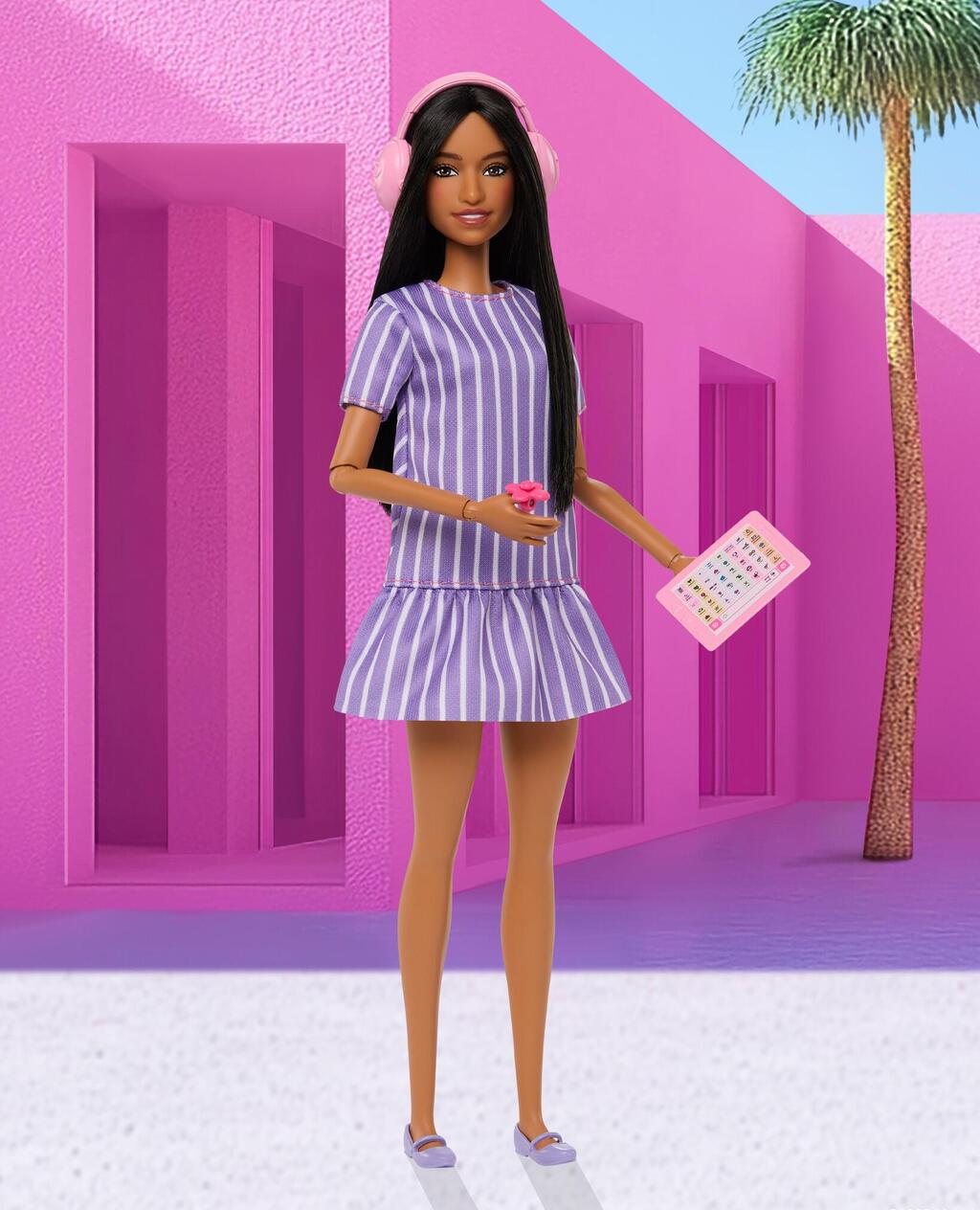
The new Barbie even has noise-canceling headphones, because many autistic people are sensitive to sounds and noise in their environment. She also has a squeeze toy to reduce anxiety and even a tablet for adapted alternative communication.
It is possible that Mattel’s intentions were good — to raise awareness and help some girls on the autism spectrum feel a sense of belonging, that they are seen. The main problem with this move is that, once again, autism is being treated as a curiosity.
The autism Hollywood loves
In recent years, autism has become Hollywood-friendly. Autistic characters appear more and more often in films and television series, and it is always the interesting, attractive autism — the kind that comes with special talents. The brilliant accountant, for example, or the gifted doctor whose autism allows him to see things differently and excel in his field. This is compounded by phenomena such as celebrities who self-diagnose as autistic.
Take Elon Musk, for example, who defines himself as being on the autism spectrum. But with all due respect, Musk would not survive a single day with the challenges faced by my son Dan, 22, who experiences physical difficulties and anxiety alongside a communication disorder. Real autism is far more challenging than it appears from the outside, at least as it is portrayed in the glossy Hollywood space.
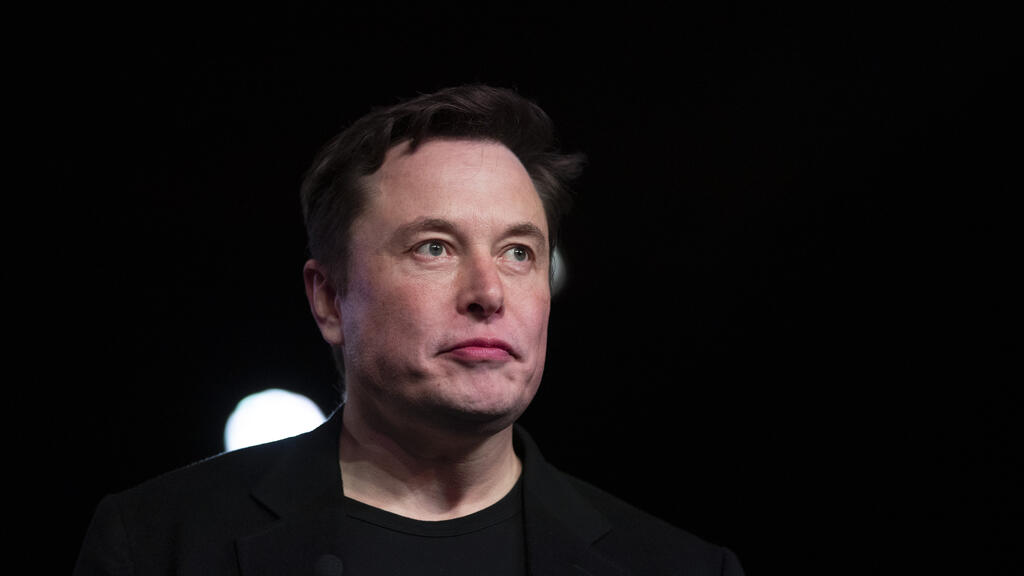
Elon Musk
(Photo: AP)
Twenty percent of autistic people among us are coping with severe autism. With a body that does the opposite of what they want. With a motor system that has a life of its own. With physical pain, with distractions that cannot be controlled. With a mouth that cannot move when it is time to speak. They make movements and sound as they walk. They can sometimes be unsettling. It is hard to believe that inside there is a thinking mind, understanding and, yes, a longing to belong. But one must believe and understand that this is exactly the case.
Hollywood autism, of which Mattel’s new doll is a direct continuation, does not speak to autistic people who suffer. To those who harm themselves in moments of frustration and experience physical and emotional pain. Worse than not speaking to them, it does them harm, because it presents a completely distorted reality of autism. To help children and adults with severe autism — who make up 20% of the autistic population — a system is needed that understands them and speaks their “language,” endless patience to uncover the real person beyond the autism’s outer shell and a huge heart capable of containing the difficulties they face.
What is needed is a society that understands that autism is not a game and not a movie. It is a condition that all too often causes physical and emotional pain and requires serious, profound engagement, not a Barbie doll with a loose dress, headphones and a tablet.
I wish the day would come when television series, films and even toys present “real” autism. Ask autistic people who do not speak. They will explain, in their own way, what it should look like.
The writer is the mother of Dan and his two sisters, the author of “Autism Mom" and an attorney who works to secure the rights of autistic people.