

Israeli elections tend to revolve around security, the economy, the cost of living, religion and state, and the country’s democratic character. But the coming election is likely to carry another dramatic significance.
For decades, Israel has enjoyed a unique relationship with Europe. The European Union is our largest trading partner, a major source of investment and a key partner in research and development. Israeli companies, academic institutions and high-tech industries have benefited from access to European research and science programs, markets and networks that helped establish Israel as an innovation powerhouse.
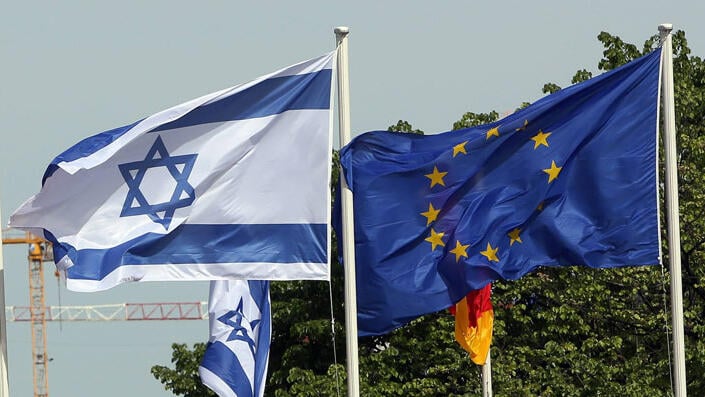
(Photo: AFP)
In recent years, however, there has been a growing sense in Europe that the relationship has reached a turning point. The war in Gaza and its consequences have left a deep mark on European public opinion.
Some of the criticism of Israel stems from longstanding hostile attitudes, some of which have been given new framing since October 7. Some is connected to social, demographic and political changes, alongside the rise of antisemitism in Europe.
At the same time, substantive criticism is also coming from figures known precisely for their support of Israel, focusing on the prolonged war and the humanitarian situation in the Gaza Strip. Israeli policy in the West Bank is also drawing growing criticism. The expansion of illegal outposts, the rise in Jewish terrorism and the debate surrounding sensitive areas such as E1, east of Jerusalem, are viewed in many European capitals as part of a broader trend.
For many in Brussels, Berlin and Paris, the debate is no longer about a single incident. It is about whether Israel remains committed to the political principles on which its relationship with Europe has rested for decades.
Accordingly, even some of Israel’s closest friends, such as Germany and Italy, are voicing sharper criticism than in the past, while Britain has been among those leading calls for tougher measures against us. At the same time, pro-Israel forces remain active across Europe and continue to prevent the formation of a uniformly harsh line toward Israel.
This is where the meaning of an “Israeli Brexit” lies.
Israel is not a member of the European Union and therefore cannot leave it. But as a metaphor, it describes a possible process of gradual estrangement: less political trust, less willingness for commercial and scientific cooperation, and more diplomatic friction along the Jerusalem-Brussels axis.
Just as Brexit inflicted enormous damage on ordinary British citizens, while the United Kingdom continues to struggle with its consequences and is now trying, almost desperately, to rebuild its ties with the European Union, the same could happen to Israel’s public and private sectors, and to Mrs. Cohen from Hadera as well.
A deterioration in relations with Europe could cause serious damage to foreign investment in Israel, GDP per capita, research and trade, as well as to Israel’s economic, security and international standing, in ways that could make it extremely difficult to turn the clock back.
The election for the 26th Knesset is therefore not only a choice between leaders, identities and ideologies. It could also become a decision by Israeli voters about Israel’s place in the West in general and in Europe in particular.
A vote in this election is also a choice between an “Israeli Brexit,” with all the negative consequences that could come with it, and an effort to rebuild relations of trust and cooperation with one of the world’s most important centers of power, economic strength and knowledge, while preserving Israel’s standing, values and enlightened outlook among its friends in the West.