

After 40 days of intense fighting by the United States and Israel in Iran, with significant military gains, the sides are nearing 30 days of a ceasefire and stalled negotiations with no tangible results. The question is why the parties have failed to reach agreements.
There are multiple reasons for the current impasse: gaps in interests and positions, cultural differences, the personal profiles of the negotiators, differing perceptions of time, lack of trust, declarative versus substantive motivation, limits on leverage, ineffective mediation, the passivity of Gulf states, flaws in the negotiation process and internal constraints on both sides.
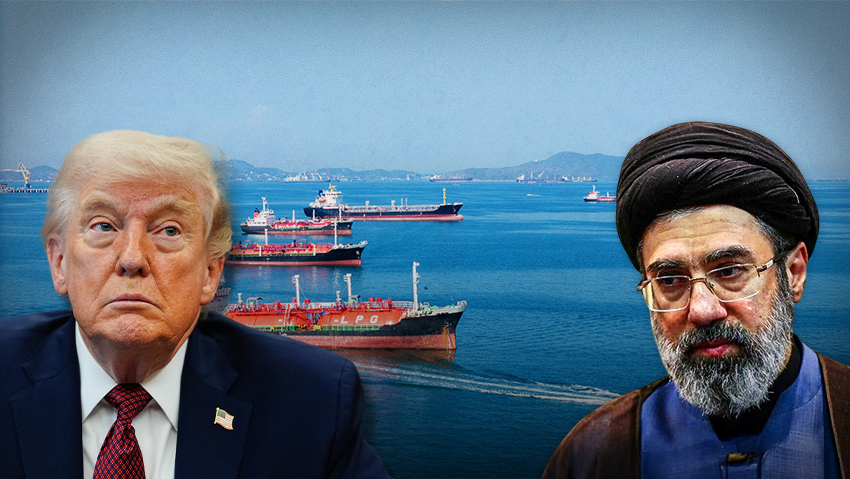
(Photo: Anna Moneymaker / AFP, CENTCOM, shutterstock)
Another key question is how to produce an agreement that provides an optimal response and can be implemented over time. On the nuclear issue, Trump seeks the removal of all enriched uranium and a permanent halt to enrichment. Iran, for its part, is trying to preserve enrichment capabilities and maintain a stockpile of uranium on its territory in order to retain a future breakout option.
Regarding the Strait of Hormuz, Iran seeks recognition of its control over the route and aims to collect transit fees similar to those charged for passage through the Suez Canal. Trump, by contrast, wants to minimize reliance on Iran and establish a U.S. foothold along the route, both for economic benefits and for geopolitical interests, including countering China.
On economic issues, Iran is demanding the lifting of all sanctions and the release of all frozen funds in the United States, the United Arab Emirates and elsewhere. Trump views the economic arena as a pressure lever that provides “oxygen” to the regime and wants to regulate the flow of funds and their release over time.
In military terms, Iran is seeking a commitment to a complete halt of all U.S. military activity in the Gulf, particularly around Iran. Trump, however, aims to maintain U.S. bases, partnerships and defense agreements with Gulf states.
A clear polarity
There is, in effect, a stark polarity between the sides’ positions and interests, and little apparent room for agreement. This is where the art of negotiation comes into play. When dealing with multiple disputed issues, it is possible to concede on one issue in order to secure full gains on another.
To conduct a substantive, professional and productive negotiation process, a stable and binding procedural framework is required. The current process is problematic, to say the least. Iranian Foreign Minister Abbas Araghchi is experienced in negotiations with the Americans, but his standing appears to have weakened following the elimination of Supreme Leader Ali Khamenei. The current leadership of the Islamic Revolutionary Guard Corps is pushing him to harden positions and avoid what they see as past American manipulation. As a result, he is more constrained, less pragmatic and more suspicious than in previous rounds.
Vice President J.D. Vance, chosen to lead the talks, is first and foremost a political actor with an eye on a future presidential run. Ideologically, he is seen as even more hardline than Trump, with a sharply conservative and economically nationalist approach, limiting his flexibility in negotiations. This contrasts with figures such as Jared Kushner and Steve Witkoff, who are viewed as more traditional public servants without overt political ambitions and have demonstrated an ability to break down complex issues and expand the scope of agreements to create additional value.
To “expand the pie” in these negotiations, the United States would need to establish a mechanism similar to the regional forum proposed for Gaza and convene a regional summit including Gulf states, European representation and other stakeholders affected by the Strait of Hormuz and a potential arms race in the absence of a comprehensive deal.
The advantage for Washington would be placing Iran in a position where it would be difficult to walk away without being seen as responsible for the summit’s failure. The drawback would be a loss of control over the negotiation process and the ability to dictate an optimal outcome. The United States, which secured a decisive military victory with Israeli support, is also seeking a decisive outcome at the negotiating table — a “win-lose” result — and is reluctant to pursue a “win-win” agreement that would deliver gains to Iran, particularly given Trump’s past statements about eliminating the regime.
From a cultural perspective, in Islamic thought the dimension of time can serve as a strategic tool in times of distress. Concepts such as “sabr” and “sumud” — patience and steadfastness, regarded as religious imperatives in the Quran — play a role. Trump, by contrast, favors rapid dealmaking and shows a preference for immediate results. Recently, he appears to have recognized that this impulse is being used against him by Iran and has begun signaling that the absence of an agreement is an acceptable outcome for him and would pose greater difficulties for Tehran.
At the same time, Trump appears to recognize the constraints he faces regarding regime change in Iran. He has begun referring to the current leadership as a “new regime,” seeking to promote a narrative that the objective of removing the old order has effectively been achieved.
 Doron Hadar
Any eventual agreement will require extensive detail due to the complexity of the issues and the need for implementation mechanisms in both the near and long term. There is therefore a clear need to first formulate a framework agreement — a document of agreed principles. Reaching such agreement requires skillful drafting, with principles that are simple and clear, supported by professional creativity.
Col. (res.) Doron Hadar is a former commander of the IDF’ negotiation and crisis management unit.