


Blocking the Strait of Hormuz is essentially the main strategic lever Iran can use — and is now using — against the United States and its allies, the Sunni Arab Gulf states. The blockade threatens the major economies of Asia and Europe, since about one-fifth of their energy consumption passes through the strait from oil-producing Gulf states, including Iran.
About 10% of China’s oil consumption — which it purchases very cheaply — is in fact smuggled from Iran, which is under severe U.S. sanctions that prohibit it from exporting oil and gas.
India receives a large portion of the liquefied gas it needs, mainly for household cooking, from the Persian Gulf — from Qatar, Iraq, Kuwait and other countries. Economists in Europe estimate that if the strait remains blocked for several more weeks, oil prices could climb to about $140 per barrel, which could cause a mild recession in the global economy and slow growth across most European Union countries. If the blockade lasts longer than a few weeks, economists say, it could cause significant damage to global growth.
The closure of the Strait of Hormuz is also severely hurting the Sunni Gulf states. Although they benefit from the current rise in global energy prices, they must reduce oil production because they cannot export it and their storage facilities are already full.
Saudi Arabia is the only country that has built an alternative route bypassing Hormuz. Its East-West oil pipeline crosses the kingdom and transports about 4 million barrels of oil per day from Gulf coast oil fields and refineries to the port of Yanbu on the Red Sea, where it is loaded onto tankers bound for Europe. But even this does not meet market demand.
The United States is energy independent and even exports oil to the rest of the world, so it does not suffer directly from an energy shortage as a result of the closure of the strategic strait. However, rising oil prices on the global market have already increased gasoline and diesel prices at American gas stations by about 40 cents per gallon. That is bad news for U.S. President Donald Trump, who promised voters he would lower prices ahead of the midterm elections in a few months.
It is frustrating to see that the Iranians, with considerable cunning and pragmatism, have been carrying out a selective blockade of the Strait of Hormuz since the start of the war, thereby limiting the material damage to themselves and reducing harm to their international image. They threaten — and in some cases attack — tankers attempting to pass through the strait, except for those carrying oil and gas to China and India.
In return, China does not pressure Iran to reopen the passage or accept U.S. demands. Tehran receives Chinese diplomatic support at the United Nations and, behind the scenes, intelligence assistance as well as promises to help with reconstruction after the war.
India, which asked Iran not to block liquefied gas tankers sailing to it, is reciprocating by announcing that it will not join the international naval coalition Trump is trying to assemble to secure tanker convoys passing through the Strait of Hormuz despite Iranian threats.
An easy target
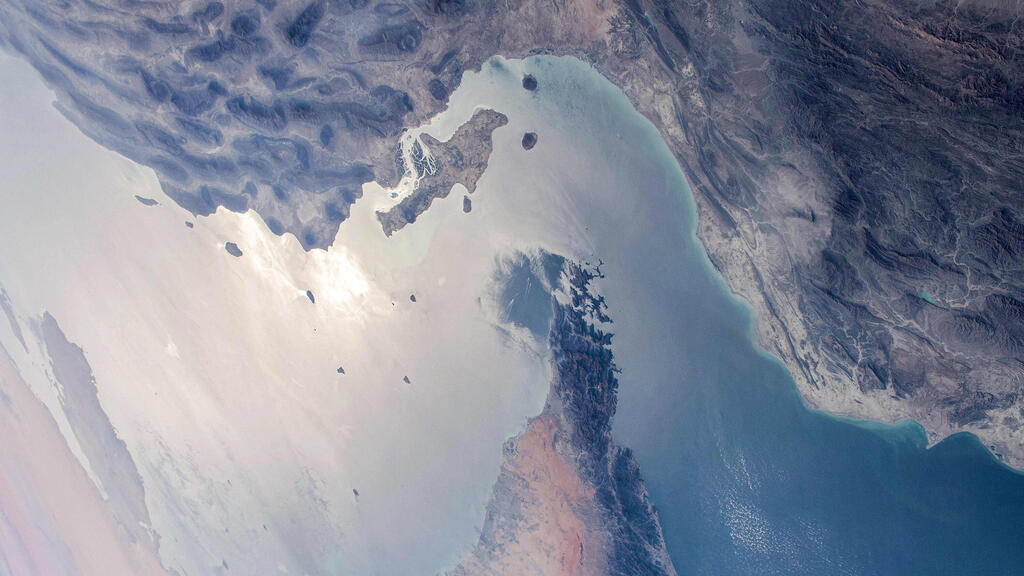
Iran does not need to make a great effort to block the strait. At its narrowest point it is only 21 nautical miles wide (about 38 kilometers), and it has just two shipping lanes for large tankers: one leading into the Persian Gulf and the other leading out. Each lane, separated by a narrow buffer zone, is only about two nautical miles (3.6 kilometers) wide.
Iran controls not only a rocky coastline stretching hundreds of kilometers along the strait but also seven islands, the largest of which is Qeshm. These give Tehran a variety of means and methods to attack any vessel attempting to pass against its will.
These range from older Chinese-made C-802 anti-ship missiles — similar to the missile Hezbollah used in 2006 to strike the Israeli navy vessel Hanit during the Second Lebanon War — to ballistic missiles that Iran claims are capable of targeting ships. Another key tool is naval mines, which Iran could deploy by the hundreds in shipping lanes, potentially blocking them for months. Iran already did this during the 1980s Iran-Iraq war, in what became known as the “Tanker War,” which the United States eventually brought to an end.
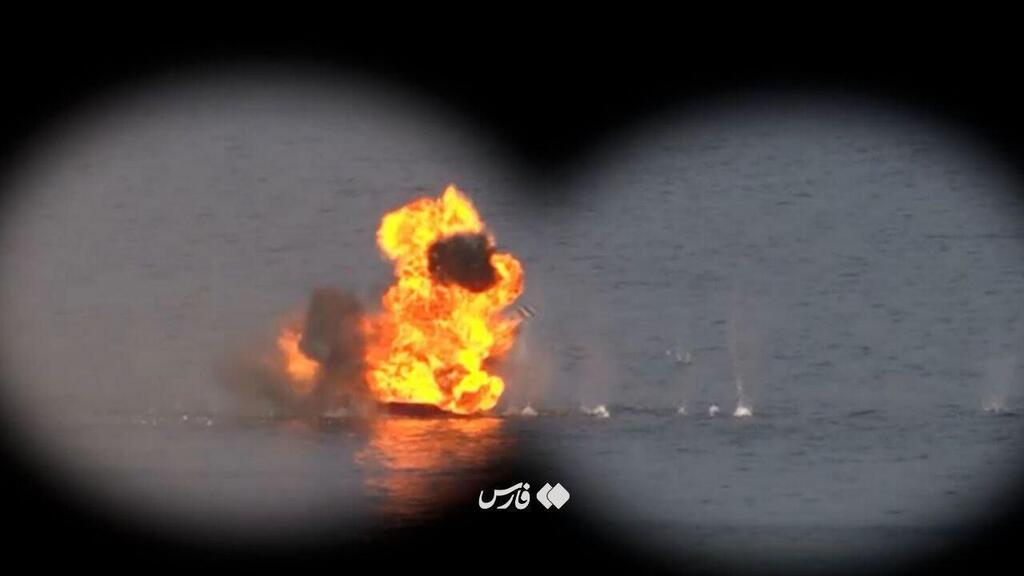
Islamic Revolutionary Guard Corps exercise in the Strait of Hormuz
In addition, Iran possesses fast boats used by the Islamic Revolutionary Guard Corps to attack vessels in swarms, seize them or strike them with short-range missiles, attach explosive charges or even operate as explosive drone boats. These boats are equipped with rails that allow them to deploy naval mines while maneuvering around tankers and escort ships.
U.S. Central Command and the Pentagon have reported destroying most of the Iranian navy’s vessels, but it can be assumed that dozens of armed high-speed boats remain, along with coastal missiles hidden in caves along the shoreline and on the islands in the strait.
A third major means Iran can use to block the strait is drones and attack UAVs. Iran has used such aerial systems for years to target ships linked to Israel, and oil tankers loaded with highly flammable fuel are easy targets for such weapons. Iran’s underwater capabilities must also be considered, including explosive submersibles, both manned and robotic.
A comfortable situation for Iran
For now, Iran has been cautious and avoided heavy use of these capabilities. It has struck several tankers with suicide drones to signal that it is serious about its threats, but it has refrained from using missiles or swarming boats.
It may be reserving those capabilities for the possibility that the United States attempts to reopen the strait by force, or simply because it fears that if it escalates too far, the United States and Israel will remove the gloves and strike Iran’s oil production and export infrastructure — which would devastate what remains of Iran’s economy.
In any case, the current situation suits Tehran. Tanker traffic through the strait has almost completely halted due to the threats, except for vessels sailing to India and China. However, there is uncertainty about whether Iran has laid mines in the gulf.
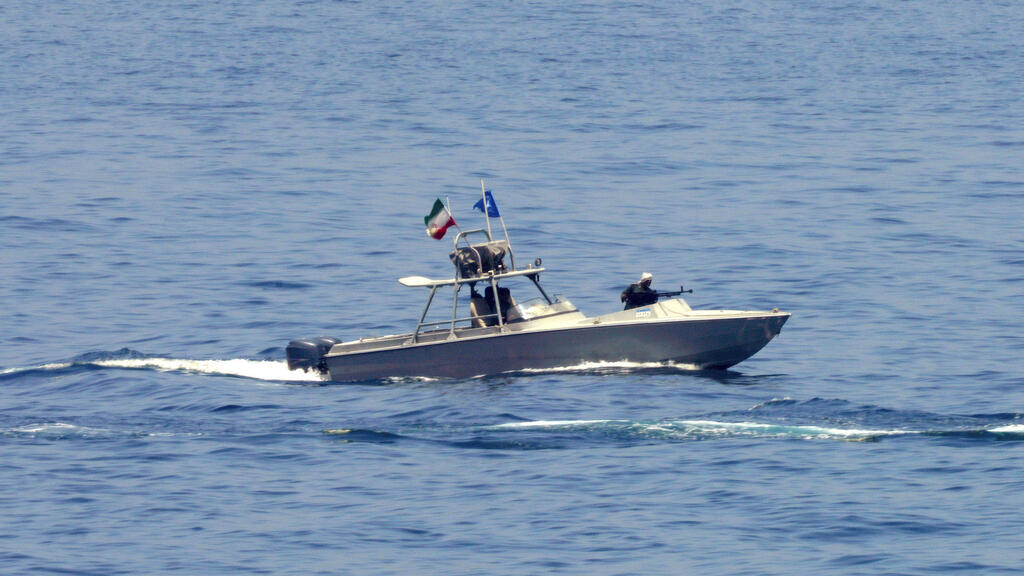
Islamic Revolutionary Guard Corps fast boat in the Strait of Hormuz, 2023
(Photo: AP Photo/Jon Gambrell)
A senior IDF official told members of the Knesset Foreign Affairs and Defense Committee that Iran has already deployed more than 10 large naval mines in the waters of Hormuz. These are likely not standard contact mines triggered by a ship hitting them but larger mines intended to be detonated remotely when the Iranians choose.
The Pentagon, however, says it has no evidence or reliable intelligence that Iran has placed mines in the waters of the gulf. In any case, if U.S. Central Command must reopen the strait, it will have to assume that mines are present and deploy specialized systems to locate and neutralize them before allowing tankers to pass, even if Iran no longer actively resists.
Using Kharg Island as leverage
So what can the United States do?
One important bargaining chip and strategic pressure point — perhaps too powerful — is Kharg Island, located off Iran’s western coast. About 90% of Iran’s oil exports are loaded onto tankers there. If the United States were to seize the island’s oil facilities militarily, Iran would be unable to export oil without Trump’s approval, placing heavy pressure on the regime in Tehran and indirectly on China as well.
Two days ago, U.S. Central Command proposed using Kharg Island as leverage to force the reopening of the Strait of Hormuz and as a broader pressure point against the Iranian leadership. American aircraft have already bombed and destroyed all military installations protecting the island and its oil facilities, which would allow roughly 2,200 Marines currently en route from Japan to the Gulf to seize it relatively easily. If that happens, Iran’s economic future and its chances for postwar recovery would effectively be in the hands of the American president.
Washington, however, is hesitant to use this option out of concern that Iran might respond with a “Samson option”-style reaction, launching destructive retaliatory strikes against the oil fields and facilities of the Arab Gulf states. Iran has thousands of short-range ballistic missiles, drones and UAVs capable of causing irreversible damage to the global oil industry — something the United States wants to avoid.
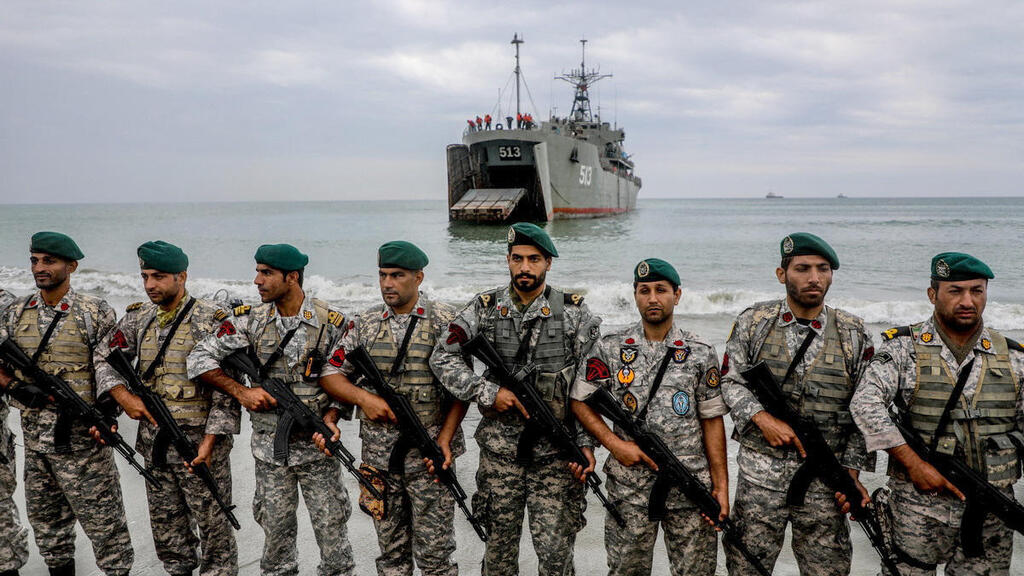
Iranian military exercise in the strait
(Photo: Reuters/Iranian Army/WANA)
Footage from the strikes on the ‘oil island’ of Kharg


At the end of the month Trump is expected to meet Chinese President Xi Jinping. If the United States disrupts Iranian oil exports to China or reopens the Strait of Hormuz, Trump’s bargaining position in that meeting would be far stronger than it is today, when Iran effectively controls the strait.
The convoy option
A second option is to escort tanker convoys through the Strait of Hormuz and protect them. The U.S. Navy successfully did this in the 1980s under President Ronald Reagan during the Iran-Iraq war, when Iran laid hundreds of mines in the northern Persian Gulf.
It is likely that if the United States decides to reopen the strait and escort tankers it could succeed again, but preparations would take at least several weeks. U.S. Central Command would first need to conduct preliminary operations to neutralize threat centers along the Iranian coast and on the seven islands in the strait.
Israel cannot contribute much to the operation beyond intelligence and early warning regarding possible attempts by the Revolutionary Guard to sabotage tanker convoys.
Another option would be a large-scale U.S. military operation — essentially seizing and occupying the entire Iranian coastline around the Strait of Hormuz and the seven islands to physically neutralize all threats. This is feasible, but it would require a much larger landing force than the 2,200 Marines and three landing ships currently available. Such an operation could result in casualties and potentially drag the United States into a prolonged conflict similar to the situation President George W. Bush faced in Iraq — something Trump has promised voters he would avoid at all costs.
Of these three options, it is highly likely that Trump, following the advice of his generals, will choose the convoy escort strategy. A naval and air operation of this type does not necessarily create a direct escalation with heavy casualties.
The main drawback is the need to assemble additional naval and air forces to ensure success and the time required to prepare.
For example, the United States would need to deploy helicopter ships and specialized underwater systems to locate and neutralize naval mines — or at least ensure none are waiting to be remotely detonated by the Revolutionary Guard in the narrow shipping lanes used by tankers and their escorts.
That is one reason Trump wants NATO navies to participate in the convoy mission. Britain, France and Germany are known to possess mine-sweeping vessels that could reach the region relatively quickly. The United States will also need to wait for the Marine force that departed Japan four days ago and has not yet arrived in the Gulf of Oman, as well as an additional carrier strike group centered on the USS George H.W. Bush, currently en route from the U.S. East Coast.
A third aircraft carrier group is needed because the carriers USS Abraham Lincoln and USS Gerald Ford, already in the region, will have to dedicate at least two or three missile destroyers each day to escort duties and deploy multiple fighter jets and drones to patrol and strike any detected threats.
Those aircraft, drones and destroyers would be diverted from the air and naval forces currently attacking targets in Iran. Therefore, the arrival of the third carrier group — the George H.W. Bush — expected in about two weeks, is considered necessary.
Fear of a global downturn
All of this means that an effective convoy escort operation could begin in about a week and a half to two weeks at the earliest. In the meantime, global energy prices continue to rise.
If the Strait of Hormuz remains closed for another six weeks, economists warn it could trigger a global economic downturn. That is why Trump is under pressure and is urging NATO countries to join the convoy mission.
He has been demanding this publicly and angrily — including again last night — in order to ease the burden on U.S. forces. American ships could continue attacking targets while NATO vessels help escort tankers through the strait. If the global economy is suffering from the closure, he argues, then the countries affected should help reopen it.
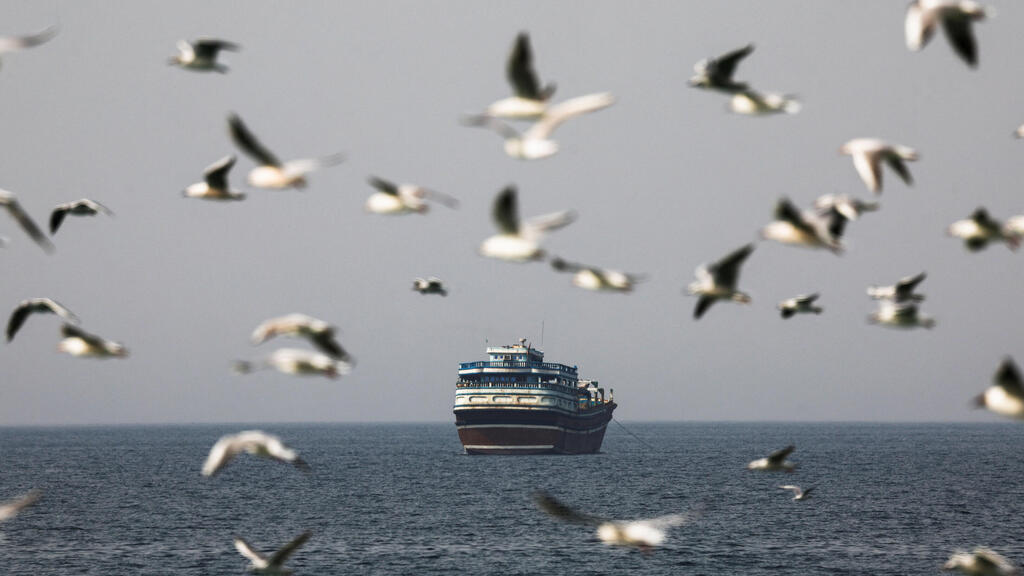
The Strait of Hormuz
(Photo: REUTERS/Amr Alfiky)
NATO already has experience in such missions. European forces protected civilian shipping against Houthi attacks that disrupted the Bab el-Mandeb Strait at the start of the Israel-Hamas war, from late 2023 through the end of 2024. International involvement in escorting tanker convoys through Hormuz could also deter Iran from further escalation out of concern about broader confrontation with the international community.
But European and Asian countries have been reluctant to respond to Trump’s call. First, they do not want to be drawn into a regional war with Iran that they did not initiate and whose necessity many of their governments and publics question.
NATO countries already assisting Ukraine in its war against Russia also do not want to be led by the United States into a conflict whose biggest beneficiary — because of soaring oil prices — would be Russian President Vladimir Putin. That is why Europe and India have quickly declined to join the naval coalition Trump seeks to form.
In the end, it appears the United States — with Israeli assistance, mainly in intelligence, and with quiet support from Arab oil states — will have to carry out the mission largely on its own.
Trump cannot afford to end this war with Iran still blocking the Strait of Hormuz and projecting the image of a power capable of successfully defying the United States and imposing its will on its neighbors.