

While President Trump declared that peace is at hand, as we enter the second stage of the Trump Gaza Peace Plan, our national, public and private conversations are flooded with what ifs. What if Hamas refuses to disarm? What if attacks continue against our soldiers or citizens? What if the international Sunni force set to govern Gaza will be unwilling or incapable of confronting Hamas? What if Turkey and Qatar are too invested in Hamas to turn against it? What if Hamas succeeds in maneuvering itself into a governing role in Gaza? What if…?
Prime Minister Netanyahu's answer is straightforward. If any of the above occurs, if Hamas deviates or reneges in any way from the agreement, there is no need for concern. Israel will return to war and through the battlefield, achieve the total victory which it deserves.

Hostages Square in Tel Aviv on the day 20 hostages were returned
(Photo: Chris McGrath/Getty Images)
Neither the uncertainty and concern of Israelis nor the nature of the Netanyahu response are surprising. While stage one of the peace plan is clear and precise, the other facets of the 20-point plan are vague and it is yet unclear who, when and how they are to be implemented or enforced. In addition, years of terror, war and Intifadas, not to speak of the horrors of October 7, have trained Israelis to be fearful of hope in general, and peace in particular. "Better to avoid hope and save ourselves from disappointment," has become the cornerstone for our safe space. As a result, before the treaty was finalized, few believed that it would happen, and now that it has been launched, many are doubtful as to its positive outcome.
As for Netanyahu, his declared aim from the beginning of the war has been the destruction of Hamas and consequent erasure of the stain of October 7. Once the hostages are home, these goals are devoid of any ambivalence. Netanyahu's self-persona is as the only one who can keep Israel safe, and whether in his words, this can be achieved the easy way (i.e., peace plan) of the hard way (war), is relatively inconsequential. If, to quote Carl von Clausewitz, "war is the continuation of politics by other means," for Netanyahu, the Trump Plan is the continuation of the war by other means. If it falls short, the means of war are ready and available. His challenge to Israel is to be ready, and if or when the time comes, to emerge again as warrior nation. His statement about Israel as super-Sparta identity was not a verbal slip, but his articulation of our necessary core identity.
"Better to avoid hope and save ourselves from disappointment," has become the cornerstone for our safe space.
Truth be told, alongside advocating for Isreal as warrior nation, Netanyahu also entertains visions of a new Middle East. But unlike the late Labor Party leader, Shimon Peres, who first coined the term “a new Middle East,” Netanyahu’s version does not include Palestinians, whether in Gaza or in Judea and Samaria. The Abraham Accords, built around the principle of peace for peace, and which only necessitated the concession to refrain from annexing parts of the West Bank, is the only model he presently supports. As a result, while Trump speaks of a new Middles East for Israelis and Palestinians alike, Netanyahu reduces the horizon of the Trump plan, and the possibilities inherent within it.
But what if?
What if the Trump Peace Plan works? What if the American administration maintains the pressure on Netanyahu and the Sunni states, and works to translate its vision into practice? What if these Sunni nations, who united around Trump's vision, and who committed to remove Hamas as a military and political force, see this commitment through? What if Hamas is disarmed and its tunnels and terror infrastructure destroyed? What if a new and effective Gaza government is formed based on technocratic Palestinians and the Sunni nations accompanied by international oversight? What if this government succeeds in starting to rehabilitate Gaza, change its educational curriculum and puts it on a path to a different future? Most importantly, what if Gaza can become a model for Judea and Samria? What if…?
While all of the above will take time, what if over the next year we begin to see the first stages of even some of the above, enough to provide hope? Will we even be able to see it, let alone support it?
To do so, we need to shift from warrior nation to vision nation, once again living by the principle that built our country, "im tirzu ein zo agaddah" - if you truly desire it, it will not remain a dream. With the joy and healing of the hostage return, our people need to begin a process of rehabilitation not only from trauma, but also from despair.
In ancient Israel, as the First Temple era was collapsing, there arose a cadre of leaders the prophets of doom, who validated our worst nightmares. But at the same time, these same prophets also served as voices of consolation, and most importantly, of hope and redemption. They provided a vision of our national life as it could be, as it might be one day, a vision which sustained and nurtured our people for over 2000 years. A vision which ultimately gave birth to Zionism.
We need to shift from warrior nation to vision nation, once again living by the principle that built our country, "Im tirzu ein zo agaddah" - if you truly desire it, it will not remain a dream.
While we are suspicious of self-anointed prophets, we need their spirit. We need leaders – political, cultural, intellectual and educational - who will begin to talk not about what is feasible, but about what is worthy of the Jewish people and Israeli society. Not about what will go wrong, but about what can go right. President Trump modelled this type of leadership in his speech in the Knesset. It's time for us to follow.
Netanyahu likes to say that one does not make peace with one's enemies, but only with enemies who want to make peace. We are now on the verge of a process that at the very least has the potential to do exactly that. But it seems that Netanyahu and his coalition fear the enemies who may choose to make peace over those who want war. It is for this reason that for years he preferred and supported Hamas rule over that of the Palestinian Authority.
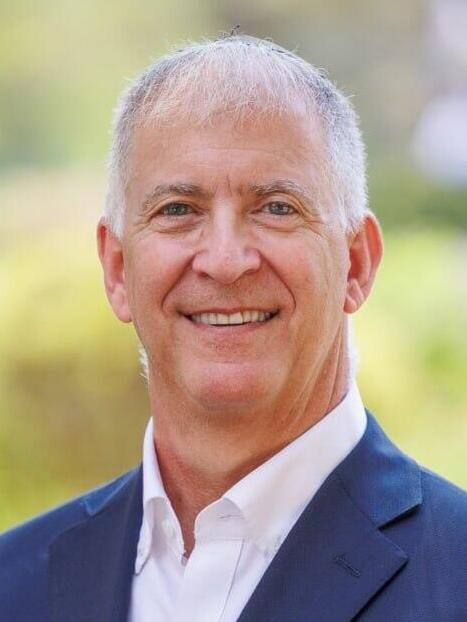 Rabbi Dr. Daniel HartmanPhoto: Noam Feiner
Will this peace treaty be actualized? Will it move Palestinian leadership and society to expunge terror and embrace peace? It is premature to speculate. But what is certain is that such a movement will not happen if we are simply waiting to go to war when the process inevitably fails. If we want a new future, we need to begin building it, by believing that it is possible that President Trump has initiated a process that can serve as a tipping point in the Middle East.
What Palestinian society will do is not in our hands. What is up to us is to support a process that while fraught with uncertainty and danger is also filled with opportunity. Alongside our justifiable worry about What if, it is time to embark on a national process of hope. What if…?
Rabbi Dr. Daniel Hartman, president of the Shalom Hartman Institute