

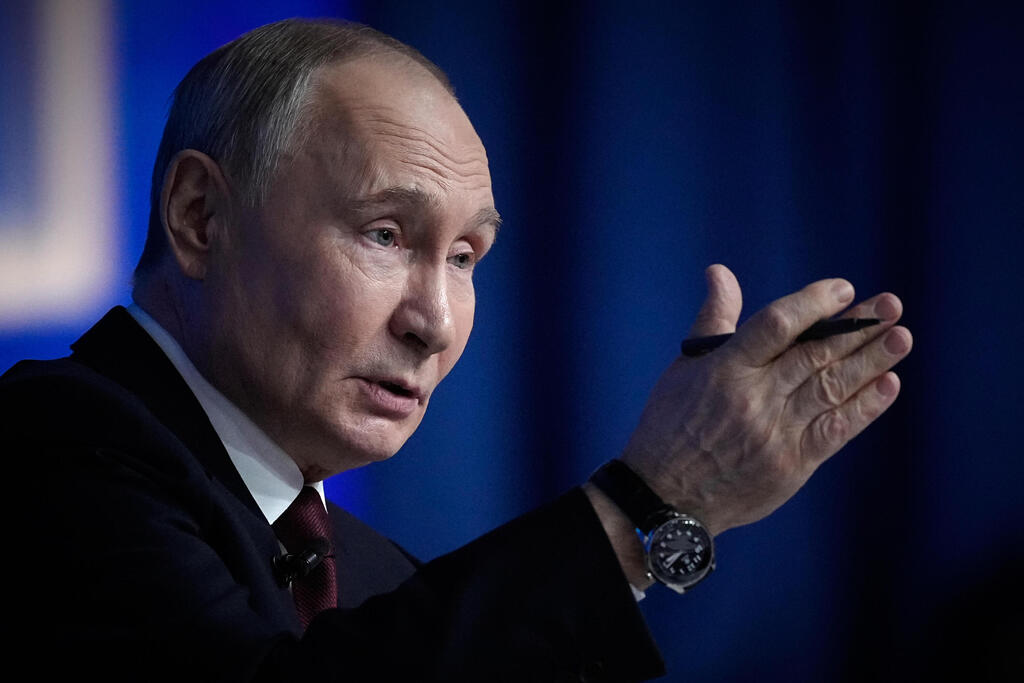
February 24 marked the fourth anniversary of Vladimir Putin’s all-out attack on Ukraine. Four years is a very long time for a major war between national armies to have lasted, and it is particularly long when a comparison is made with past wars of great consequence.
The Crimean War of the nineteenth century, which began with the Russian Empire’s invasion of Moldavia (now Moldova) and Wallachia (now northern Romania) on July 2, 1853, substantively ended with the surrender of the Ottoman army at Kars, in northeastern Turkey, on November 26, 1855; two years, four months and 25 days later.
In spite of its minor victory on the edge of Turkey, the empire had been defeated in the Crimean Peninsula by the far more technologically advanced naval and ground forces of Britain and France, losing the naval base of Sevastopol. Russia was thrown into crisis, accentuated by the death of Tsar Nicholas I in the spring of the final year of the war.
Decades later, the First World War on the Western Front, which shattered European civilization, lasted four years, three months and 11 days from the German invasion of Luxembourg on August 1, 1914, to the Armistice of November 11, 1918.
In the East, Russia had lost the war long before then, having proved unable to cope with superior German organization and operational methods. Tsar Nicholas II abdicated his throne already on March 15, 1917, and the war on the Eastern Front ended with the fall of Riga on September 3 of the same year.
The Nazi-Soviet war, an abattoir which consumed numberless millions of lives, began with the Nazi invasion of the Soviet Union on June 22, 1941, and ended after three years, 10 months and 18 days with a Soviet-staged surrender ceremony in Berlin in the early hours of May 9, 1945. Putin’s war passed this mark on January 12, one and a half months ago.
The present war has exceeded that on the Eastern Front of the Second World War in length, but its murderous nature and its persistence are directly derived from that previous war, and the Stalinist regime which was fundamentally strengthened by its part in the joint victory of the Grand Alliance over fascism and Nazism.
Nazism, in particular, was not only annihilated militarily but thoroughly delegitimized by the discovery of the full extent of its murderous crimes. These crimes were revealed in detail and at least partially punished in a long series of trials, which included not only the main Nuremberg Trials of major war criminals, but a dozen more Subsequent Nuremberg Proceedings, as well as a wide range of other trials across Europe, including that of the infamous Norwegian traitor and Nazi collaborator Vidkun Quisling.
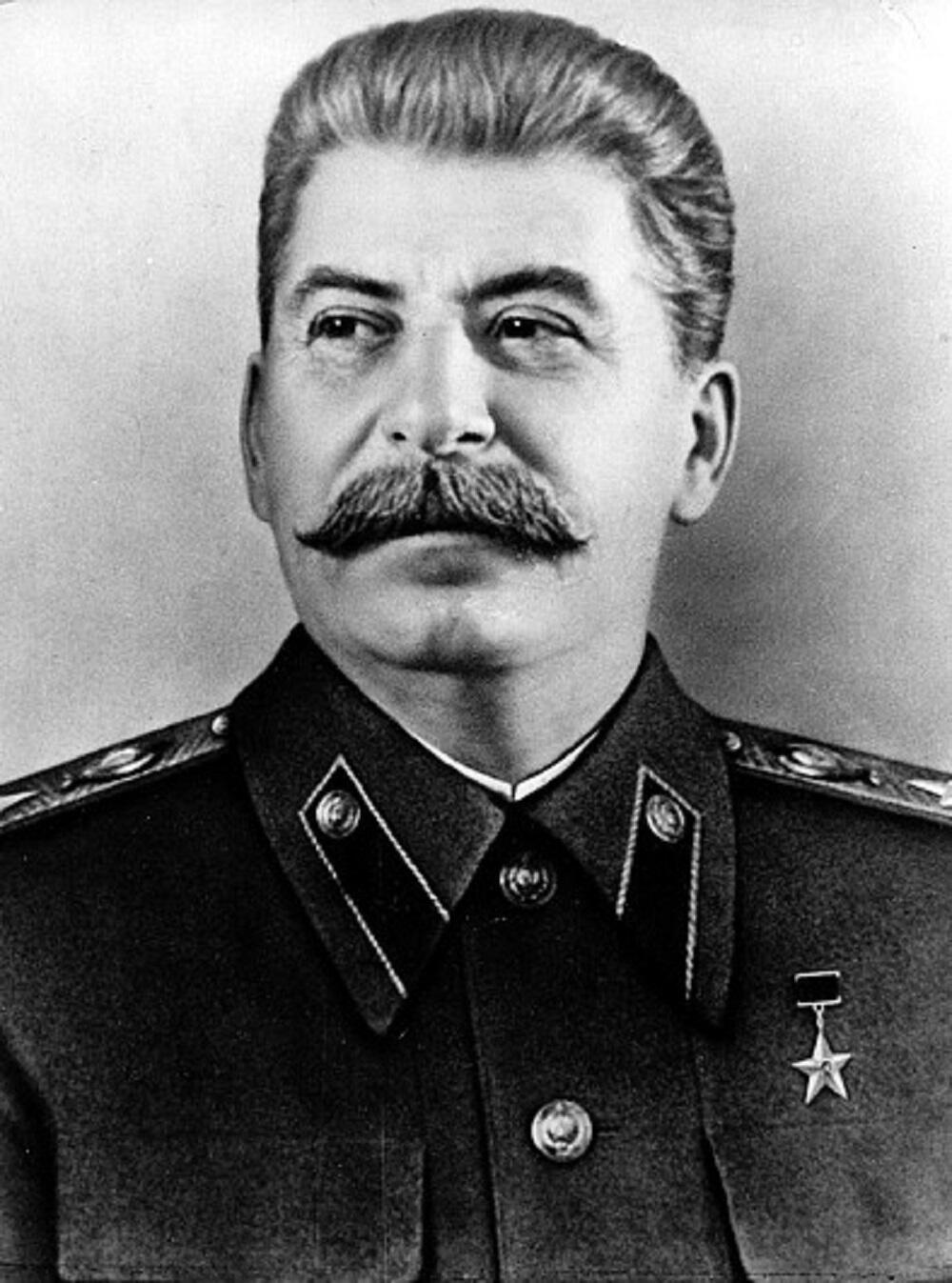
Joseph Stalin
(Photo: AP)
Stalinism has had a very different fate. It was, on the one hand, legitimized by its role in fighting Nazism, and on the other, never punished for its own crimes. These were apocalyptic in scale and duration, and even this basic fact is far from always clearly understood.
On September 2, 1918, when the First World War had not yet ended and Joseph Stalin was only one of Vladimir Lenin’s henchmen, the Communist secret police issued a secret order authorizing the taking of hostages, who were to be “immediately shot” if they attempted to resist.
Three days later, the Communists issued a decree On the Red Terror, which stated that “it is essential to secure the Soviet Republic from class enemies by isolating them in concentration camps.” In 1921, Mārtiņš Lācis, a Latvian who was one of the most senior early members of the secret police, the Cheka, described it as “not a college of investigators or a court… it exterminates without legal proceedings or isolates from society, imprisoning in concentration camps.”
Concentration camps rapidly spread nationwide, and details of the early camps have been so well concealed that specifics of their existence are discussed in only a few sources, like the doctoral dissertation of the Russian historian Ilya Udovenko.
Among the first camps were those at the Andronikovo and Ivanovsky monasteries, opened in Moscow in autumn 1918 and summer 1919, respectively. These were especially sinister "special purpose camps." Their purpose was the “imprisonment of counter-revolutionaries, hostages and in general, overt and covert enemies of Soviet power.”
Soon after, and years before Adolf Hitler was a person of any significance, the worst invention of humanity’s long, blood-stained history followed – the death camp. At Kholmogory in Russia’s far north, Mikhail Kedrov organized a camp “exclusively for the mass liquidation of White officers... there were no prisoners there, and they were taken there for liquidation only.”
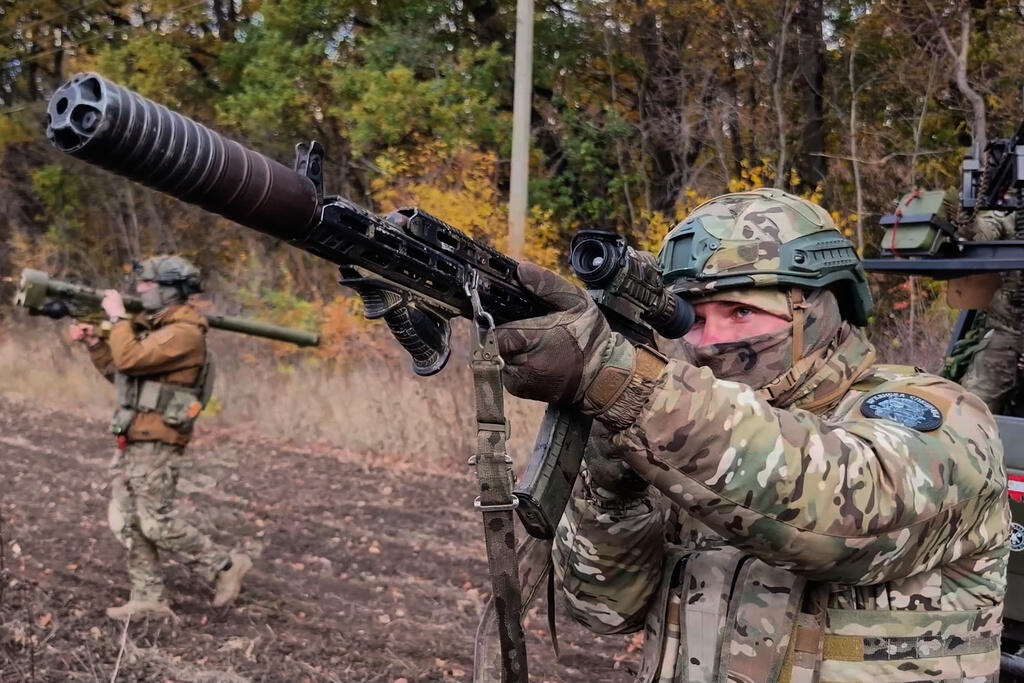
Russian troops in Ukraine
(Photo: AP)
Once Stalin succeeded Lenin, camps only became more numerous, and on 1 October 1930, they were reorganized into the Main Directorate of Corrective Labor Camps – the Gulag. More than two years before Hitler became German chancellor, the Soviet Union had a fully organized and extensive system of concentration camps, which Alexander Solzhenitsyn would later describe in his famous book, The Gulag Archipelago.
The full extent of the atrocities perpetrated in this system will probably never be known, but it is certain that many millions died or were executed. In the summer of 1933, six out of ten thousand prisoners sent to a camp on the Ob River in western Siberia starved to death, a quarter of them within just two weeks.
A compendium of documents published in Russia in summer 2000, with Putin already in power, includes a short table claiming that 1,606,748 prisoners died in the Gulag between 1930 and 1956. Another, slightly longer, table in the same text claims that 799,455 people were sentenced to death following investigation by the secret police between 1921 and mid-1953, instead of being imprisoned in the camps. Both of these totals are self-evidently implausible, and implausibly precise, minimum figures of the victims of a relentless multi-decade campaign of murder.
The Stalinist terror machine, including its Leninist predecessor, was in operation for 38 years from 1918 to 1956, while the entire Nazi period lasted 12 years. Soviet terror had thus lasted more than three times longer than Nazi terror. Moreover, the Nazi regime was obliterated, many surviving Nazis put on trial and the regime’s ideology has been forever damned, especially so in Germany, where it originated. Nothing of the kind happened to Stalinism.
Rather than being defeated and delegitimized, Stalinism was curtailed by Soviet bureaucrats after the death of Stalin, because the murderous regime had predictably driven the country to the brink of collapse. The Soviet Union had become a kingdom of lies and catastrophic economic failures, where a reported 48% increase in the weight of grain harvested in 1952 compared with 1940 was intended to mask the catastrophic reality of a 27% decrease in the harvest. Faced with the real possibility of national catastrophe, Stalin’s successors, Nikita Khruschev and Leonid Brezhnev, refused to engage in mass terror.
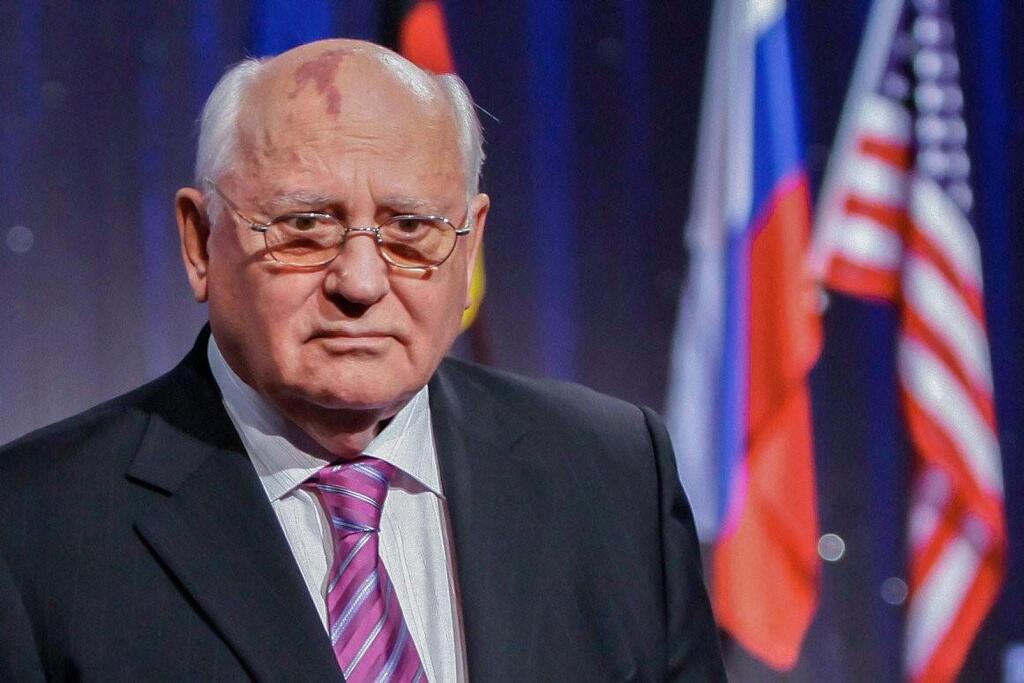
Mikhail Gorbachev
(Photo: AFP)
For a period of time, the Soviet leadership became more interested in raising its own standard of living than in putting society in chains, and this eventually led to the rise of Mikhail Gorbachev and the largely peaceful dissolution of the USSR in August 1991.
Yet, Stalinism had never disappeared; it remained dormant. Once various oligarchs and corrupt bureaucrats accumulated sufficient wealth during the post-Soviet period, retaining political power firmly in the hands of the few again became the central concern of the regime.
Fewer than seven years after the Soviet collapse, on May 25, 1998, the former secret police officer Putin was appointed deputy chief of staff to Russian President Boris Yeltsin, beginning Putin’s rapid accession to power, which was completed with his appointment as acting president by Yeltsin on December 31, 1999.
Putin’s regime and his war are a direct consequence of Stalinism, and of the fact that Stalinism was never defeated, much less put on trial. Members of Russia’s Federal Security Service (FSB) are proud to call themselves "chekists," and thus are proud to be the heirs of Lācis and Kedrov, among many other executioners.
Putin’s military, with its frequent executions of its own men, imitates Stalin’s. During the Nazi-Soviet War, the Red Army fielded 45 penal battalions for officers and 846 penal companies for soldiers and sergeants, as well as 29 special "assault battalions" for Soviet prisoners of war who had been liberated from Nazi captivity or occupation.
The West did nothing to dismantle Stalinism, and is doing very little to dismantle Putinism, in essence hoping that Putin’s Russia will collapse and the problem will resolve itself. When facing a sadistic dictatorship directly modelled on the worst regime in human history, and armed with the world’s largest arsenal of nuclear weapons, this Western approach is not simply dangerous, but insanely so.
- Dan Zamansky is a British-Israeli independent historian and author of The New World Crisis, a Substack analyzing the problems of today.