

On February 24, during his State of the Union address, Donald Trump boasted of an achievement felt in every American's pocket. "And in some places, $1.99 a gallon," he declared, adding that during a visit to Iowa, "I even saw $1.85 a gallon for gasoline." Trump seemed to be on a sure path to success.
A Harvard CAPS/Harris poll conducted after the speech but before the war found that 60% of those who had watched at least part of the address viewed it favorably. It was an impressive figure that suggested considerable political momentum. But the timing is critical to understanding the collapse, because this celebration took place just four days before the war in Iran broke out.
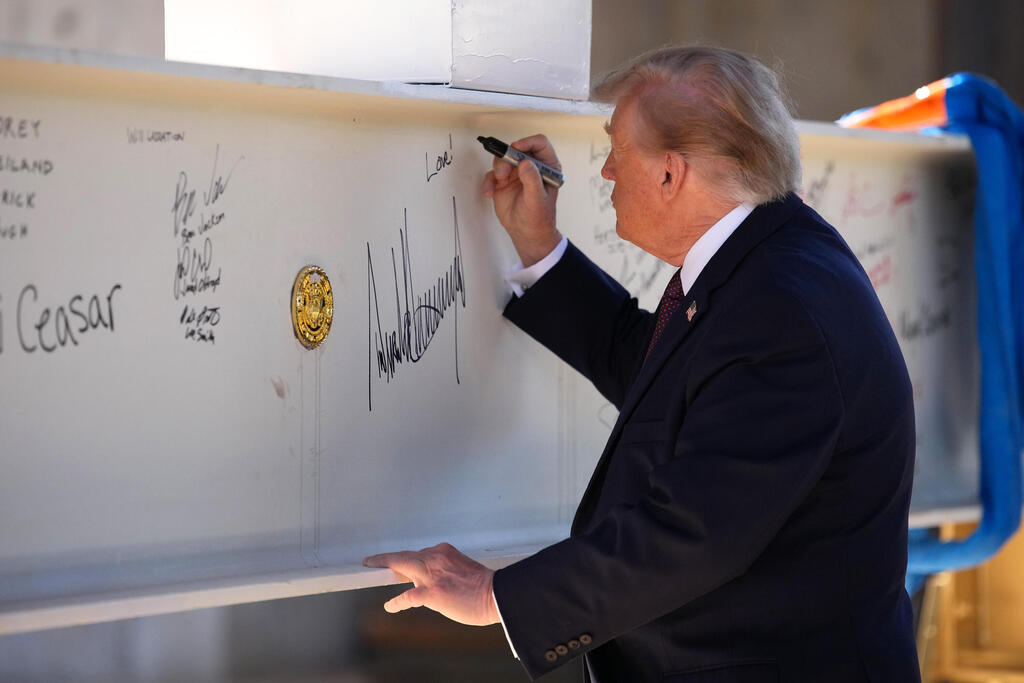
Donald Trump
(Photo: Andrew Harnik/Getty Images)
Midterm elections are usually considered relatively subdued affairs, but this time the reality was entirely different. Turnout broke records, with some 54 million voters casting their ballots early, an increase of 9 million compared with 2022, on the way to what promised to be unprecedented overall participation. What motivated them? A political equation that changed in an instant. The immediate surge in gasoline prices fueled public anger directed at the war. Because Israel was the United States' sole partner in the military campaign, that anger was directed squarely at Israel. Israel became a central issue at the ballot box, a major factor driving voters to the polls. Netanyahu's complete identification with the Republicans came back to hit us like a boomerang. This one-sided alliance motivated voters to punish the Republicans, and Israel is paying the price.
The result was a blue wave and a historic collapse for the Republicans. This is only the fifth time since World War II that a sitting president's party has lost control of both chambers of Congress in midterm elections. The trend was particularly striking in traditionally conservative strongholds. In Kansas, for example, Adam Hamilton was elected to the Senate, becoming the first Democrat to win a Senate race in the state in 94 years, illustrating the depth of the political earthquake.
An even more troubling dimension is the meteoric rise of the socialist left, this time characterized by young candidates in their 20s and 30s. They have become cultural icons, riding waves of social media attention and influencer support all the way to Congress. Take Darializa Avila Chevalier, the candidate in New York's 13th Congressional District, representing parts of the Bronx and northern Manhattan, who received the backing of New York City Mayor Zohran Mamdani. In a since-deleted social media post from 2019, Avila Chevalier explicitly called for seizing the means of production, reflecting the radical economic positions that resurfaced during her campaign.
Joining her in Denver, Colorado, is Melat Kiros. The 29-year-old Black lawyer was fired from her law firm after publishing an opinion piece defending the right of students to protest against Israel following the events of October 7. After losing her job, she was forced to work as a barista at a coffee shop to make ends meet. She turned her personal anger into a powerful political force that propelled her straight into the House of Representatives. This young, radical wave is also symbolized by Dr. Abdul El-Sayed, who became the first Muslim elected to the Senate, representing Michigan, after making his fight against AIPAC, the influential pro-Israel lobbying organization, a central pillar of his campaign alongside the struggle against the rising cost of living. Together, they represent a generation of politicians who have made Israel a significant and central part of their political agenda.
These radical messages resonate with Generation Z, which lives with existential anxiety over the artificial intelligence revolution and mass layoffs. The promise of redistributing wealth sounds like a lifeline, but beneath the class struggle, resentment and hatred toward Israel, perceived as part of the old establishment, are also simmering.
 Dr. Kobby Barda Photo: Tal Givoni
Midterm elections are almost never decided by foreign policy, but rather by the domestic economy. This time, cause and effect became tied to Israel. When the American economy suffers from rising gasoline prices because of a war in the Middle East, voters do not forgive. The political assumption Netanyahu adopted during the Obama years, that Israel could rely on just one side of the American political divide, has completely collapsed. The political earthquake will become a reality on January 3, 2027, when the 120th Congress begins its term and control of both chambers passes dramatically to the Democrats. The waves will continue to crash against our shores for a long time to come.
Dr. Kobby Barda is a researcher at the Jewish People Policy Institute (JPPI) and a lecturer at the School of Multidisciplinary Studies at the Holon Institute of Technology (HIT)