

Before you cast your ballot in the upcoming election, consider a few lessons from what Israel has experienced over the past three years, and what could happen if your vote helps keep Benjamin Netanyahu in power.
Imagine Netanyahu winning the election and convening his government for a Cabinet meeting. He proposes two resolutions. The first: The Earth is flat. The second: The IDF will be ordered to finish the job in Iran by attacking nuclear facilities, missile production plants and, of course, the energy infrastructure of the ayatollahs' regime. Acting on a Mossad recommendation, Israel will also make another attempt to bring about regime change with Kurdish assistance.
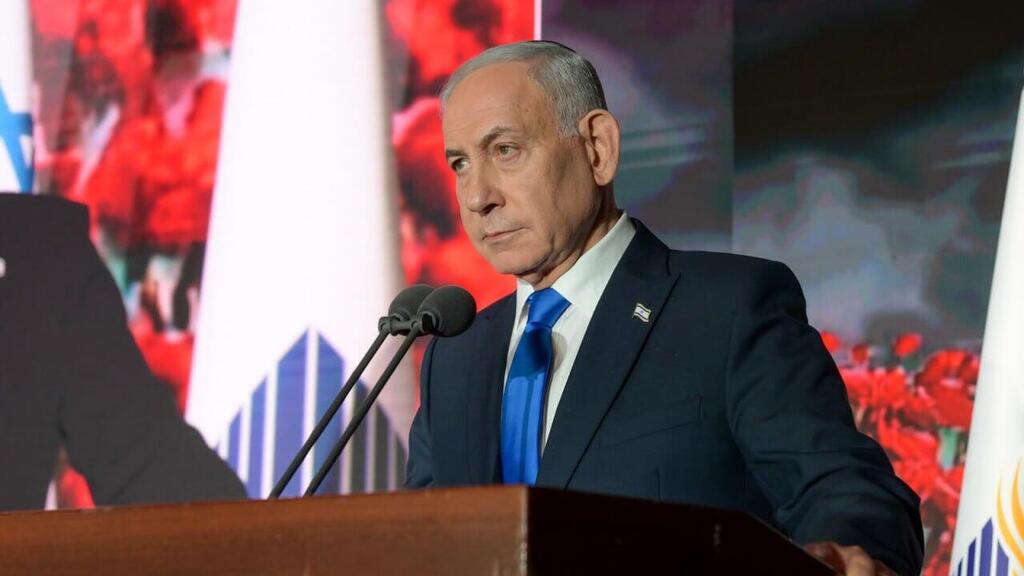
Israel's election is a reckoning over Netanyahu's wars and their consequences
(Photo: GPO)
The ministers, including Avi Dichter, vote unanimously in favor. Several even praise Netanyahu for showing that he is not a man to be challenged, a leader who fears no one.
Now, there's no need to panic. By my reading of the political situation, Netanyahu and his right-wing government's days are numbered, and their time in power could come to an end in less than two weeks.
But beyond that deliberately absurd scenario, there is something important to remember: Donald Trump has taken away Netanyahu's license to kill. Agent 007 now belongs strictly to the movies. The outgoing prime minister can still target Hamas terrorists being hunted in Gaza for their participation in the October 7 massacre, but that is as far as his freedom of military action now extends.
Tragically, Netanyahu and his associates appear never to have read Carl von Clausewitz's On War. The Prussian military theorist warned that no rational person should begin a war without first understanding what he intends to achieve through it and how he plans to conduct it.
That warning is especially relevant today. None of the objectives this government originally set, or those it subsequently added, has been achieved. Not one.
The Iranian regime, in my assessment, has emerged stronger and is closer to obtaining a nuclear weapon than it was before the war. Hamas continues to exercise control in Gaza, while the IDF continues to exhaust its soldiers across several fronts where no lasting political settlement has been reached.
The United States: Trump is threatening to use the "mother of all bombs" against Iranian infrastructure, with the possibility of further military action around the November midterm elections. His administration has reportedly prepared new strike options, although no decision to launch such an attack has been announced.
Meanwhile, criticism of Israel is growing among both Democrats and Republicans, raising serious questions about the future of the special relationship that has long underpinned Israel's access to American military equipment.
Consider what happened only recently: Government ministries were required to absorb across-the-board budget cuts to help finance the purchase of Apache attack helicopters. Netanyahu's grand declarations about transforming Israel into a modern Sparta have little foundation in reality. Anyone who believes Israel can simply manufacture its own F-16 fighter jets is living in the fantasy world of Netanyahu's cheerleaders.
Europe: The warning from some of Israel's most important trading partners should not be dismissed as an empty threat. There is a growing risk of European measures against financial institutions operating in the West Bank if the current government's policies continue.
During a hurried visit near Tulkarm, apparently intended to reassure his supporters, Netanyahu warned that there were indications Israel's enemies might be planning an attack. He also expressed concern about possible escalation before the election.
The prime minister went further, warning the Palestinian Authority about the possibility of its security forces "turning their guns" on Israel, echoing language previously used by Defense Minister Israel Katz.
But the Palestinian Authority is not going to hand Netanyahu the justification he might need for another military operation in the West Bank. In Ramallah, too, there are hopes that Israel will soon have a different government, one with which a new relationship might be developed and perhaps even a different political horizon for Israelis and Palestinians.
Saudi Arabia: One of the greatest strategic losses of the seemingly endless war Netanyahu has imposed on Israel may be the collapse of hopes for normalization with Saudi Arabia.
The kingdom was supposed to establish formal diplomatic relations with Israel, potentially opening the door to broader recognition across the Muslim world. Instead, Netanyahu chose Itamar Ben Gvir and Bezalel Smotrich over Saudi Crown Prince Mohammed bin Salman.
There will be no normalization with Saudi Arabia, in my view, until Israel is prepared to take a meaningful, visible step toward resolving its conflict with the Palestinians.
That is why this election matters far beyond the question of who occupies the prime minister's office. It is about Israel's relationship with the United States, its economic ties with Europe, its opportunity for peace with Saudi Arabia and, above all, whether the country can finally move beyond years of confrontation without a clear strategic destination.
As you consider your vote, put aside emotion and the seemingly endless desire for revenge. Think carefully and dispassionately about what Israel has experienced over the past four years, and whether the time has come to try something different.