

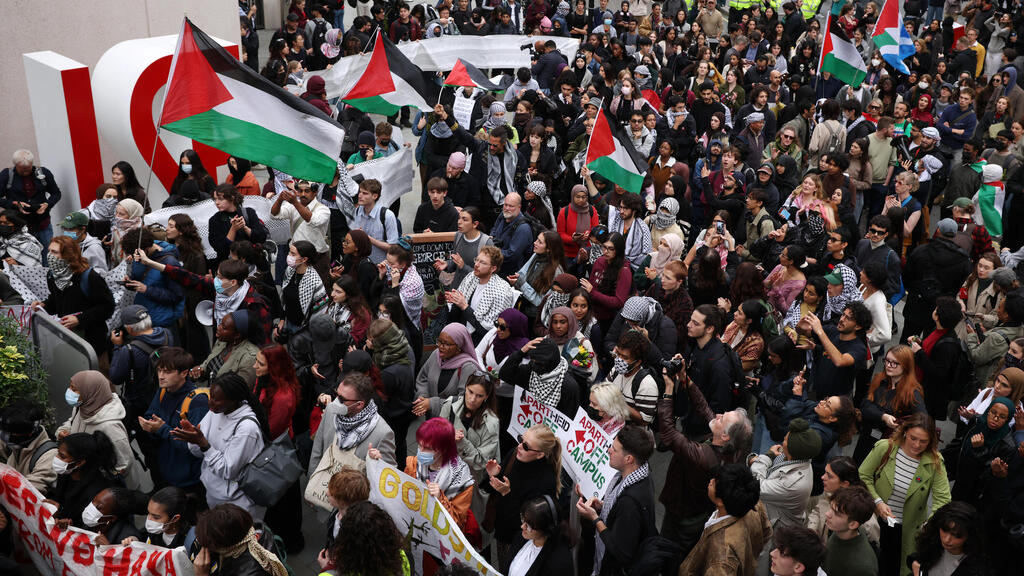
Are we approaching the end of centuries of Jewish presence in the United Kingdom? This is not only about the dramatic rise in antisemitic incidents since October 7, nor solely about the wave of anti-Israel demonstrations that have effectively turned into protests against Jewish existence itself. It is not just about the loss of basic personal security, the fear of wearing a Star of David, affixing a mezuzah or appearing visibly Jewish in public.
All of these are symptoms of a far deeper and more troubling process: a seismic shift that is eroding foundations built over centuries.
British Jewry is a deeply rooted community, third, fourth and fifth generation, that built careers, community institutions and embraced British identity in the most intimate way. Today, many feel betrayed and are reaching a painful conclusion: their future in the kingdom is fading.
According to a survey by the British group Campaign Against Antisemitism, for the first time in a decade, a majority of British Jews no longer see a future in the country. Sixty-one percent said they had considered leaving Britain over the past two years.
Britain’s demographic reality has changed at a dizzying pace. The country is now home to approximately 11 million immigrants. According to 2021 data, around 4 million Muslims live in Britain, about half of them immigrants and half British-born. Reform UK, led by Nigel Farage, estimates that roughly 1 million undocumented migrants are also present in the country.
In recent years, the largest asylum-seeker groups have arrived from Pakistan, Afghanistan, Iran and Bangladesh. Some hold extreme and antisemitic views and have high birth rates. The result is clear: the Jewish public space is steadily shrinking.
This did not happen overnight. For more than two decades, Muslim immigration has steadily gained political influence across Western Europe and particularly in Britain. The war Israel was forced into following the October 7 massacre pushed these trends to a boiling point.
For years, British governments chose not to fully enforce existing laws against antisemitism, attempting to maintain a false balance of interests. Law enforcement operated under the assumption that strict enforcement could trigger widespread violence from Muslim communities, while potential harm to Jews was seen as an acceptable price.
This is not liberalism. It is surrender.
The consistent failure of successive British governments to confront an aggressive minority, supported by the radical left, progressive academia and large segments of the media, emboldened lawbreakers and intensified both incitement against Israel and attacks on Jews.
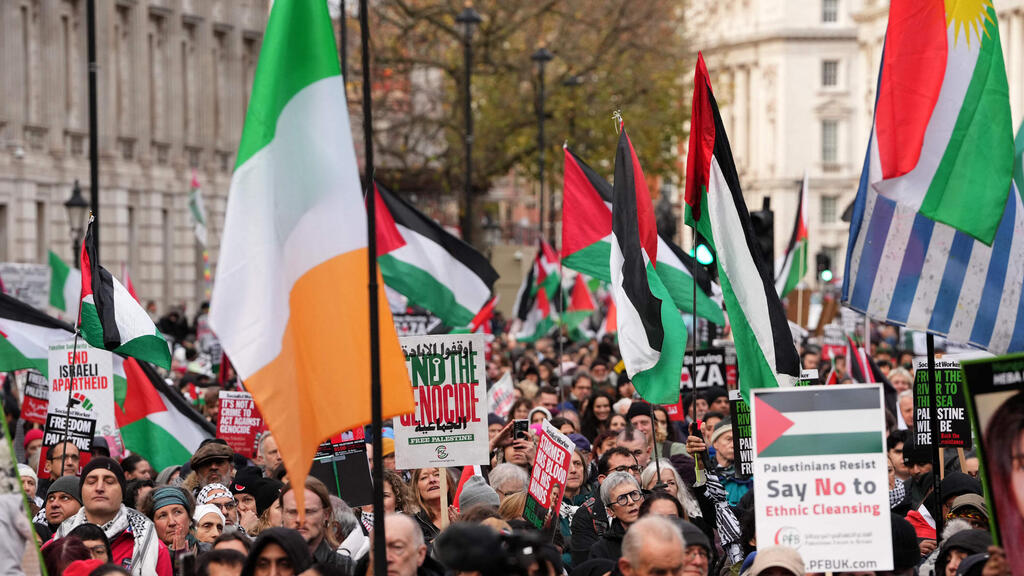
Pro-Palestinian protest in the UK
(Photo: Carlos Jasso/ AFP)
The numbers speak for themselves. In 2023, Britain recorded a historic high of 4,296 antisemitic incidents, according to the Community Security Trust. The trend continued in 2024, with 3,528 incidents. In the 1990s, only dozens or a few hundred incidents were recorded annually.
Since the early 2000s, incidents have risen steadily, with sharp spikes almost always coinciding with military confrontations Israel was forced into. The police chief of Greater Manchester put it starkly: “Jewish children are the only children in our country who go to school every day behind high fences, with security guards and constant patrols. The Jewish community lives in a way no other community does.”
A partial and insufficient shift
Only after more than two years of massive anti-Israel demonstrations, and following deadly attacks in Australia and earlier in Manchester, did authorities begin a partial and inadequate policy shift. Police have announced plans to act decisively against calls for a “global intifada” or slogans such as “from the river to the sea.”
It is too little, too late.
Existing legislation still allows racist incitement to continue with little consequence, and the government shows no urgency in changing it.
Over the years, I have repeatedly been accused of Islamophobia and even racism, at times by senior figures within the Jewish community, after warning about the demographic changes unfolding in Britain and their possible implications for the future of Jews in the kingdom.
European antisemitism did not begin with Muslim immigration, but in recent decades it has been suppressed and disguised as “criticism of Israel.” Democratic systems enabled extremist migrant leadership to use political tools to exert disproportionate influence over issues that should have been self-evident, such as enforcing public order and protecting Jewish communities.
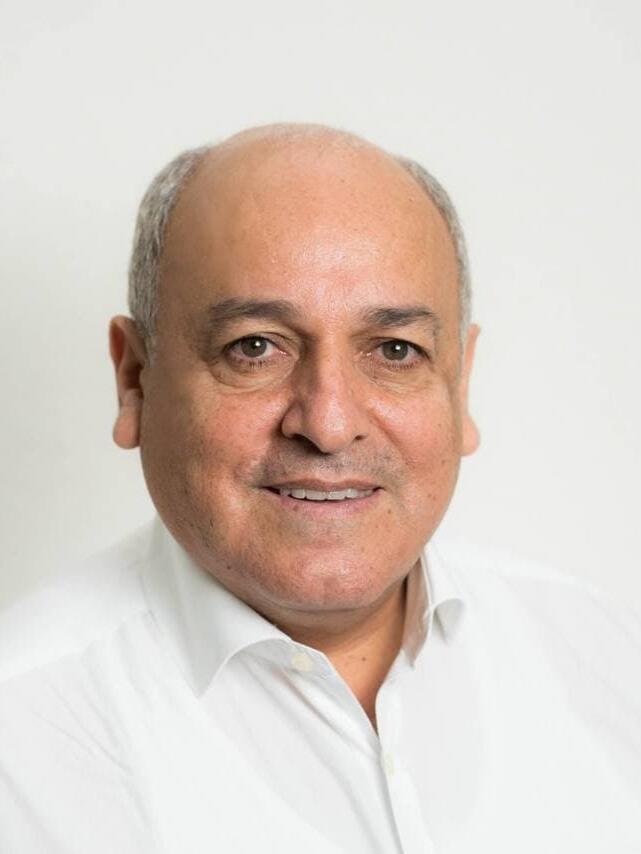 Samuel Hayek
The latest war unleashed antisemitism in its full force and enabled a resurgence of classical Jewish exclusion. A recent Campaign Against Antisemitism survey found that the most serious threats perceived by British Jews come from Islamist extremism, cited by 96 percent, and the radical far left, cited by 92 percent.
I struggle to see the British government taking extraordinary steps such as revoking citizenship from those involved in terrorism, deporting illegal migrants or enacting legislation to curb incitement in mosques. I also struggle to envision meaningful action against the severe bias in British media and academia toward Israel and Jews.
The approach toward immigration is likely to remain lenient. Radical immigration will not stop. Britain, like Europe as a whole, appears set on a path of self-destruction and identity erosion.
It is time to wake up.
British Jews must seriously examine emigration options, whether to Israel or to other countries. This is already happening, and the pace will only accelerate.
Speaking plainly after years of denial
Over the years, I have repeatedly been accused of Islamophobia and even racism, sometimes by senior figures within the Jewish community, after warning about demographic changes in Britain and their potential consequences for Jewish life.
For far too long, it was almost a social taboo to speak openly about antisemitism in Britain, and certainly to attribute parts of it to elements within the Muslim community. Islamic civic organizations succeeded in establishing a powerful social narrative, largely immune to criticism, using the term “Islamophobia” as a political tool to block any serious discussion of extremism, incitement and violence.
Some Jewish community leaders denied these underlying processes and gravely misjudged the situation when they continued to claim this was a “golden age” for British Jewry. Today, it is clear to all that a real existential threat faces Jewish life.
I am not trying to incite panic. I am calling on Jews to open their eyes. Britain today no longer guarantees a safe Jewish space. Those who convince themselves this is a passing wave and choose to wait it out risk repeating the mistakes of the past.
Sometimes leaving in time is not an act of panic, but the fine line between a warning ignored and lives saved.
Samuel Hayek is a senior leader of British Jewry