

After the fall of Bashar Assad’s regime in late 2024, Syrians looked forward to a new era of freedom, justice and democracy. Yet reality quickly betrayed those hopes. Turkey has emerged as a dominant player in post-Assad Syria—not as a supporter of the Syrian people, but as a pragmatic power driven by narrow national interests, regional deals and a troubling silence over massacres carried out under interim President Ahmad al-Sharaa (formerly al-Golani).
Years before Assad’s fall, Turkey entrenched its military presence in northern Syria through operations like Euphrates Shield, Olive Branch and Peace Spring.
Gallery

Syrian interim President Ahmad al-Sharaa, Turkish President Recep Tayyip Erdoğan
(Photo: AL ARABIYA TV/Handout via REUTERS, Andrew Harnik / GETTY IMAGES NORTH AMERICA / AFP)
Today, regions such as Jarabulus, al-Bab, Afrin, Tel Abyad and Ras al-Ayn are under direct Turkish administration: transactions are conducted in Turkish lira, schools follow Turkish curricula and local institutions answer to Ankara. These are no longer “safe zones”- they are extensions of Turkish influence in Syria’s new order.
Even after Assad’s ouster, Turkey’s compass has not changed: preventing the emergence of any autonomous Kurdish entity on its borders.
Ankara continues to focus its military and diplomatic maneuvers on weakening the Syrian Democratic Forces (SDF), even at the expense of national stability or the protection of communities endangered under al-Sharaa’s rule.
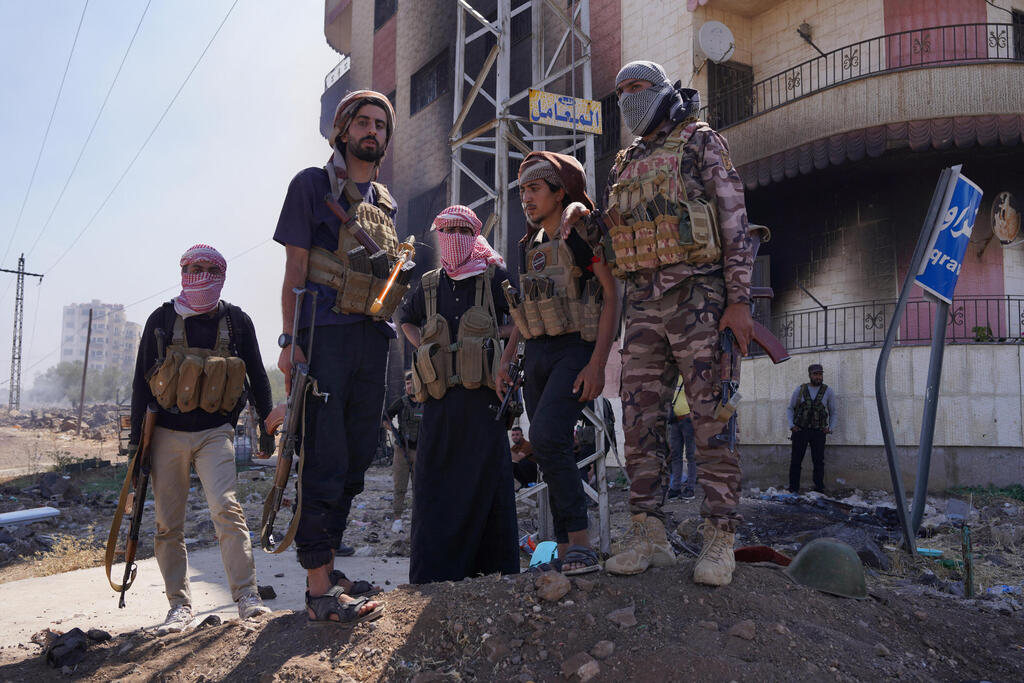
Regime loyalists in Syrian Druze stronghold of Sweida
(Photo: REUTERS/Karam al-Masri)
This arrangement has entrenched a division of Syria into spheres of influence at the expense of its people, leaving areas such as Sweida to face sieges and repression alone.
In post-Assad Syria, tensions between Turkey and Israel have become increasingly apparent. Israel views dismantling Iran’s influence as paramount, while Turkey maintains coordination with Tehran and Moscow to safeguard its zones of control. Turkey-backed factions deliberately avoid confronting Iranian positions west of the Euphrates, creating a security environment where Israeli and Turkish priorities collide.
More concerning, however, is Ankara’s “bear hug” strategy toward Ahmad al-Sharaa. Instead of direct confrontation, Turkey has opted for a policy of containment and calculated embrace, offering indirect support, economic deals, logistical assistance and weapons to gradually bind al-Sharaa to its orbit.
This strategy enables Ankara to tighten its grip on Damascus without costly confrontation, leveraging its influence in the north to pressure the new regime’s decisions.
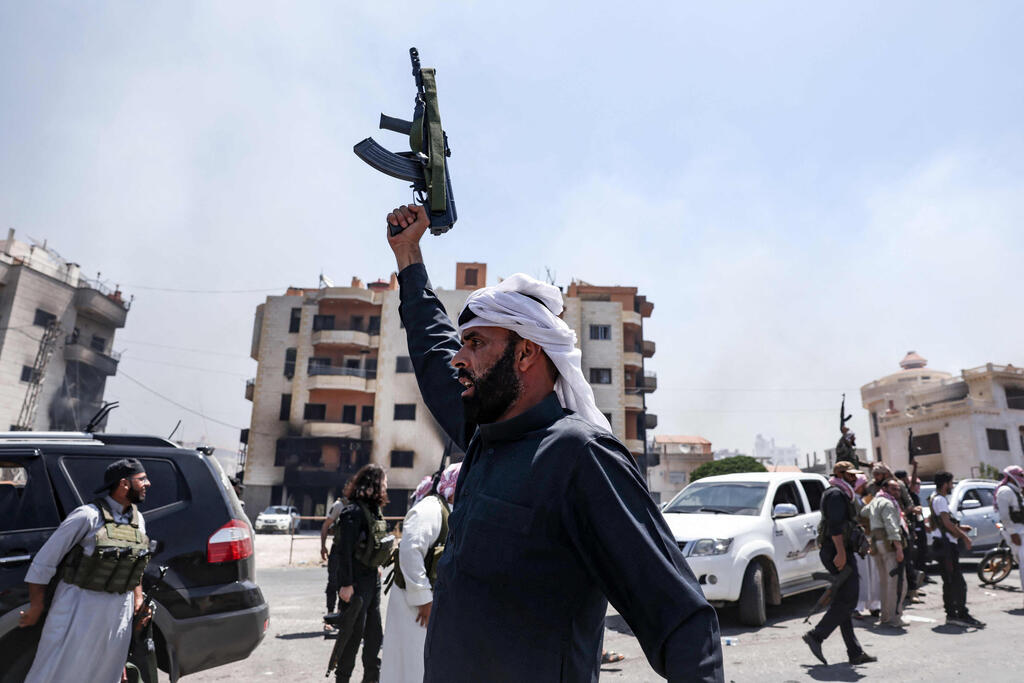
Regime loyalists in Syrian Druze stronghold of Sweida
(Photo: Bakr ALkasem / AFP)
For Israel, this approach poses a dual threat: it preserves Iran as a tacit partner to Turkey in certain files while granting Ankara a growing foothold over Syria’s political center through al-Sharaa, a shift that could dramatically alter the region’s balance of power.
Even after Assad’s fall, Turkey continues to wield the Syrian refugee issue (3.6 million people) as a pressure tool on Europe: “Provide funding and political support, or we open the borders.”
Get the Ynetnews app on your smartphone: Google Play: https://bit.ly/4eJ37pE | Apple App Store: https://bit.ly/3ZL7iNv
Domestically, President Recep Tayyip Erdoğan exploits the issue electorally by promising to “return refugees to safe zones,” which in reality are Turkish-controlled territories, not sovereign Syrian land.
Since al-Sharaa took power, Sweida and the coastal regions have witnessed massacres and sectarian cleansing targeting Druze, Alawites and Christians.
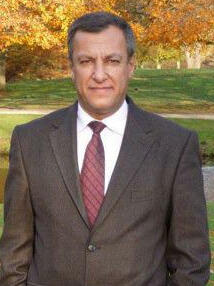 Munir Dahir
Turkey has remained conspicuously silent, choosing instead to focus on entrenching its positions in the north while ignoring the suffering of minorities subjected to violence and persecution.
In post-Assad Syria, Turkey has shifted from being perceived as a “supporter of the people” to becoming a power broker devoid of principle, exploiting chaos to cement its dominance. Meanwhile, Syrians, especially in Sweida, bear the brunt of new bloodshed and deepening divisions.
Ankara’s current policy is not about protecting Syrians. It is about securing its interests in a fractured country stripped of sovereignty and bartered among regional powers.