

In today’s globalized world, money is not just an economic lever; it is a political one. Capital flowing from the Gulf states, led by Qatar and Saudi Arabia, now exerts both direct and indirect influence on decision-making in Washington, Europe and Jerusalem. Through lobbying, funding of policy institutions, deep involvement in academia and large-scale investments in infrastructure and technology, these states have built a soft but highly effective network of influence. Israel, positioned at the heart of this strategic arena, has good reason to be concerned.
Since the 2017 Gulf crisis, Qatar has invested tens of millions of dollars annually in a sophisticated lobbying apparatus in the United States. According to Foreign Agents Registration Act (FARA) filings, these funds have been directed to senior political consultants, lobbying firms, academic institutions and think tanks. One notable example is the roughly $15 million Qatar provided to the Brookings Institution, widely regarded as an influential actor in shaping policy discourse in Washington.
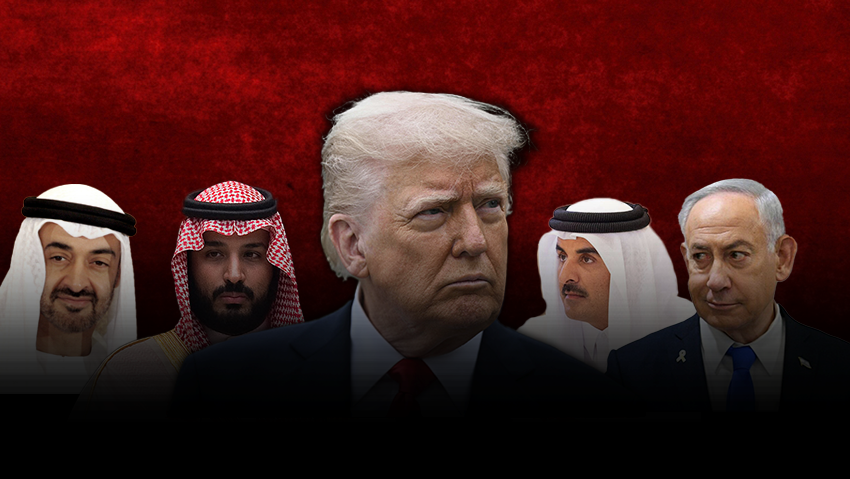
(Photo: Shutterstock, Gettyimages , Reuters, Reuven Castro)
In parallel, Qatar has financed the establishment of prestigious university branches in Doha, including Georgetown and Cornell. These initiatives are not simply acts of academic philanthropy; they are part of a long-term strategy to build networks with Western political, academic and business elites, networks through which agendas can be shaped and policymakers influenced.
Today, Qatar plays a central role in mediating between Israel and Hamas, not only because of its geographic location, but also thanks to its substantial financial leverage. Over the years, Doha has transferred hundreds of millions of dollars to the Gaza Strip, including $360 million in 2021 and $15 million per month during 2018, with the indirect approval of both Israel and the United States.
This influence stems not only from Qatar’s financial involvement in Gaza but also from the presence of Al-Udeid Air Base on its territory, a forward headquarters of U.S. Central Command (CENTCOM). Qatar has invested more than $8 billion in developing the base, giving it significant weight in Washington’s strategic considerations.
Saudi Arabia employs a different strategy. Its sovereign wealth fund (PIF) has become a major player in the global economy. It controls the electric vehicle company Lucid, has invested billions of dollars in Uber, and poured $45 billion into SoftBank’s Vision Fund. This deep interdependence between Riyadh and Western economies limits these countries’ diplomatic freedom of action.
This dynamic is particularly evident on sensitive issues such as oil prices, the murder of Jamal Khashoggi or the kingdom’s relations with China and Russia. Western governments tend to proceed with notable caution. Saudi capital does not merely “speak”, it sets the pace.
 Munir Dahir
The growing influence of Gulf money on Western policy has direct implications for Israel. When Western policies are shaped by actors whose interests do not necessarily align with Israel’s, new pressures and constraints arise. These can manifest as a softening of stances toward Hamas, shifts in security priorities or increased diplomatic and military restraints.
Moreover, direct Gulf investments in Israel, particularly in real estate, energy and high-tech, could provide external actors with access to sensitive information or create potential leverage in the future, if not carefully and transparently managed.
To address these challenges, Israel should consider several concrete policy measures. First, establish a dedicated foreign investment review mechanism, similar to the U.S. Committee on Foreign Investment in the United States (CFIUS), to oversee foreign investments in sensitive sectors.
Secondly, enforce transparency requirements for academic and research institutions regarding external funding, particularly from states with significant regional influence.
Then, enhance strategic coordination with the United States to reduce the impact of Gulf capital on critical regional policy.
And finally, tighten oversight of Gulf investments in Israel, especially in infrastructure, energy, technology and defense sectors.
Gulf investments in the West are far from being purely economic moves. They are powerful tools for shaping policy and exerting soft influence, tools that are already bearing fruit in Washington and across Europe. Qatar and Saudi Arabia exemplify this reality. Israel, situated at the crossroads of these interests, cannot afford to remain passive. It must develop a transparent, focused and strategic policy to ensure that Gulf capital does not become a factor that dictates its national security.