

For more than a year, Turkish President Recep Tayyip Erdogan has sought to present momentum toward realizing his “neo-Ottoman” vision, positioning himself as a leader of the Muslim world. In recent days, however, the achievements he built during that period have unraveled before his eyes, with little he can do to stop it.
Over the past year and a half, Erdogan has presented both the Turkish public and the broader Muslim world with what he described as unprecedented momentum toward fulfilling the vision of neo-Ottomanism. This display rested on five strategic pillars that appeared stronger than ever.
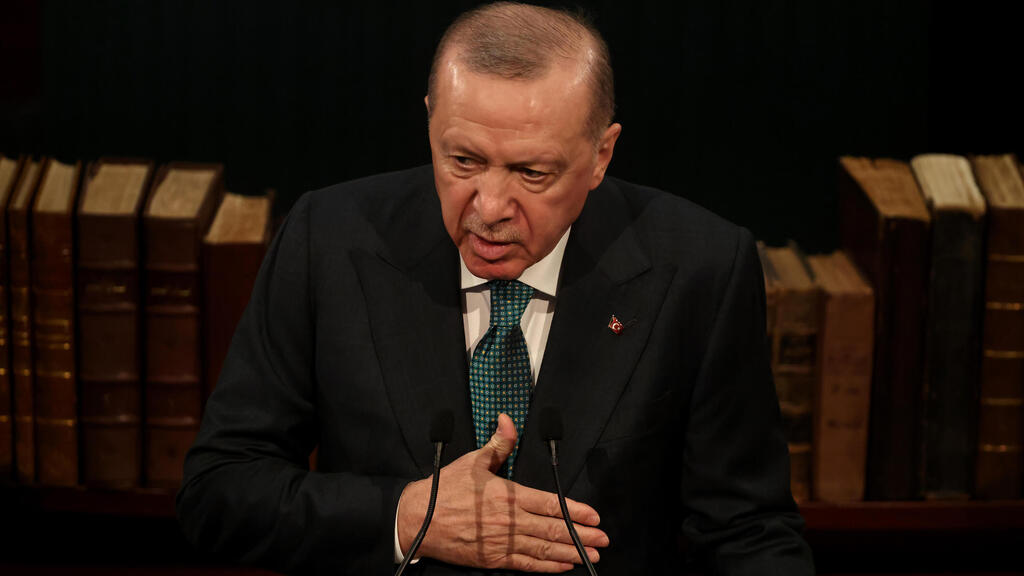
Turkish President Recep Tayyip Erdogan
(Photo: Chris McGrath/Getty Images)
First was what Ankara portrayed as the final submission of the Kurdish insurgency, the PKK. Second was the meteoric rise of al-Jolani in Syria under a Turkish “playbook” that had previously been implemented in Libya and Somalia. Third was an energy breakthrough off the coast of Mogadishu, with potential reserves estimated at half a trillion dollars. Fourth was the growing international reputation of Turkey’s military industry. And fifth was what Ankara presented as an intimate and direct axis with the White House.
Erdogan hoped to translate these achievements into leadership of the Muslim world as a whole, the ultimate ambition of the modern-day sultan.
Yet in the past 72 hours, each of these pillars has collapsed in what appears to be a cascading chain reaction, leaving Ankara with no effective means to halt the process. Recent speeches by Erdogan and by his energetic foreign minister, Hakan Fidan, reflect the depth of Turkish embarrassment and helplessness in the face of these developments.
The first and most painful crack appeared in the diplomatic arena.
As recently as Thursday, at the conclusion of the Geneva summit, Fidan boasted that “nothing happens in the region without Turkey,” attempting to position Ankara as the central mediator with Iran. It soon became clear, however, that Israel and the United States had been coordinating both operationally and diplomatically in full secrecy.
Turkey’s complete exclusion from the room during the strike on Iran was not merely an intelligence failure. It was a public humiliation that exposed Ankara’s lack of relevance within the Western decision-making axis.
At the same time, Turkey’s attempt to forge a unified Arab front faltered in the face of the realism of Saudi Arabia and the United Arab Emirates. Both preferred the framework of the Gulf Cooperation Council and quiet coordination with Israel over what they saw as Turkish Islamist adventurism.
In the military arena, the myth of Turkish technological superiority also suffered a severe blow.
Faced with the cyber capabilities, electronic warfare and precision weaponry demonstrated by Israel in Central Asia and Iran, drones produced by the Turkish firm Baykar appeared suddenly outdated. Fidan’s admission that without dominance in space and cyberspace Turkey cannot achieve superiority on the modern battlefield amounted, in effect, to a technological capitulation.
In Syria as well, Israel systematically dismantled the remnants of Assad’s military and blocked any potential agreements with al-Jolani that might have granted Turkey strategic leverage in the region. Instead of replicating the Somalia model in Syria, Erdogan discovered that Israel had left him without bargaining chips.
This strategic failure is compounded by persistent economic difficulties that threaten Erdogan’s domestic stability.
Turkey’s inflation, which rose to 31.5% at the beginning of 2026, continues to erode the purchasing power of the middle class, while the Turkish lira remains under pressure against the dollar.
The most painful blow came from international markets. The withdrawal of Norway’s sovereign wealth fund, the world’s largest institutional investor, from investments in Turkish banks due to regulatory instability and corruption signaled to other investors that Turkey still falls short of the standards required for significant foreign investment.
Even the energy dream has suffered a setback. Ankara’s frequent declaration that “no energy corridor exists without passing through Turkey” now appears hollow as Israel tightens an emerging axis with India and Greece. Liquefied natural gas is now being unloaded at Greek ports and fed into the European pipeline network from there.
Above all, the “Kurdish nightmare” looms over these developments.
The weakening of Iranian influence in northern Iraq and Syria has created a vacuum that is reviving Kurdish independence aspirations. For Erdogan, a strong Kurdistan aligned with the West represents an existential threat to Turkey’s territorial integrity. The knowledge that Israel and the United States are shaping the region without Turkey only deepens the anxiety in Ankara.
Politically, the pressure is also mounting.
The year 2027 will effectively mark the start of the election cycle, and the decisive vote scheduled for May 2028 appears increasingly distant and difficult for Erdogan’s AKP party.
Three leading contenders are already seen as potential successors. They include former intelligence chief and current foreign minister Hakan Fidan; aerospace engineer and chairman of Turkey’s leading defense company, Selcuk Bayraktar, who is also Erdogan’s son-in-law; and current intelligence chief and longtime Erdogan adviser Ibrahim Kalin.
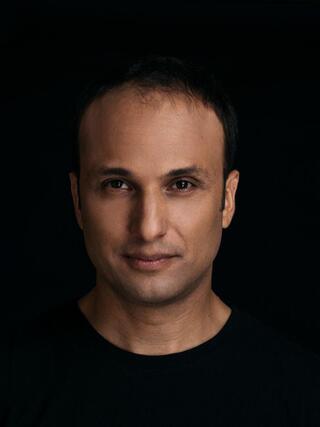 Jonathan Adir
Recently, however, Erdogan has been investing significant political capital in promoting his son Bilal as a potential successor. The internal tension is evident, while the opposition to the AKP continues to maintain support despite the imprisonment of several of its leaders.
The cascade of failures over the past 72 hours forces Turkey to reconsider its strategic course. For Israel, however, the moment presents an opportunity to shape an exit strategy in which Turkey is no longer a veto player but rather a power forced to adapt to a new Israeli-American order.
If October 7 was a test for Israel, for Erdogan, it has become an experiment that ended with the collapse of the immune system of his neo-Ottoman vision.
One can only hope that Israel and Turkey will eventually return to the strategic cooperation that characterized their relations until 2009. Working together to shape the region could once again bring both countries significant success.