

Israel's precision strikes reduced Iran's nuclear facilities in Natanz, Fordow and Isfahan to rubble. Khamenei's regime imploded under its own weight. Hezbollah's Bekaa Valley bunkers collapsed. Houthi redoubts in Sana'a fell silent. Tehran's proxy empire disintegrated. We secured strategic triumph. While Israel absorbed global applause, Kim Jong Un secured Iran's proxy network.
On April 19, Pyongyang conducted its seventh missile test of 2026. Kim supervised five Hwasong-11 Ra ballistic missiles obliterate an island target. Cluster warheads disperse hundreds of submunitions across 13 hectares, defeating Iron Dome saturation defense. North Korea studied our war, mastered the solution. Hwasong-11 Ra, derived from Russian-developed Iskander, maneuvers low to evade terminal intercept.
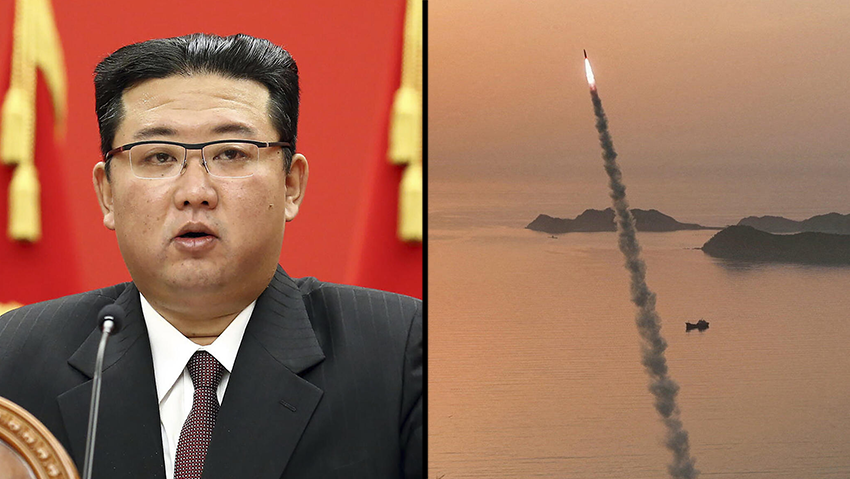
Kim spoke directly to Iran's proxies. To state media he declared: "If Iran asks, we will supply missiles against Israel. One missile is enough to erase it."
Pyongyang engineered Iran's arsenal from blueprints of its Nodong missile family. Shahab-3, Emad, Ghadr-1 and KN-23 all trace to Yongbyon designs. Tehran's collapse rerouted proxies to their original supplier. Hezbollah inherits North Korean tunnel complexes that survived our deepest raids. Houthis secure Sinpo shipyard drone architectures. Iraqi militias funnel Yongbyon uranium enrichment south. Cash-for-oil pipelines restart immediately. North Korean technicians embed in Lebanese bunkers. Our war data accelerates their production lines.
Iran withheld nuclear weapons and perished, just as Muammar Gaddafi surrendered in 2003 and was executed. Pyongyang learned atomic weapons guarantee survival. To his Supreme People's Assembly, Kim declared: "Today's reality clearly demonstrates the legitimacy of our nation's strategic choice and decision to reject the enemies' sweet talk and permanently secure our nuclear arsenal." North Korea's status is irreversible. The arsenal includes 50 warheads, Hwasong-18 ICBMs reaching America, and nuclear-armed Choe Hyon-class destroyers.
Under this nuclear umbrella, proxies operate differently. Hezbollah rocket barrages escalate without existential fear. Houthi blockades tighten around Eilat with cluster warheads inbound. Israeli retaliation must now weigh Kim's MIRVs (Multiple Independently Targetable Re-entry Vehicle ballistic missiles), not merely proxy bunkers.
Iran's JCPOA diplomacy of the last decade shielded Pyongyang's ascent. Every UN session focused on Tehran's enrichment freed Yongbyon from scrutiny. Khamenei's collapse validates Kim's doctrine to every proxy watching from Beirut to Sana'a. The pattern was visible months ago to those paying attention. April 19 confirmed the trajectory.
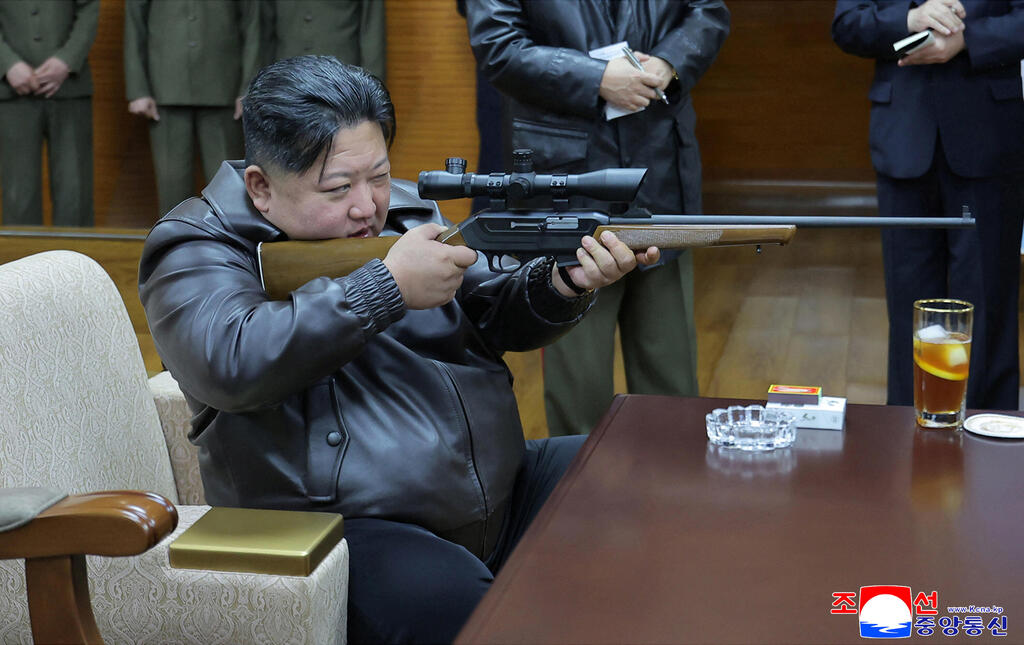
(Photo: KCNA via REUTERS)
The International Atomic Energy Agency's (IAEA) April 15 warning notes a "very serious increase" across Yongbyon reactor, reprocessing and light-water operations. CSIS satellite imagery confirms a completed new enrichment hall with generators, cooling towers and fuel storage capable of doubling weapons-grade uranium output. North Korea shipped RD-250 rocket boosters to Isfahan for a decade. The factories we bombed contain institutional knowledge that endures in Yongbyon.
Kim addressed Israel directly. His cluster munitions target our defenses precisely. His nuclear umbrella protects its proxies directly. Hezbollah's next salvo will carry no Iranian markings. Cluster-armed, nuclear-backed and proxy-delivered, it launches Pyongyang's war by another name.
Israel must adapt appropriately. Forensic attribution of every intercepted warhead strips Pyongyang's deniability before the UN and Gulf allies. Sanctions must sever the North Korea-Iran oil pipeline and demand IAEA access to proxy arms caches. No Israeli Air Force strike package reaches Yongbyon. Diplomatic leverage remains our only instrument. Washington, Tokyo and Seoul must offer Pyongyang reunification security guarantees in exchange for Middle East divestment. Gulf states must pressure Beijing. Naval interdictions will expose Chinese complicity.
Iran's corpse bought us time. Pyongyang's proxies will define our future.
Jeshurun Hight is an academic intern at the Moshe Dayan Center and a graduate student in government at Reichman University; he studied diplomacy at the University of Oxford.