

In recent days, international media reported that former Real Madrid soccer star Royston Drenthe, only 38 years old, entered intensive rehabilitation following a stroke he suffered last month.
Drenthe’s case highlights a severe issue that extends far beyond the sports world. In Israel, for example, approximately 18,300 new stroke cases occur annually, leaving many survivors with disabilities and the daunting task of rebuilding their lives from scratch.
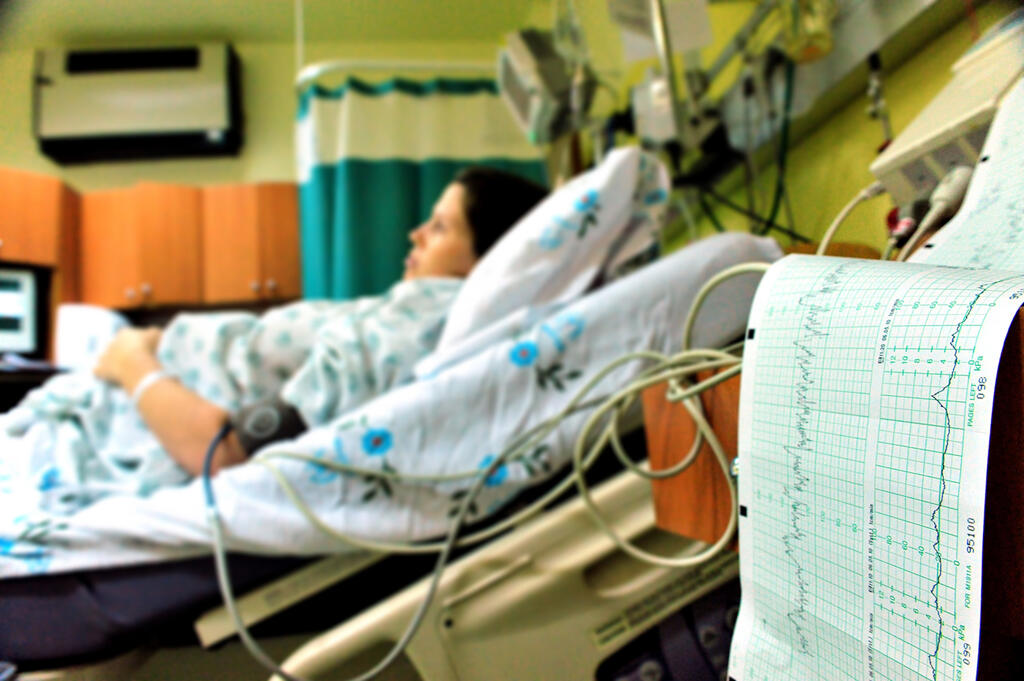
(Photo: shutterstock)
This represents a massive economic burden. A recent report by the Neeman Association for Stroke Survivors estimated the direct and indirect costs of new stroke cases in Israel at approximately $630 million annually. This figure includes hospitalization, treatments, disability benefits, and most significantly, the loss of productivity resulting from suboptimal rehabilitation. Every individual who fails to return to full function transforms from a productive member of the workforce into a burden on the system, and that cost only compounds over time. While these figures reflect the Israeli reality, the trend is identical across Western healthcare systems.
Here lies the deepest problem. The healthcare system focuses on physical metrics, teaching a patient to walk, talk, or hold a cup. Yet, when medical rehabilitation ends, the emotional and mental struggle is just beginning. Anxiety about the future, Post-Traumatic Stress (PTSD) from the event, and a profound loss of control are rarely treated adequately within the current standard of care.
A new international study, published in late October in the Journal of Rehabilitation and Disability Studies, found that while the system views hospital discharge as the "finish line" for patients, it is merely the start of a confusing and challenging era.
Even doctors, physical therapists, and social workers struggle to provide a comprehensive solution. Services for community-based emotional, occupational, and family rehabilitation are scarce. Consequently, the transition from the protective bubble of the medical system to the "real world" is often brutal.
The assumption that the body and mind can be treated separately is an illusion. A person surviving an extreme medical event faces an existential crisis. The system must redefine the concept of "recovery." Recovery is not just about being discharged from a hospital bed; it is about feeling part of life again. It is not just surviving, but functioning, participating, and finding meaning. The state must invest in a true continuum of care.
To prevent the patient from "falling through the cracks" into the void post-discharge, the solution must begin within the hospitals and rehabilitation wards. The model must shift from being department-based to Patient-Based.
Comprehensive care cannot be an option; it must be standard. Every patient undergoing a life-altering medical event, whether a stroke or a complex injury, must be assigned to a permanent multidisciplinary team from the moment of admission.
This team cannot consist solely of a doctor, nurse, or physical therapist. It must routinely include a rehabilitation psychologist or clinical social worker to immediately address the mental trauma, anxiety, and depression accompanying the physical crisis. Simultaneously, occupational therapists and speech-language pathologists need to build a plan that goes beyond restoring basic functions. They must examine the patient's former world career, hobbies, and family role and bridge the gap back to that life. This envelope must also include intensive guidance for family members, who often become primary caregivers overnight and lack the tools to cope.
This is a conceptual shift: from "fixing" the body to "rebuilding" a life, starting from day one of hospitalization.
However, this team’s role does not end at the hospital exit. A critical, defined part of their job must be managing the transition to the community. The team should establish direct contact with community health providers and follow-up facilities before discharge, creating a "transfer dossier" that is not just medical, but socio-functional.
The goal is to create absolute continuity of care, ensuring the patient is seamlessly transferred to continued emotional, social, and occupational care in the community, as an integral part of the rehabilitation plan that began in the hospital.
If medical success is measured solely by reduced hospital stays and healed physical wounds, the system will continue to produce a generation of broken "survivors" and pay billions for it. It is time to stop repairing what was damaged and start rebuilding what was broken.
Emil Ilionski is the CEO of Integrative Medical Care, a rehabilitation hospital.