

'If the enriched uranium remains in Iran, the war has failed'
After the United States withdrew from the nuclear deal with Iran, Tehran enriched some of its uranium beyond the levels permitted under the agreement. It also prevented the International Atomic Energy Agency (IAEA) from maintaining close oversight of these processes, in clear violation of its obligations under the Nuclear Non-Proliferation Treaty.
In its latest report, the agency said Iran possesses 440.9 kilograms (about 972 pounds) of uranium enriched up to 60%. Even so, removing the uranium from Iran was not included among the objectives of Operation Rising Lion or Operation Roaring Lion.

The reasons are straightforward: Israel, and apparently the United States as well, never intended to deploy thousands of troops deep inside Iran to seize nuclear facilities in a ground operation. While the United States, unlike Israel, has unique great-power capabilities, it appears to prefer removing the uranium as part of a comprehensive agreement. Absent such a deal, the approach is to monitor suspected sites and, if necessary, act against them from the air.
In any case, it is unclear where the enriched uranium is definitively stored, and it cannot be ruled out that some, most or even all of it is located at undisclosed sites.
At any rate, Iran’s enrichment facilities have been completely disabled, and it is doubtful they can be restored to operation anytime soon. It is also known that despite years of effort, Iran has yet to achieve a breakthrough that would allow it to move from acquiring fissile material to building an actual weapon system. Over the past year, many of the senior scientists involved in these efforts have been killed.
Without the ability to develop a weapon, the uranium Iran possesses, even if enriched to full weapons-grade, has no practical significance. In light of all this, the success of the joint U.S.-Israeli operation will not be judged by whether uranium is removed from Iran. The fall of the regime or its submission to the dictates of President Donald Trump would also resolve the uranium issue, alongside other significant advantages such developments would bring.
'Trump was misled by Israeli/Mossad optimism'
This claim reflects a misunderstanding of U.S. decision-making culture. American presidents formulate policy based solely on their country’s interests. President Trump, like his predecessors, takes allies into account, but the decisive consideration guiding the White House is what serves the American people.
Within this framework, the intelligence that informs presidential decision-making must be independently obtained by U.S. agencies. Assessments from foreign intelligence services are shared in ongoing security dialogue, but they carry weight only if supported by independently gathered U.S. intelligence.
American presidents adhere strictly to this principle. They are accountable to the Senate and House intelligence committees, which require them to detail the intelligence basis for their decisions. The notion that a U.S. president makes critical national security decisions based on assessments presented by Israeli leaders or Mossad officials runs counter to longstanding American practice.
The president’s advisory forum consists exclusively of senior administration officials and experienced intelligence and military leaders, including the CIA director, national security leadership, the chairman of the Joint Chiefs of Staff and, in the Iranian context, the head of U.S. Central Command. They are not immune to mistakes, but any such errors are homegrown, not imported.
'It is possible to decisively defeat Hamas, Iran, Hezbollah or the Houthis once and for all'
There is no way to guarantee that even a clear military defeat will end an adversary’s motivation to pursue its objectives. Phrases such as “once and for all” amount to speculation. Political leaders and military commanders are not prophets.
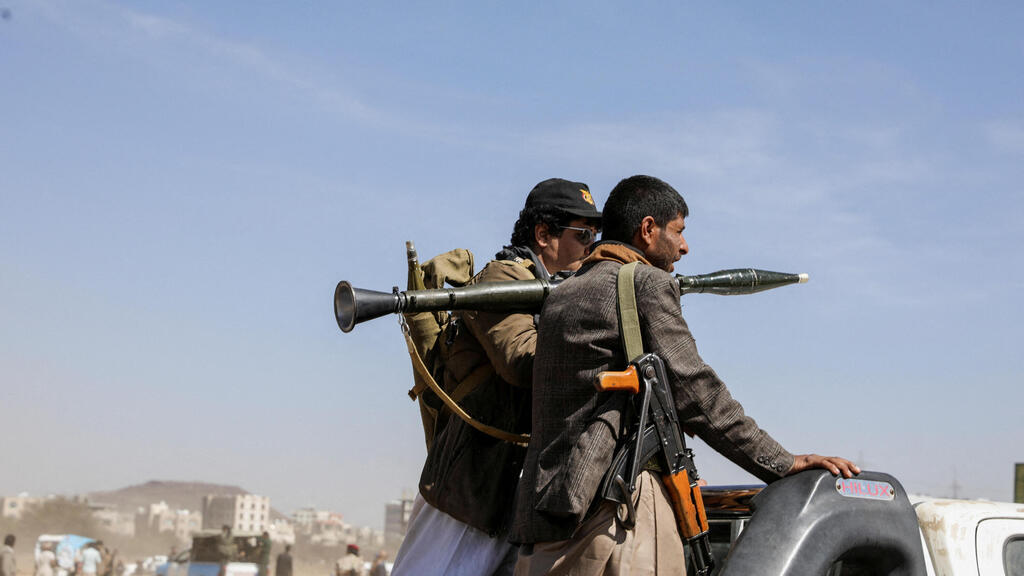
Houthi rebels
(Photo: Khaled Abdullah / Reuters )
Their responsibility is to assess the enemy’s intentions and capabilities, while recognizing that capabilities can be rebuilt and intentions sustained. This is true for states and all the more so for ideologically driven militant groups.
There are, however, realistic objectives Israel can achieve through a successful war: preventing the enemy from attaining its goals, weakening its capabilities, deterring future aggression, capturing territory and establishing operational or sovereign control, imposing political arrangements that strengthen national security and securing more favorable conditions for future conflict, including through buffer zones.
Israel has achieved such outcomes in past wars, while preparing for the likelihood that the results would not be permanent.
'We have achieved, or will achieve, total victory'
Israel’s most decisive victory came in June 1967 during the Six-Day War, when its military defeated the armies of Egypt, Syria and Jordan and ended the fighting in control of extensive territories previously held by those countries.
Even that exceptional victory, like the 1948 War of Independence and the 1956 Sinai campaign that preceded it, had a shelf life. Within a few years, Egypt launched the War of Attrition, and in 1973, together with Syria, carried out a large-scale surprise attack against Israel.
The lesson is that Israel must always prepare to win the next conflict. The more comprehensive the victory, the more likely it is to yield longer-term security benefits. But it is not serious to declare in advance what those benefits will be, or how long they will last.
 Tzachi HanegbiPhoto: Alex Kolomoisky
What is certain is that victories, like failures, may have an expiration date. When the Israeli military meets the objectives set by the political leadership, it is preferable to describe the outcome in terms that convey satisfaction without creating illusions, such as “an impressive victory,” “a decisive victory,” or “a resounding victory.”
If only a single successful operation could eliminate the hostile ambitions of Israel’s enemies for generations. A more sober outlook, however, echoes a traditional Passover Seder passage: in every generation, there are those who rise up to destroy us.