

To understand the significance of Donald Trump’s decision to withdraw about 5,000 U.S. troops from the roughly 45,000 stationed in Germany, one must go back to 1944, to President Franklin D. Roosevelt’s initiative and the Bretton Woods Conference. There, the foundations were laid not only for a new monetary system but for an entire world order shaped by the lessons of two devastating world wars. The organizing idea was clear: the United States would lead the creation of a more stable world through a combination of economic openness, collective security and limits on militarized nationalism.
Within that vision, later termed globalization, Washington assumed broad responsibilities: rebuilding Germany and Japan, opening the American market to their exports with minimal tariffs, and shaping a constitutional order that restricted their ability to undertake military action while anchoring pacifism as a core principle.
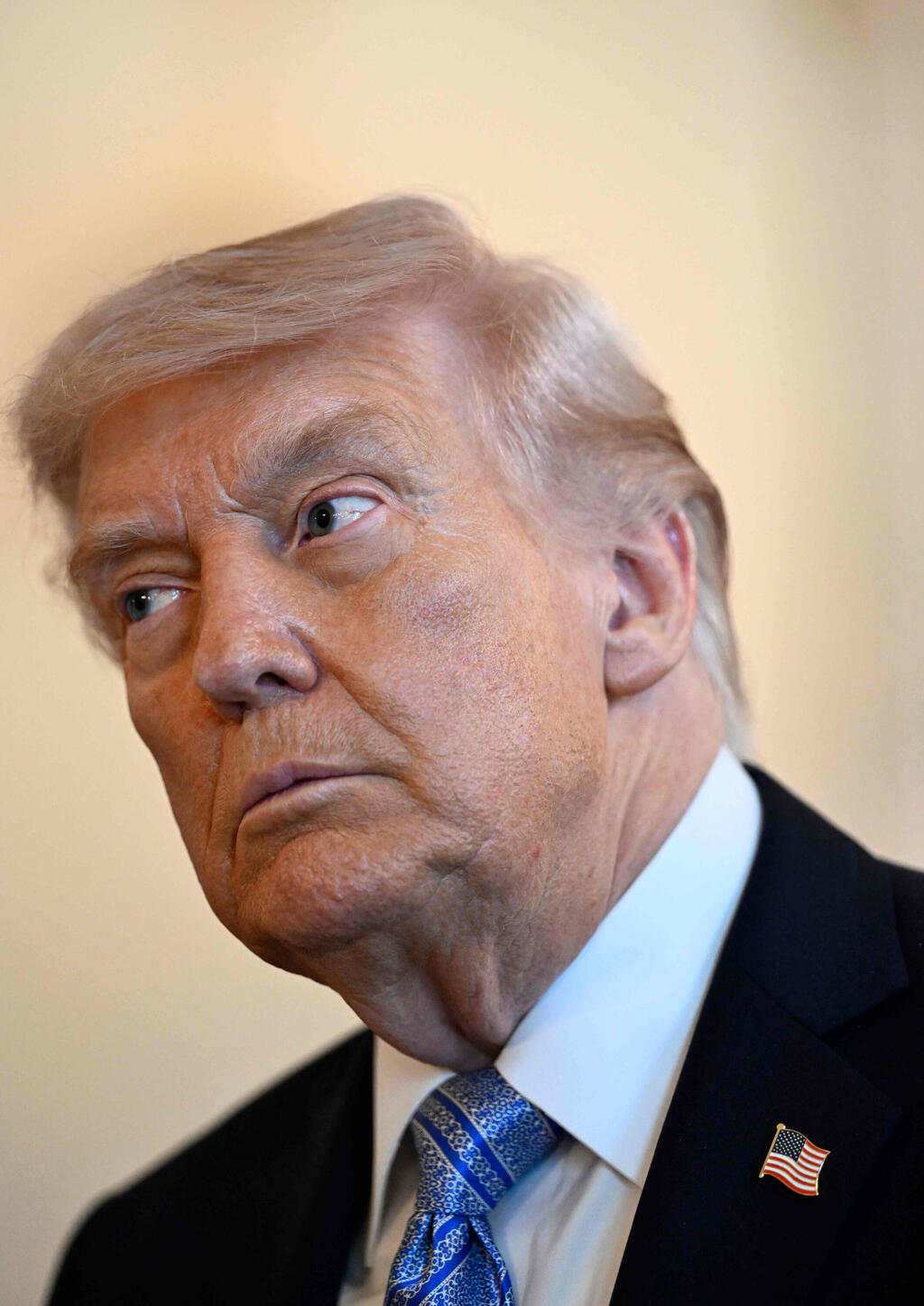
(Photo: Kent NISHIMURA / AFP)
Against this backdrop, the current friction between Trump and U.S. allies is not incidental. It began early in the conflict with Iran, when Washington asked Germany and Japan to assist in operational activities in the Strait of Hormuz, including mine-clearing and securing shipping lanes. For the U.S. administration, this was a reasonable request within an alliance. For Berlin and Tokyo, it crossed constitutional and political red lines. Germany’s refusal was unusually public.
Defense Minister Boris Pistorius said, “This is not our war.” But it was Chancellor Friedrich Merz who escalated the confrontation, saying the United States was being “humiliated” by Iran. Trump responded sharply and directly, continuing to criticize the chancellor and writing on his Truth Social platform that he “should spend more time ending the Russia-Ukraine war.” He added: “He should spend more time fixing his broken country, and he should spend less time interfering with those who are getting rid of the Iranian nuclear threat.”
The friction is no less acute in Asia. In March 2026, a political crisis erupted in Tokyo after Japanese Prime Minister Sanae Takaichi refused Trump’s request to send naval forces and mine-sweeping vessels to the Strait of Hormuz. At a White House meeting on March 19, Takaichi made clear that Japan would assist where it could but would not exceed the limits imposed by its pacifist constitution. The refusal angered the White House and stirred domestic upheaval in Japan, where lawmakers from the ruling Liberal Democratic Party warned the move could jeopardize the American security umbrella and even trigger economic retaliation.
Trump anticipated this. More than a decade ago, long before the current crisis, he pointed to the gap between U.S. commitments and what he saw as a lack of reciprocity from allies, saying: “You know about our military, everybody talks about our military budget, but they don’t understand we’re taking care of Germany, probably nobody even knows that. We’re taking care of Japan — you know, we have a defense treaty with Japan. If we’re attacked, Japan doesn’t have to help us, and if Japan is attacked, we’re in World War III. We have a war now. What kind of deal is that?”
Meanwhile, Berlin is engaged in a dual and even contradictory process. On one hand, political hesitation and a reluctance to be drawn into a confrontation with Iran alongside the United States. On the other, an unprecedented acceleration in military preparedness. The term Zeitenwende — meaning “historic turning point” or “epochal shift” — describes Germany’s attempt to change strategic direction. Accordingly, Germany is investing billions in upgrading logistical infrastructure, including adapting ports such as Bremerhaven to handle heavy tank transport.
At the same time, deals are being considered to convert civilian factories, such as Volkswagen facilities, to defense production, including cooperation with Israeli companies. Yet the gap between declarations and actual readiness remains wide. Germany faces significant challenges in building its military strength, chief among them manpower shortages, difficulties in recruitment and a lack of full preparedness for large-scale conflict scenarios. Discussions about reinstating conscription and improving operational readiness underscore how far the process is from completion.
This is compounded by a quieter but potentially more significant shift. As of April 1, an amendment to German law took effect with little public attention, requiring millions of men of service age to obtain government approval to travel abroad for more than three months. The implications go far beyond a technical change. Viewed in context, the measure strengthens the state’s ability to control its manpower in an emergency, even if it is still framed in softened bureaucratic language.
Here the paradox sharpens: Germany is preparing for a future confrontation with Russia and investing vast resources toward that end, yet hesitates to take part in the current confrontation alongside the United States. It is trying to build capabilities, change laws and prepare infrastructure, but is still not politically or operationally ready to enter real-time friction. Within this context comes Trump’s decision. The withdrawal of 5,000 troops may appear limited, but it is a clear signal. A full withdrawal would require congressional approval, but a significant reduction is within presidential authority. As such, this is likely only a first step. For Trump, the equation is simple: if allies do not act when asked, there is no reason to continue providing them with a full security umbrella. Germany and Japan are seen as benefiting from the system without sharing the burden.
The implications extend far beyond troop deployments. This is a deep crack in the order established since Bretton Woods. But unlike past crises, this is not an external challenge — it is erosion from within. If Germany and Japan continue to benefit from the U.S. security umbrella while refusing to act when called upon, and if the United States itself begins to question the value of the system it created, then this is no longer a localized crisis but a change in the rules of the game.
Trump’s drawdown in Germany may involve only 5,000 troops, but it is likely just an initial phase in a broader process. Its significance is far greater: it is an opening shot in a reassessment of the very U.S. commitment to the world order it built.
In that vacuum, there are also beneficiaries. For Russian President Vladimir Putin, any rift between Washington and Berlin is a strategic gain, one that weakens NATO from within. In Asia, the widening gap between the United States and Japan offers Chinese President Xi Jinping a similar opportunity — to test how durable American alliances are at a moment of truth.
 Dr. Kobby BardaPhoto: Tal Givoni
If this is the direction, Europe and Japan may soon discover that the world they have relied on is no longer what it was, and that the era in which the United States served as a stable and unquestioned anchor is steadily eroding.
Dr. Kobi Bardah, HIT Holon Institute of Technology (multidisciplinary school) and senior researcher at the Jewish People Policy Institute (JPPI)
First published: 07:59, 05.05.26