


Since last week, a pattern and a degree of intent have begun to emerge in the launches from Iran and in the firepower Israel is bringing to bear on Iran. It could be described as an eye-for-an-eye dynamic.
The Iranians strike the Dimona area with missiles, and we strike the heavy water reactor in Arak, even though that area had already been hit. The Iranians strike and damage a petrochemical plant producing chemical fertilizers in Ramat Hovav, and overnight, we strike a petrochemical plant in Tabriz, in northwestern Iran. The next day, the Iranians launch a cluster missile at the Bazan oil refinery in Haifa. That is one trend.
Gallery
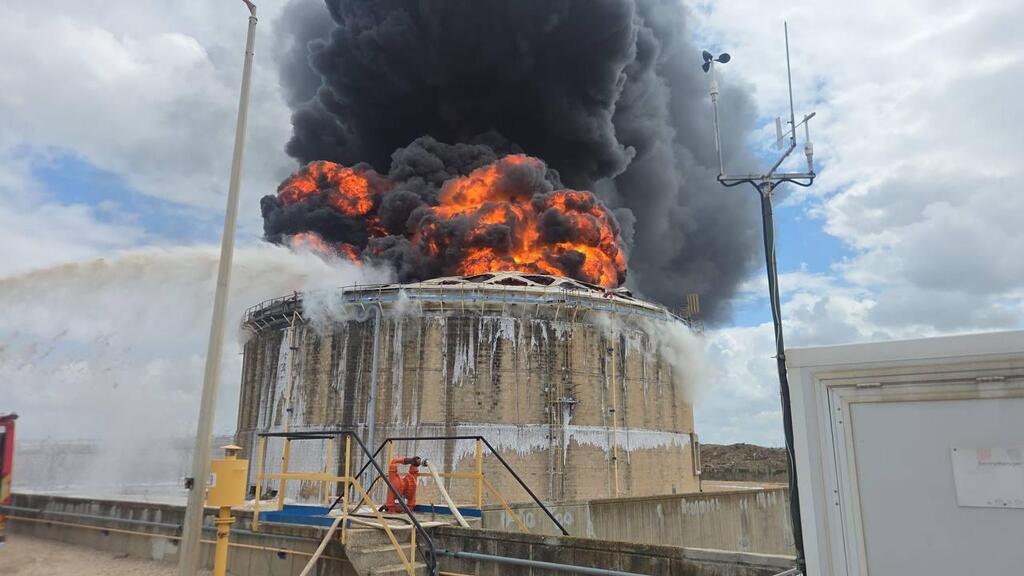
A gasoline storage tank at the Bazan oil refinery in Haifa after impact from an Iranian cluster missile, Monday
(Photo: Fire and Rescue Services)
A second trend, particularly in the Israeli strikes, is attacks on Iranian critical infrastructure with dual military and civilian uses. A clear example is the strike on steel plants in Iran that produce for the civilian market while also manufacturing steel used in missile production, and that are partly owned by the Revolutionary Guards.
That fact is worth noting because the Americans, at least in their official position as reflected in statements from the Pentagon and the White House, oppose Israeli strikes on Iran’s critical infrastructure. Washington is concerned that the Iranians will respond with barrages against oil facilities across the Gulf and further deepen the global energy crisis that is already beginning to take shape.
However, Jerusalem believes that unless Iran’s critical infrastructure is dealt a heavy blow, both the Revolutionary Guards and the Iranian civilian government will continue the hard-line, defiant course they are now pursuing, both in negotiations with the United States and in missile and drone launches toward Israel and the Gulf states.
In addition, striking critical infrastructure in Iran, such as oil depots, petrochemical plants and dams, would also intensify the internal debate now taking place within the Iranian establishment — between Revolutionary Guards hardliners and senior figures in the civilian government, most notably President Masoud Pezeshkian.
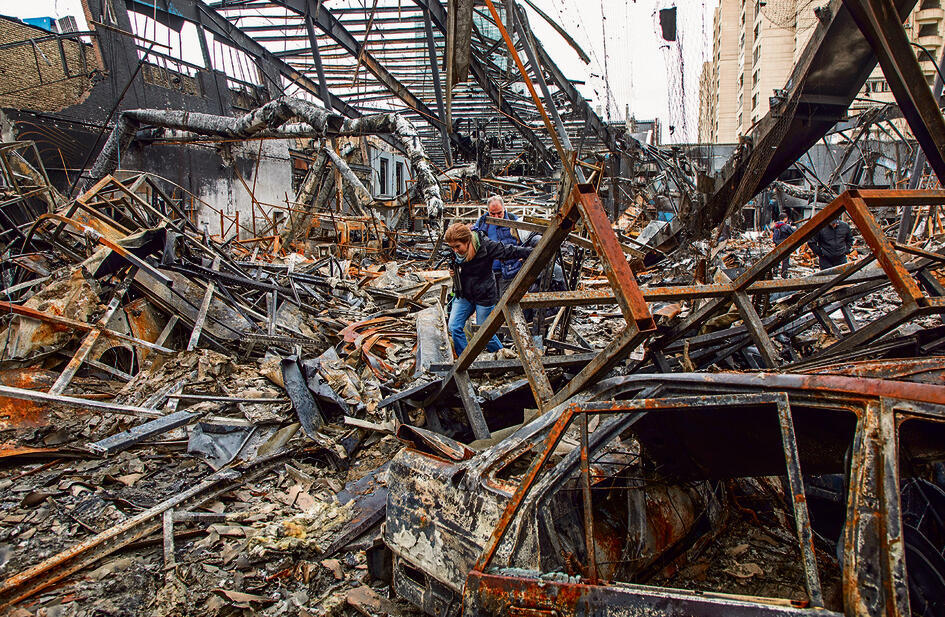
An industrial plant in Tehran struck by Israel
(Photo: Majid Saeedi/Getty Images)
As for what comes next, it appears that U.S. President Donald Trump is trying to bring the fighting to an end through diplomacy, but without giving up his main goals, such as reopening the Strait of Hormuz or getting Iran’s highly enriched uranium out of the country. If that can be achieved through negotiations, all the better.
If the war does not end soon through negotiations, the Pentagon is preparing a relatively broad range of options for Trump, including special operations that would give the U.S. president the PR victory he is looking for, after which he could forgo a diplomatic agreement with the Iranians.
At this stage, we are at a point where no decision has yet been made at the White House. Any attempt to understand what Trump will ultimately decide, based on the barrage of statements he is issuing in the media, is doomed from the outset to fail, simply because Trump still has not decided which course of action he will choose.
For now, while in Iran the military plan — at least according to U.S. CENTCOM and the IDF — appears to be unfolding step by step, in Lebanon Israel is still far from achieving its war aims. There is not even the slightest sign that Hezbollah is prepared to disarm, and there is no actor inside Lebanon capable of enforcing such a move, including the Lebanese government.

US President Donald Trump
(Photo: AP Photo/Mark Schiefelbein)
At the moment, the opposite is happening: Hezbollah is demonstrating to the Lebanese government that it, together with its Iranian patrons, remains the decisive force on Lebanese sovereign territory. That is evident, for example, in the case of the Iranian ambassador, whom the Lebanese government expelled but who has remained under Hezbollah’s protection.
Israel is trying to bring about Hezbollah’s disarmament by applying pressure. Israeli military operations have driven more than 1 million Shiites to seek refuge in northern Lebanon, and the Israeli government is urging international actors not to allow even the start of Lebanon’s reconstruction until the government moves to disarm Hezbollah.
Meanwhile, the Israeli Air Force continues to strike high-rise buildings in Beirut and the Beqaa Valley in an effort to create additional leverage. Israeli officials hope that the more the regime in Tehran shows signs of weakness and an inability to support Hezbollah, the more willing Hezbollah will be to give up its weapons, knowing its patrons are no longer there to back it as they once were.
These pressure tactics may yet produce results, but for now residents of northern Israel — roughly from the Hadera line northward — are living under daily barrages of rockets and drones launched from Lebanon. Even when they do not hit, they exact a heavy psychological toll on a population forced to remain close to shelters, all while the IDF is operating 12 brigade combat teams inside Lebanon, up to roughly the Litani River.
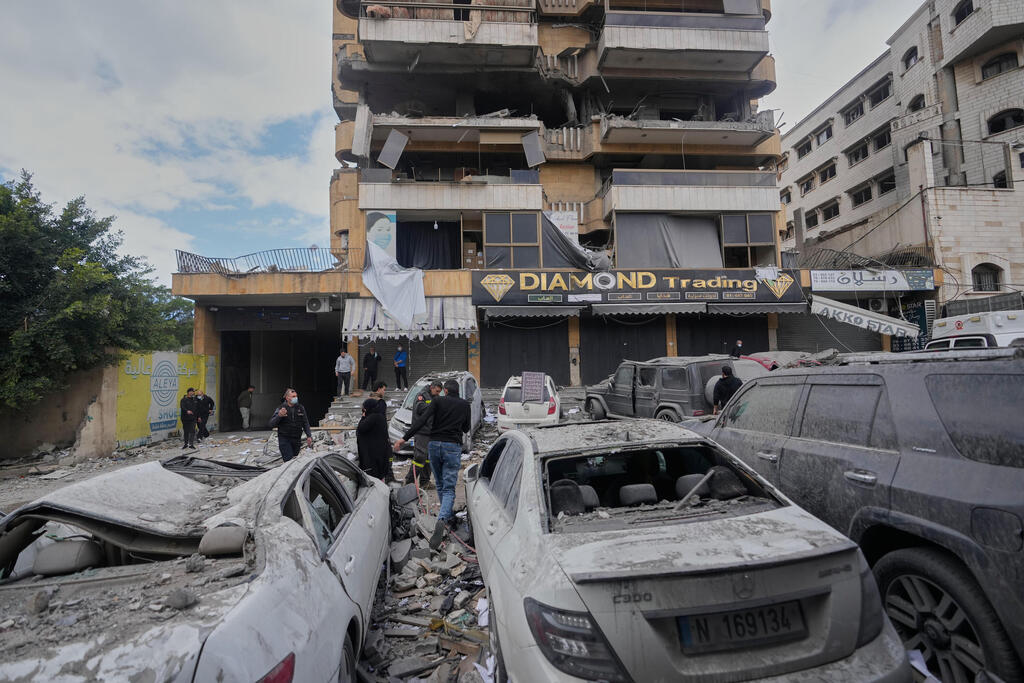
Aftermath of an Israeli airstrike in Beirut, Lebanon
(Photo: AP Photo/Hassan Ammar)
Those brigade combat teams, under the command of four divisional headquarters — and possibly with additional divisional forces set to join the campaign — cannot stop the war of attrition that residents of Kiryat Shmona and other Galilee communities are being forced to endure.
It is important to be clear: the forces operating in Lebanon now are carrying out their mission faithfully. Not only are they drawing much of Hezbollah’s fire onto themselves, thereby reducing the physical damage to Israel’s northern home front, they are also providing active defense that keeps Hezbollah cells from infiltrating frontline communities and has nearly eliminated direct anti-tank missile fire and sniper attacks on fence-line towns in the Galilee.
The forces are steadily pushing Hezbollah northward, with the aim of ensuring that the area between the Israeli border and the Litani remains a “security zone,” more or less free of Hezbollah. From that security zone, the military would then defend northern communities until Hezbollah is disarmed — whether through a political arrangement or a military campaign.
This security zone up to the Litani is not meant to be a second version of the “security zone” from which the IDF withdrew in May 2000 after 18 years of bloody fighting. There will be no Shiite communities in this sector, only a handful of Christian villages. There will be no South Lebanon Army, and Israeli forces will not sit in fixed outposts exposed to shelling and Hezbollah raids.
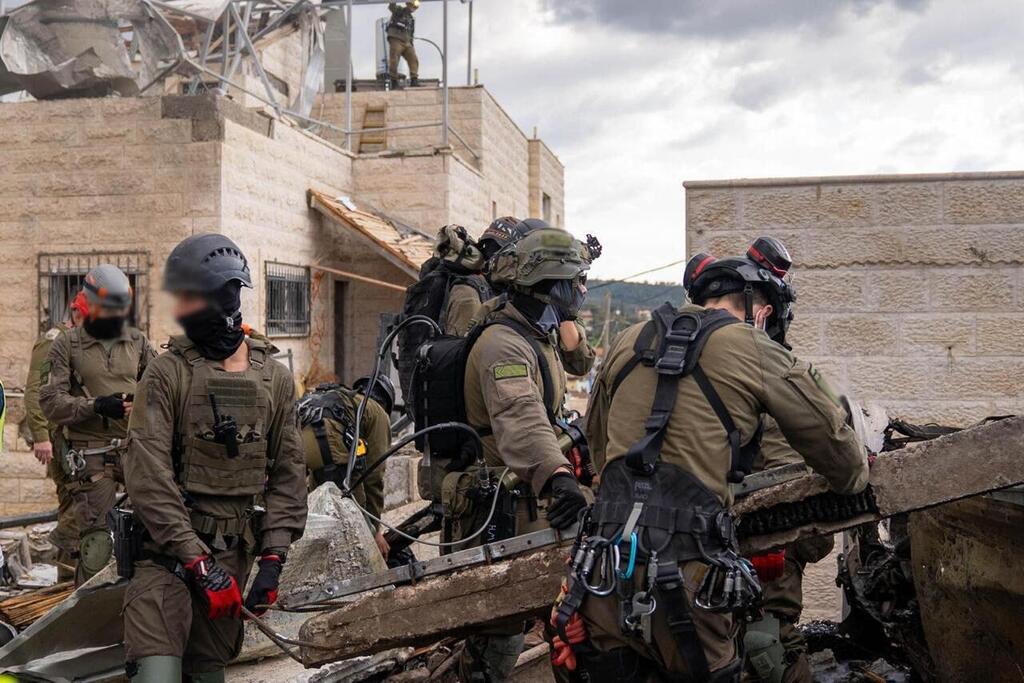
Israeli commandos operating deep inside southern Lebanon
(Photo: IDF)
Instead, the military intends to conduct a mobile defense based on advanced technological intelligence gathering, minimizing Hezbollah’s ability to strike our forces from a distance or raid them, while at the same time creating an effective buffer between Hezbollah — and its direct-fire capabilities — and civilians in northern Israel.
That goal is within reach. There is no doubt that this security zone is now taking shape under the heavy impact of maneuvering forces, which are also sustaining losses, unfortunately. But the problem facing residents of the Galilee, Israel’s northern home front, has not been solved. They continue to absorb most of the fire directed at northern Israel from areas north of the Litani — from the Nabatieh Heights, the Arnoun Heights and even farther north, toward Sidon.
This area is what Hezbollah calls its “Badr” operational zone. The military is killing commanders there in large numbers, as well as at the Beirut headquarters, but launches of Grad rockets and drones from that area into northern Israel continue without letup.
Granted, Hezbollah also fires heavier rockets and missiles from the Beqaa Valley toward central Israel each week, but the real problem is the mobile launchers it moves along the roads in that area. Hezbollah carries out launches from those same civilian population centers in Tyre and other towns, and even from Christian villages south of the Litani.
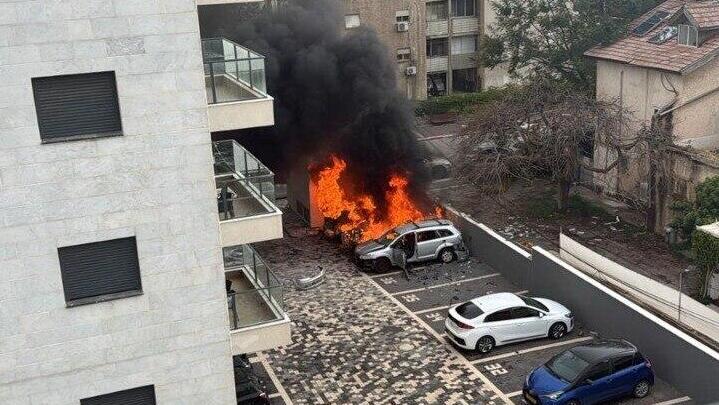
A car in the northern coastal city of Nahariya struck by a Hezbollah rocket
(Photo: from social media)
The Air Force has not been able to solve this launch problem — whether because Lebanon is considered a secondary front and most combat sorties and drone operations are concentrated on Iran, or because persistently wintry weather has made it harder to operate from the air against mobile launchers disguised as innocent civilian trucks.
The almost unavoidable conclusion from this frustrating situation is that an effective and creative ground maneuver is needed, including in the area north of the Litani. Such a maneuver would neutralize Hezbollah’s ability to deploy and move rocket launchers in that area and fire them at the north.
It would also make it possible to seek and destroy launchers in local villages before they move into more rugged terrain to fire into Israel. In addition, operating in Hezbollah’s “Badr” sector would bring its disarmament closer.
The IDF, even with most attention and kinetic and intelligence efforts focused on Iran, cannot allow itself to wage in Lebanon what the U.S. military calls “EBW,” or effects-based warfare. The U.S. military concluded that this type of fighting — in which pressure levers are applied against an enemy — is effective only when the target is a state with a democratic, or near-democratic, regime.
It is far less effective when fighting terrorist organizations and armies whose motivation is ideological or religious. We saw that with Operation Accountability and Operation Grapes of Wrath the military carried out in Lebanon in the 1990s and failed. The effects did not achieve their purpose, and Hezbollah kept fighting. That is why the current war in Lebanon must be based on maneuver and gains on the ground, not on pressure tactics.