

Nine years ago, Saudi Crown Prince Mohammed bin Salman branded Iran’s supreme leader, Ayatollah Ali Khamenei, “the new Hitler.” One must never forget, even for a single moment in the Middle East, the atrocities Hitler committed in Europe, the crown prince said at the time.
True, bin Salman did not mention the Holocaust, nor did he explicitly note that Jews were Hitler’s victims, but the sharp attack on Iran’s leader, delivered pointedly in The New York Times, was widely noticed. An unnamed Iranian spokesman responded then with mockery aimed at Saudi Arabia’s “dictators.”
In 2023, a notable shift emerged in relations between Riyadh and Tehran, with China acting as mediator. Saudi Arabia appointed Abdullah bin Saud al-Anzi, its outgoing ambassador to Oman, and sent him to take up residence in a grand compound in Tehran. Even before his departure, the senior Saudi envoy received clear instructions: be cautious, avoid drawing attention and, above all, stay in the office and report.
At the same time, Iran appointed Ali Reza Enayati as its ambassador to Saudi Arabia. Few would envy either diplomat. Their movements are closely monitored by authorities, and their activity outside embassy offices is heavily restricted.
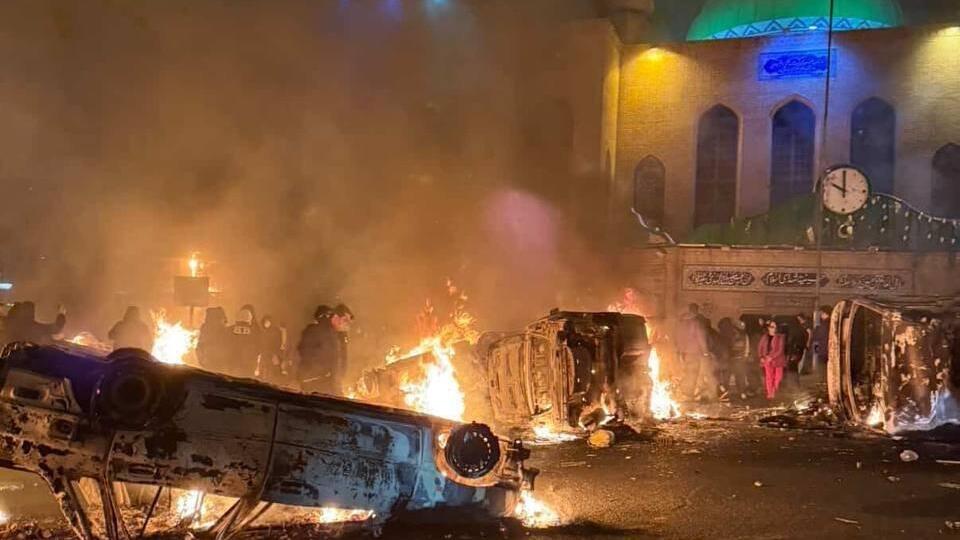
Since protests began in Iran, official Saudi Arabia has imposed silence on itself. As the Middle East is reshaped, and with the final word, by most assessments, expected to come from President Trump in Washington, the Saudi crown prince is primarily preoccupied with the threats to Vision 2030.
His concern is how to attract foreign investors to develop and finance the ambitious plan designed to reduce Saudi dependence on oil, while safeguarding regional shipping lanes and air routes.
While the Saudi leadership, like most Middle Eastern leaders, has remained publicly silent on events unfolding in Iran, Saudi media outlets have not. Channels led by Al Arabiya and the more outspoken by Saudi standards Al Hadath, as well as the widely read Asharq Al-Awsat newspaper published in London, have provided extensive coverage of developments in Iran.
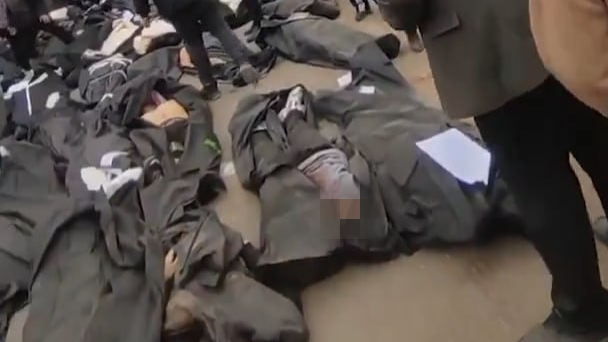
Bodies pile up on the streets in Iran
The coverage has been persistent, despite new limitations caused by the shutdown of phone networks and social media platforms inside Iran. From time to time, journalists manage to connect with Iranian citizens who speak on condition of anonymity. Still, there is no clear picture of the true scope of the protests. Saudi media, like others, rushes to publish any report that appears exclusive, without the ability to independently verify or refute claims.
Particular attention was given in Saudi media to the visit of Iran’s foreign minister, Abbas Araghchi, to Lebanon, a visit widely described as imposed on Lebanon’s leadership. Araghchi appeared unsurprised by the cold reception he received in Beirut. According to reports, his host, Lebanese Foreign Minister Youssef Rajji, seemed to be counting the minutes until the meeting ended. Indeed, Araghchi left earlier than planned, after denying reports that he had brought his wife and three children on the plane to evacuate them to Beirut.
Behind the scenes, a quiet but ongoing channel remains open between the White House and the royal palace in Riyadh. Bin Salman has embraced President Trump’s approach, which also favors monitoring developments in Iran without direct intervention.
At the same time, the de facto ruler of Saudi Arabia is taking initiative quietly, offering Washington recommendations on possible American courses of action in Syria and Lebanon. Notably, he deliberately skips over Jordan and Egypt.
Riyadh and Washington see eye to eye on Iran’s uncertain future. Trump, in his blunt style, made sure to sideline the shah’s son by describing him as “nice.” As for Israel, Crown Prince bin Salman has set very strict conditions. Trump has not publicly rebuked him, nor has he abandoned his vision of eventually achieving normalization between Riyadh and Jerusalem, though when and under what circumstances remains unclear.