


“Total victory” was not just Netanyahu’s slogan for the war against Hamas. It was the de facto slogan of every camp in this election. Each of us aimed for total victory in order to save Israel from the existential danger posed by the other. So deep were our conviction and hope that even months of polls consistently forecasting otherwise did not shake them.
But reality is not defined by our social media feeds or by the news sites and TV channels that validate what we already believe. The results are in, and all of us must now come to terms with our losses and failures. The “other,” whoever they may be, is here, and their votes have set our future on a path we spent years denying.
Gallery
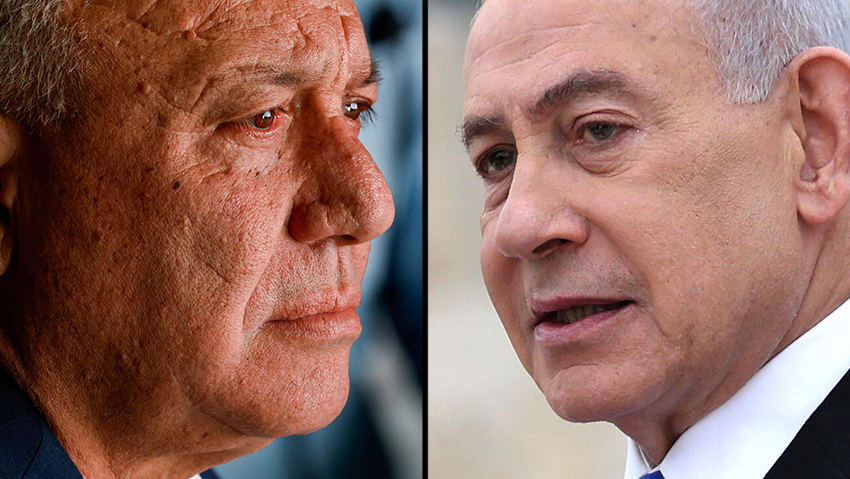
Eisenkot, Netanyahu: Each of us aimed for total victory in order to save Israel from the existential danger posed by the other
(Photos: Ilia Yefimovich/Pool Photo via AP; Amir Cohen/Reuters)
As a society, we are unprepared for this moment. We have forgotten the quintessential Jewish song that shaped our history and without which we would have disappeared millennia ago: “Dayenu,” “It would have been enough.” Throughout our history, reality has never matched our expectations, or even our needs. Yet instead of sinking into despair or assimilating into more successful religions and identities, we let Dayenu become the lens through which we carried on. We learned not to need maximalist gratification, and to feel blessed and grateful even in impossible circumstances.
In the words of the song: “Had God split the sea for us but not brought us through it on dry land, Dayenu. Had God brought us to Mount Sinai but not given us the Torah, Dayenu. Had God given us the Torah but not brought us into the Land of Israel, Dayenu.” Conceptually, it is a strange song that makes little sense. Emotionally, it has served as a guide for all of Jewish history: give us something to hold on to, and we will not merely continue to hope, but continue to build.
Now that the votes are counted, clinging to the aspiration for total victory is dangerous. It is the antithesis of Dayenu. Despite the anger, righteousness and certainty that have guided us these past years, we need to let it go. Otherwise, our only options are exit or perpetual civil war.
But we are unprepared for another reason as well. The aspiration for total victory not only created false expectations and needs; it also allowed Israeli society to avoid a critical conversation about realistic red lines and acceptable compromises.
We could not sing Dayenu while we were still slaves in Egypt. We needed, at the very least, to be free. Beyond that, everything was open to discussion. Freedom was the red line, not redemption, and not even a happy ending.
By aspiring to total victory, we never had to ask ourselves which principles we require as a society and what we need from our fellow citizens. Not what we want, or even deserve, but what we need: that without which we cannot go on.
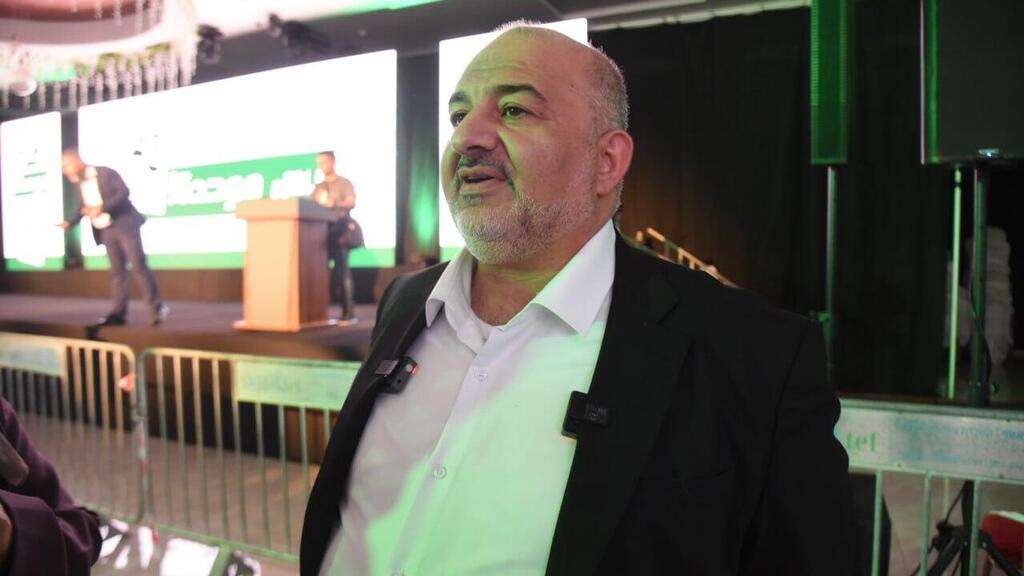
Mansour Abbas, head of the Rqa'am party
(Photo: Avihu Shapira)
We in the liberal Zionist camp, for example, are unprepared to accept that Israel’s Arab Palestinian citizens are not Zionists. While most condemned the October 7 massacre, they reject the legitimacy of the ongoing war in Gaza against their fellow Palestinians.
What is our red line for building a shared society with them? That they support every war we embark on? That they endorse what they believe is an occupation and killing of innocent civilians? Or is it enough that they recognize Hamas as a terrorist organization and accept Israel as the national homeland of the Jewish people, so long as it guarantees equal rights to all its citizens? If Zionists may contest these questions, why is it illegitimate for Arab Palestinian Israelis to do the same?
Here is another issue we haven't explored deeply: It is unacceptable that not everyone in this country bears their share of national service. Yet for some 200 years the Haredi community has lived by an ideology holding that Torah study surpasses everything else, and for the past 78 years all of us have tolerated, and even enabled, the entry of that ideology into the heart of our national life.
I do not believe that those studying in yeshiva are contributing to Israel’s security. But the question is not what I believe. It is what my red lines are: my Dayenu. Can the Haredi community and I agree on a shared policy under which only those who actually study are exempt from service? Under which only schools that prepare their students for matriculation receive public funding? With the Haredim, my red lines concern freedom of religion for Jews in Israel and their wish to dictate how other Jews live, far more than their wish to determine how they live their own lives.
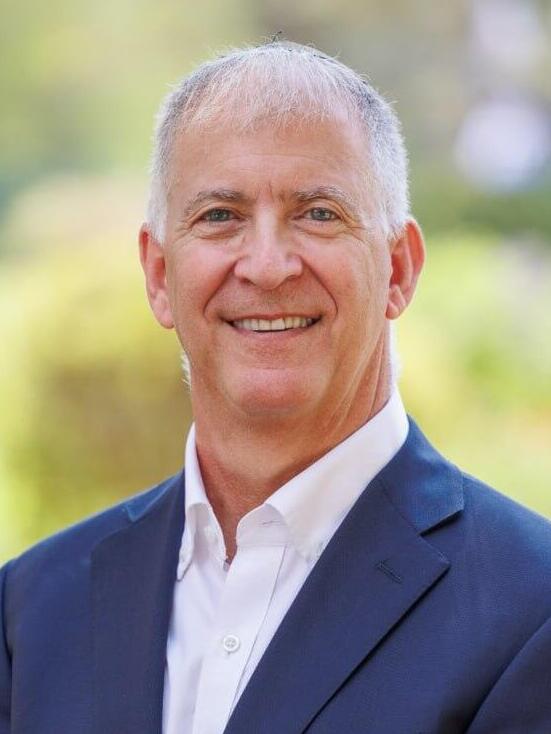 Donniel HartmanPhoto: Noam Feiner
As a liberal Jew, my red lines are first and foremost moral. Anyone who believes that only Jewish lives matter, or that we can tolerate, let alone celebrate, terror and discrimination against Arabs and Palestinians, is beyond the pale. So is anyone who believes that injustice and inequality toward our Arab Palestinian fellow citizens can be justified under the banner of Israel as a Jewish state. But can I share a coalition with those who believe that a two-state solution is, now and perhaps for the foreseeable future, an existential threat to Israel? With those who want to protect the right of the Jewish majority to shape our national culture and identity?
Prime Minister Netanyahu has crossed many of my red lines: his refusal to take responsibility for October 7, the conspiracy theories and mutual hatred he spreads, his tolerance of racism and use of racist language to win votes, and the possibility that he would drag Israel into military action solely to win an election. The list is long, and the principles behind it are just. But when more than a million Israelis declare that he is still the one they trust to lead us, can he remain a red line?
I understand that, for many of us, he still is. But if so, we must do the hard work of redrawing our red lines elsewhere. If every position is sacred and every compromise a desecration, we have no future. That is the lesson of this election, and the mandate of Dayenu.
Rabbi Dr. Donniel Hartman is president of the Shalom Hartman Institute