

Elections will be held today. Elections that will have a significant impact on our lives, on the security umbrella we enjoy and on the trade relations from which we benefit. I am not talking about elections to the Knesset, but about the midterm elections in the United States. That's how it is. Israel's future is shaped not only by Efrat from Tel Aviv or Matan from Etz Efraim, but also by John from Alabama and Barbara from New York.
Trump enters these elections in less than ideal shape. According to an NBC poll from last week, disapproval of his performance reached a record 60%. On Fox News, his numbers are even worse. Accordingly, most forecasts predict a Democratic wave that will wrest control of both houses of Congress from the Republicans. In other words, the legislative branch of the United States is expected to come under the control of the party whose voters Israel has largely written off. How much has it written them off? A Pew Research Center study from July this year shows that the share of Democrats who hold a favorable view of the Israeli people has fallen from 57% to 43% in seven years. Over the same period, Democratic sympathy for Palestinians rose from 58% to 67%. Among young Democrats, that figure has already climbed to 72%. There is room on this page for plenty more statistics and figures, but the picture is clear.
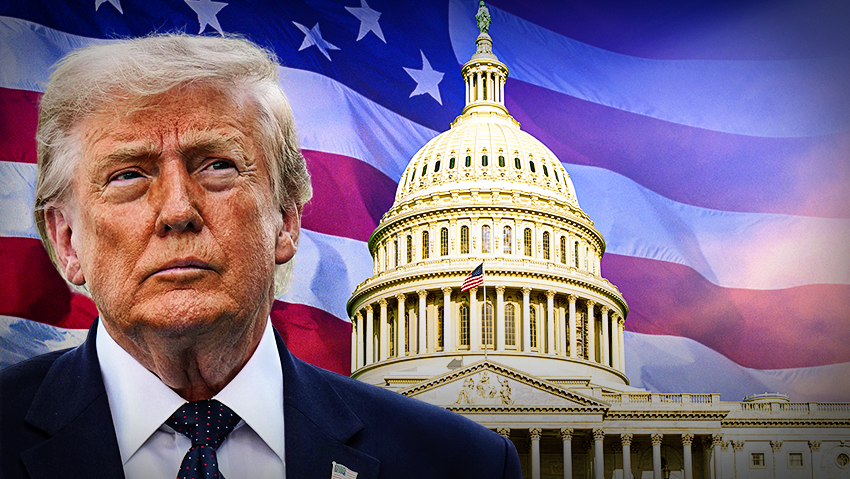
Donald Trump
(Photo: shutterstock, AP Photo/Francisco Seco)
The reality we will soon wake up to has many implications. In the limited space here, it is worth highlighting three.
In the short term, Israel's last line of defense in Congress is about to fall. In April this year, 40 of 47 Democratic senators voted in favor of halting arms sales to Israel. The year before, the number was 27, and the year before that, even fewer. The proposals failed thanks to the Republican majority. But a Democratic Senate at this particular moment, with criticism also mounting over Israel's conduct in the West Bank, could produce a different outcome. Trump could still exercise his veto, but allowing this dynamic to become routine is dangerous. At worst, it would normalize a boycott of Israel. Worse still, it could actually succeed.
In the medium term, during the final two years of his presidency, our great friend in the White House could become a lame duck on the domestic front. The implication is that foreign policy would become the only arena in which he could cement his legacy. That was the case with Bush, who lost Congress in 2006 and went on to the Annapolis peace conference in 2007. It was the case with Obama, who suffered a defeat in 2014 and advanced the nuclear agreement with Iran in 2015. And it was also the case with Trump himself, who lost the House of Representatives in 2018 and pursued the "deal of the century," followed by the Abraham Accords in 2020. All of them turned to our region.
And now? Trump has ongoing negotiations with Iran, elusive Israeli-Saudi normalization and a Gaza Strip with Hamas still in it. In other words, whoever forms Israel's next government, the pressure on it will come less from a Democratic Congress and more from a Republican White House that wants achievements, and wants them fast.
In the long term, the election results offer a glimpse into the future of our relationship with America as a whole. It is customary to say that midterm elections are a referendum on the president's performance, but the primaries this time, in both parties, were no less a referendum on Israel. And the sentiment, how shall we put it, was far from favorable. In 2028, another round of primaries will take place. That is also the year the current U.S. military aid agreement is due to expire. Israel's main task in the meantime is not only to salvage its relationship with the Democrats, but also to halt the decline in Republican public opinion. The goal, of course, is to return to the days when Israel enjoyed bipartisan support. For now, it must stop the erosion of support in both parties.
Today's midterm elections revolve around a host of domestic American issues. Israel is not at the top of either party's agenda, but the impact of the results on us is of the utmost importance. In 2028, John from Alabama and Barbara from New York will vote again. The question is what they will hear from us between now and then.