


On the night between April 13 and 14, 2024, something changed in the Middle East. Six months after the October 7 massacre, Iran dared for the first time to launch a broad attack on Israel, sending swarms of drones, cruise missiles and ballistic missiles in an operation it called “True Promise.” On Sunday, hard as it would have been to imagine then, “True Promise 5” was already underway.
On April 19, 2024, Israel responded to “True Promise 1” with a targeted strike on an air defense system, a move meant to signal its ability to hit Iran in painful places. Israel called the operation “Iron Shield.” The message did not get through successfully, and on October 1, 2024, after the assassination of Hezbollah Secretary-General Hassan Nasrallah, Iran launched “True Promise 2” at Israel.
Gallery
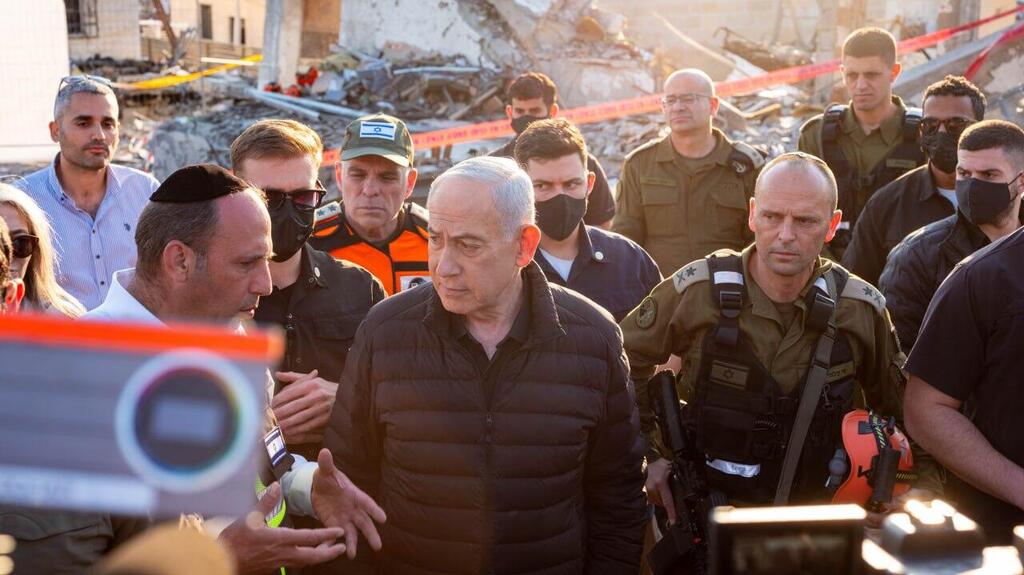
There are military gains, but no diplomatic ones yet. Netanyahu at the missile impact site in Beit Shemesh during Operation Roaring Lion
(Photo: Yuval Chen)
In response, on October 26 of that year, Israel launched “Days of Repentance,” in which dozens of fighter jets destroyed air defense systems in Iran and Syria and hit 12 planetary mixers used to produce solid fuel for ballistic missiles. Prime Minister Benjamin Netanyahu said at the time that the operation had achieved its goals and that “we severely damaged Iran’s defensive capabilities and its ability to produce missiles aimed at us.”
Behind the scenes, official and senior Israeli security officials briefed that the strikes had set Iran’s missile production program “back a year.” About eight months later, riding the wave of that success, Israel launched Operation Rising Lion, striking strategic targets and nuclear facilities across Iran. Tehran responded with “True Promise 3,” and over 12 days fired hundreds of ballistic missiles, cruise missiles and drones at Israeli cities. Some hit and caused destruction in cities and IDF bases, killing 33 people and wounding thousands. On the other side, the IDF and Mossad managed to eliminate almost all of Iran’s senior security command.
Netanyahu boasted then of a “historic victory that will stand for generations,” saying Israel had “removed two immediate existential threats: the threat of annihilation by nuclear bombs and the threat of annihilation by 20,000 ballistic missiles.”
But those achievements, which were supposed to stand “for generations,” lasted in practice about eight months. On February 28, Israel and the United States launched Operation Roaring Lion, whose goals again included the destruction of Iran’s missile and nuclear programs, and this time also the fall of the regime.
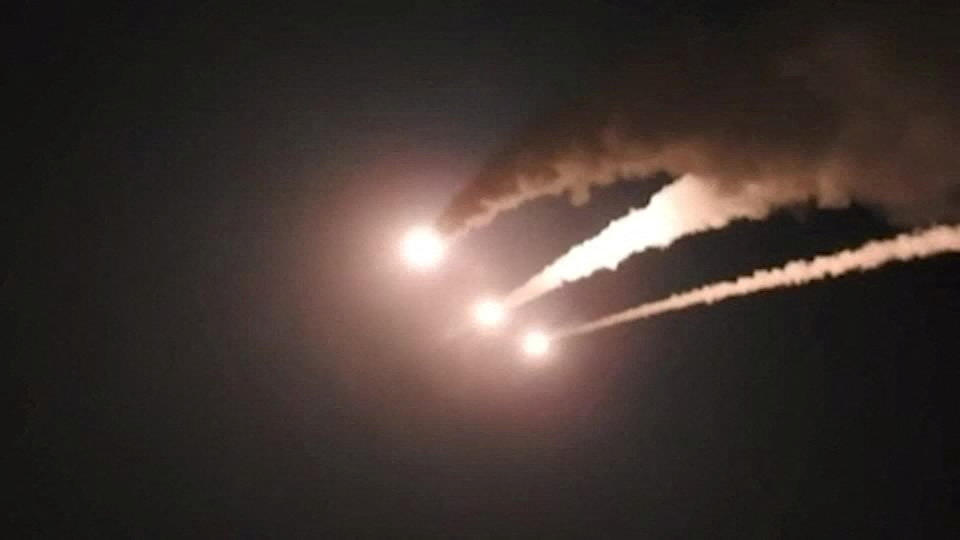
Iranian missile launches towards Israel
(Photo: WANA (West Asia News Agency)/ via Reuters)
Iran, as expected, responded with “True Promise 4,” and missile fire toward Israel resumed, though at a much lower level. Hezbollah, which had stayed out during Operation Rising Lion, intervened this time following the assassination of Supreme Leader Ali Khamenei, and the IDF entered Lebanon for the second time in a year and a half. Throughout the operation, Netanyahu repeatedly said that “Israel is stronger than ever, and the terrorist regime in Iran is weaker than ever.” On April 8, a ceasefire was declared, while the fighting in Lebanon continued.
‘We crushed it, shook it, set it back years’
There is no dispute over the Israeli and American military achievements. Iran’s defense industries were indeed dealt a severe blow. Missile launches were far fewer than during Operation Rising Lion, and Hezbollah is not the same terror army it was before October 7, 2023. Iran’s enriched uranium is buried underground, and reaching it would require complex engineering work while Tehran remains under constant Israeli and American monitoring.
But since Operation Roaring Lion, including during what is called the “ceasefire” that followed, 34 civilians and 30 soldiers have been killed, alongside enormous property damage and school closures, without the government managing to turn military achievements into diplomatic ones.
Hezbollah does not recognize the negotiations being conducted with Lebanon. Israel is not updated on what is happening in the talks with Iran and is forced to spy on the United States, according to foreign reports. In any case, Iran is not prepared to sign an agreement on American terms, which do not even demand the elimination of its ballistic missile program, and may not require a complete halt to uranium enrichment on Iranian soil either.
In practice, nearly two months after the end of the operation in which Iran was militarily defeated, Tehran continues to block the Strait of Hormuz. On Sunday, it was again the one that fired first, this time in “True Promise 5.” This time the IDF did not bother finding a new name of its own for the operation, and struck Iran in response during the night. Iran responded with missile fire, and the Houthis joined in as well.
Security officials said the IDF had plans to hit strategic targets in Iran in order to exact a heavy price for this aggression, which was not preceded by Israeli strikes. But in the end, Netanyahu ordered the fire halted following Trump’s request. In effect, Iran was the one that began the round, and it was the one that ended it by announcing it would stop attacking after teaching Israel “a lesson” over the strike in Dahieh.
The past day therefore reflects the enormous gap between the government’s declarations and reality. Israelis have grown used to a consistent pattern: When Israel launches a war, the country’s leaders rush to take credit. But when Israel is surprised, or when it is forced to hold its fire, they hear about it from someone else. Sometimes it is Arab media, sometimes the U.S. president, sometimes the IDF spokesman, but consistently, it is not the prime minister or the defense minister. They always respond last.
“We set the terrorist regime in Iran back many years, shook its foundations, crushed it,” Netanyahu declared on the evening of April 8, hours after the ceasefire went into effect. “The State of Israel achieved tremendous achievements, achievements that until recently seemed entirely imaginary,” he added, repeating the message: “Iran is weaker than ever, and Israel is stronger than ever.”
“We smashed Iran’s missile production machine,” he said. “Not only did we destroy existing missiles, we destroyed the factories that produce the missiles. The Iranians are firing what remains in their magazine, and the magazine is becoming empty, but they are not producing new missiles.” Defense Minister Israel Katz also said that “Iran suffered extremely severe blows over the past year, blows that set it back years in every field.”
Netanyahu said then that “we eliminated thousands of regime operatives, severely damaged its repression apparatus and proved that we can hunt them everywhere.” On April 13, he said the chain of assassinations in Iran had caused “internal conflicts and a deep weakening of the terror regime, which is seeking and begging for a ceasefire. Those who threatened to destroy us are now fighting for their own survival.”
That same regime that was supposedly begging for a ceasefire launched an attack on Sunday.
Netanyahu made very similar remarks on May 18, 2021, during Operation Guardian of the Walls, which began after Hamas fired rockets toward Jerusalem, and during which Israeli officials also frequently said Hamas was “begging for a ceasefire.”
Netanyahu himself said then, in the middle of another round with the Palestinian terror organization, that “Hamas received blows it did not expect. We set it back many years. Our enemies around us see the price we exact for aggression against us, and I am sure they will learn the lesson.”
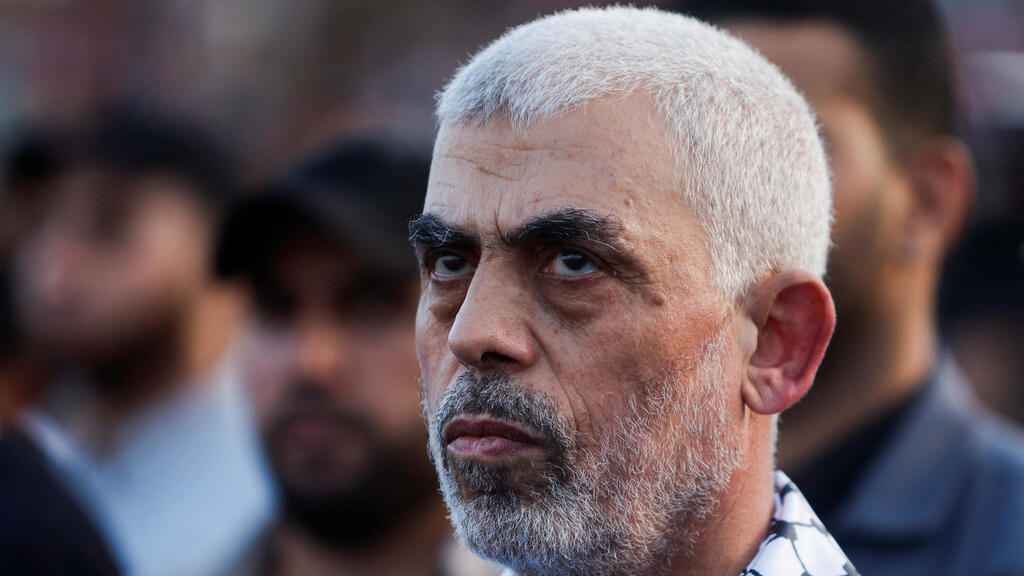
Hamas was set back 'years,' but still managed to carry out a murderous massacre. Yahya Sinwar, the dead Hamas leader
(Photo: Mohammed Salem, Reuters)
But the enemies around Israel continued to arm themselves. On October 7, 2023, when Hamas launched its murderous attack on Israel after dozens of rounds in which it had been defeated but not decisively beaten, all of Iran’s proxies joined it, and eventually Iran itself did too. The policy of repeated rounds then failed completely and led to a bloody war in which more than 2,100 soldiers and civilians have been killed, alongside tens of thousands wounded and traumatized.
“As I have done for decades, I insist on our right to act against our enemies,” Netanyahu said Monday evening, breaking a day of silence hours after Trump announced another ceasefire. “Iran and Hezbollah are weaker than ever, and we are stronger than ever,” he repeated, adding, “but our struggle against them is not over.”
At the end of his remarks, Netanyahu promised to “respond with force” if Iran attacks Israel again. That would be round number six, and it could take place after a U.S.-Iranian agreement that rehabilitates Tehran’s battered economy, strengthens a regime that has been badly hit and allows it to send large sums of money to arm terror organizations.
Israel does not have much time left to change that reality, and it is far from clear that military action alone will be enough.