


Iran is pushing negotiations to the limit. While negotiating with the United States, it is activating its proxy, Hezbollah, to increase pressure on IDF forces in southern Lebanon and try to force an Israeli withdrawal.
For Tehran, this is negotiation under fire: it is using its extension on the ground while testing whether the United States can influence its ally, Israel. The question is how this ends: with negotiations collapsing and a return to war, with an Israeli withdrawal, or with a compromise in which Israel remains only at the five positions beyond the border fence where it deployed after Operation Northern Arrows in 2024.
Lebanon is only the beginning. If this trend continues, tomorrow there will be demands for a ceasefire in Gaza, and later restrictions on activity in the West Bank. In the Middle East, surrendering freedom of action very quickly becomes a precedent. That is exactly the strategic victory Iran is seeking.
Israel tried to separate Lebanon from Iran, and failed. Iran, by contrast, is trying, and increasingly succeeding, to separate Israel from the United States.
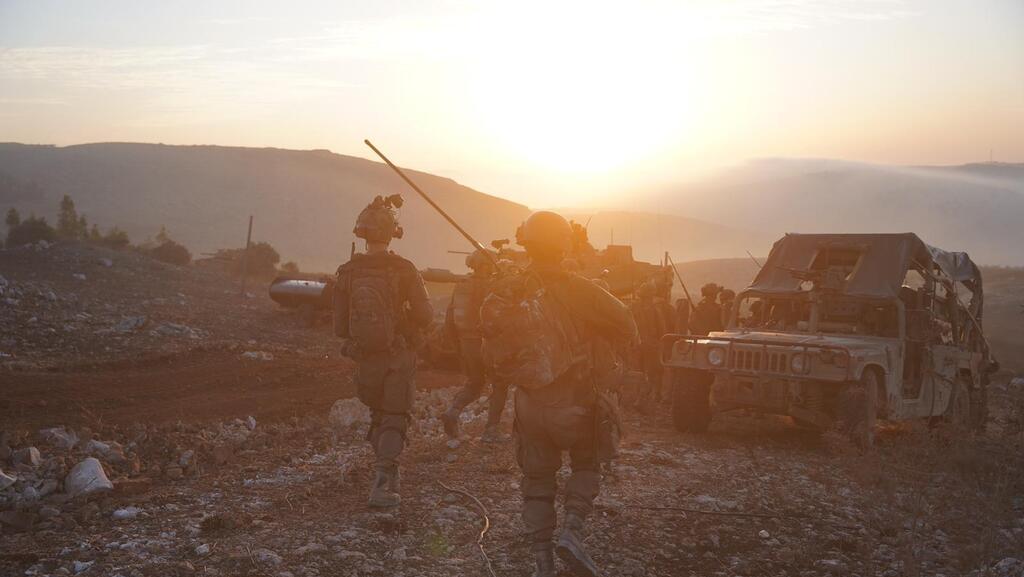
The IDF was instructed to hold its fire while forces were positioned near Hezbollah’s most important center of gravity in the Tebnit area, where dozens of terrorists are trapped. The frustration among IDF troops operating in the security zone in southern Lebanon cannot be ignored.
In conversations with soldiers, the same feeling comes up again and again: they sometimes feel like “ducks in a shooting gallery,” operating in a threat-saturated area under significant operational restrictions while the enemy keeps trying to wear them down.
According to sources familiar with the activity, forces operating from the border fence to the Litani River are not permitted to carry out proactive strikes, and are instead mainly allowed to remove immediate threats. This is a reality in which many of the IDF’s operational advantages struggle to come into play against a skilled guerrilla organization.
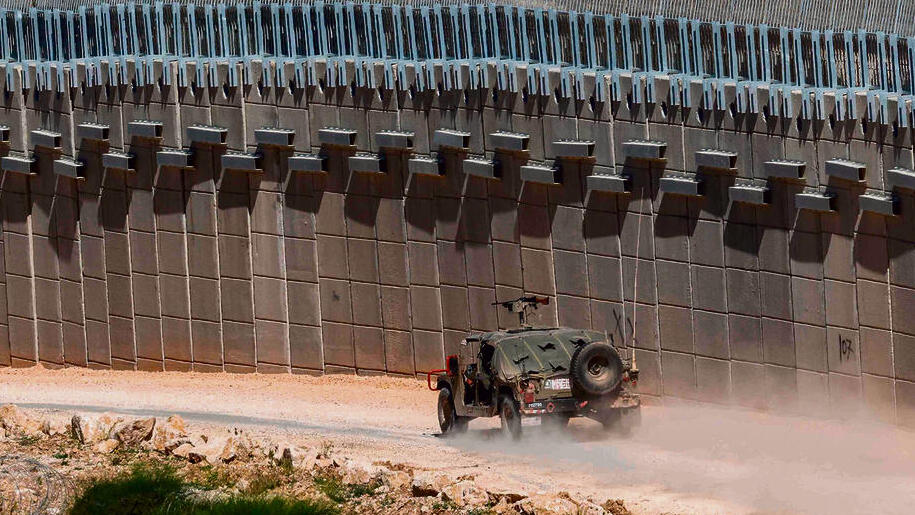
The erosion of deterrence is felt across all fronts. IDF troops patrol the Israel-Lebanon border
(Photo: JALAA MAREY, AFP)
Tehran’s strategy of attrition
Regarding the tank disaster in which Lt. Col. Dor Ben Simhon and three of his soldiers were killed, a senior IDF official said the tank was hit by an external strike, either a drone or an anti-tank missile, and not by an accident.
This is not only a matter of frustration. When an army is required to fight for a prolonged period under major restrictions, without being able to fully use its operational advantages, deterrence and the confidence of troops in the field gradually erode. Fighting with one hand tied can turn from a temporary solution into a recipe for disaster.
The IDF has clear intelligence, technological and operational superiority. It has advanced collection capabilities, precise firepower and the ability to respond quickly from the air and from the ground. But under current conditions, those advantages run into political and operational constraints.
Hezbollah operates some of its drone systems from dense civilian areas. Drone operators and command rooms hide inside civilian buildings and population centers, knowing that this narrows the IDF’s freedom of action and forces Israel into operational, political and legal dilemmas.
When freedom of action shrinks, the threat renews itself and the burden shifts to the soldiers operating on the ground. If the political leadership does not allow the military to use its full capabilities, it must reassess the nature of the mission assigned to the troops.
Operational experience shows that when the political echelon gives the IDF broad freedom of action and defines a clear objective, the military can seriously damage Hezbollah and change the deterrence balance. That is precisely why the current dilemma stands out. If the use of broad force produced significant achievements in the past, why return to a state of prolonged erosion?
Critics of the current policy argue that recent developments have allowed Iran and Hezbollah to gradually restore some of their capabilities, while Tehran continues to pursue its long-term strategy of attrition against Israel.
The negotiations led by U.S. President Donald Trump with Tehran reduced the weight of the military achievements secured by the IDF and the U.S. military, and sent a message that Israel is struggling to exercise the freedom of action it once had.
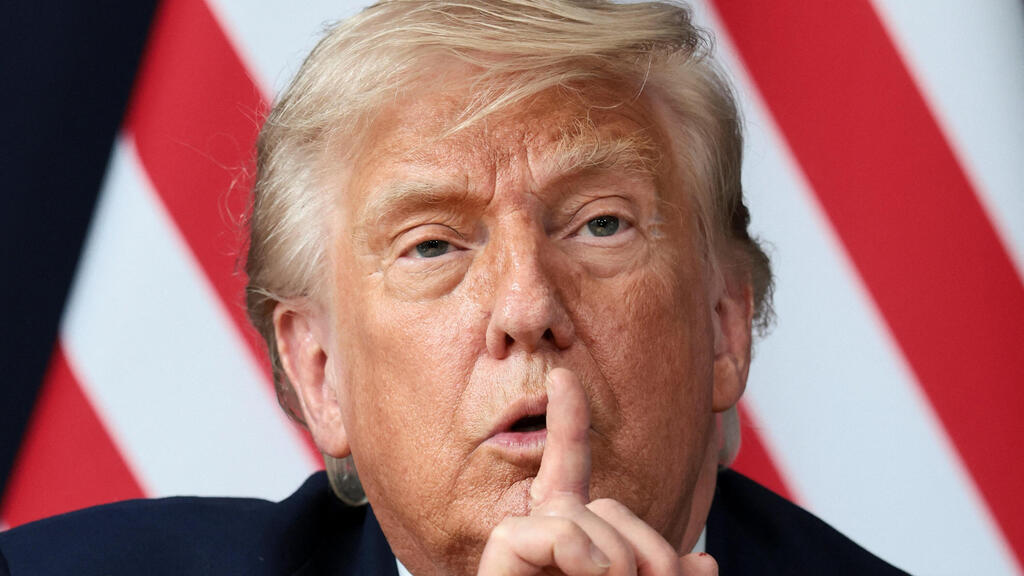
US President Donald Trump
(Photo: REUTERS/Evelyn Hockstein)
The result is a serious blow to Israeli deterrence. If strikes in Beirut or deep inside Lebanon were once seen as an available operational option, today the IDF is operating under heavy restrictions even in southern Lebanon. That message is not lost on regional players, from Turkey to Iran and its proxies, and to terrorist organizations in the West Bank.
Trump also harmed U.S. interests in Lebanon by strengthening Iran’s grip on the country through Hezbollah, at the expense of more moderate forces there, including government representatives engaged in negotiations with Israel.
Independence becomes a necessity
This is the reality: Israel faces a genuine strategic danger. The erosion of deterrence radiates across all arenas. Restoring that deterrence, according to this view, will require a particularly successful military move, similar to operations that demonstrated clear intelligence and operational superiority, and it must end with a diplomatic move that leverages the achievement rather than erodes it.
At the same time, the new reality requires a renewed examination of the IDF’s force buildup. Israel will need to invest significant resources in military expansion, independent production capabilities and reducing dependence on weapons systems originating in the United States.
 Yossi Yehoshua
This does not mean abandoning the strategic alliance with Washington. It means building broader independent capabilities that will allow freedom of action even during political disagreements.
Anyone listening closely to senior American officials, including Vice President JD Vance, can understand that the United States increasingly expects its allies to shoulder a larger share of their own defense burden. For Israel, that means independent military strengthening is no longer a luxury. It is a necessity.
Prime Minister Benjamin Netanyahu now faces a complex decision, but the worst option is leaving the situation as it is. Prolonged fighting without a clear decision exacts a daily price from forces in the field without producing strategic change.
In practice, Israel now has two main options. The first is to remove the restrictions on the IDF, allow the use of broad force and risk escalation into a wider regional confrontation, including the possibility of conflict with Iran without full American backing and severe tension with Washington.
The second is to withdraw forces to another defensive line, reorganize and prepare for a campaign under more favorable conditions. But such a move, too, could be interpreted in the Middle East as an admission of failure or as strategic weakness, with all that entails.
Either way, the political leadership, headed by Netanyahu, is expected to look reality in the eye and understand that failing to make a decision is itself a decision, and perhaps the worst one.
As the immortal line from “Apollo 13” goes: “Houston, we have a problem.”
The question is not whether there is a problem. The question is whether Israel will act to solve it before it pays a heavier price.
The sooner, the better.