

The past few months have once again underscored a basic truth in the relationship between Israel and the United States: Israel is a strong country with significant military power, but when it comes to shaping the strategic reality of the Middle East, the United States remains the most influential actor.
The old saying, “He who pays the piper calls the tune,” may not always be pleasant to hear, but in many cases it reflects reality. The American pressure that led to a ceasefire between Israel and Iran shows that even when Israel uses substantial force, Washington still influences the boundaries of the campaign and the point at which it ends.
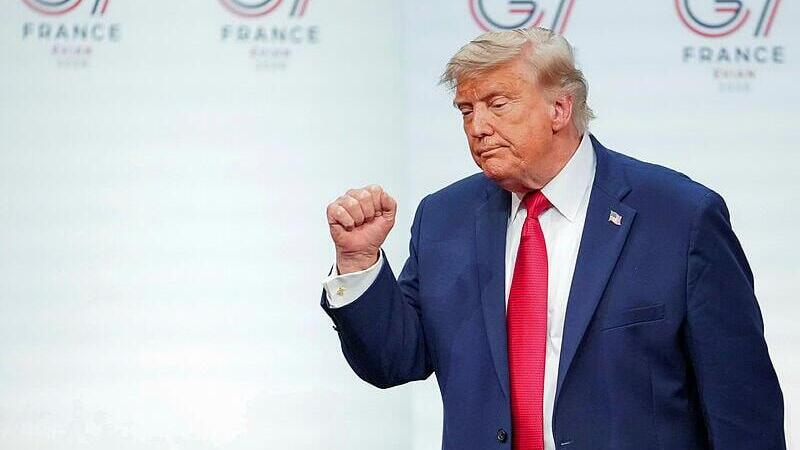
Trump is setting the limits of Israel’s power in the Middle East
(Photo: AP/ Vadim Ghirda)
Trump sought to prevent a regional war, preserve stability in energy prices, avoid economic shocks and secure a significant diplomatic achievement. Iran, for its part, needed economic relief and a way to ease some of the pressure that had built up against it. That is how the two sides reached the signing of a memorandum of understanding. And that is precisely where the gap between Washington and Jerusalem becomes clear.
For the United States, the success of the agreement will be measured by its ability to prevent war. For Israel, its success will be measured by its ability to prevent Iran from becoming a nuclear threshold state in the future. If the issue of enriched uranium remains unresolved, if Iran is allowed to continue enrichment at some level, and if the issues of ballistic missiles and regional proxies are postponed, the agreement may not solve the crisis but merely delay it.
The comparison with the 2015 nuclear deal is inevitable. But the real question is not whether this is a better or worse agreement. The real question is whether, at the end of 60 days, Iran will be farther from a nuclear weapon, or whether it will have gained time, money and room to maneuver, allowing it to recover and prepare for the next confrontation.
One of the central lessons of recent months is that it is becoming increasingly difficult to separate the various arenas of the Middle East. For years, Israel tried to deal with each front separately: Iran, Lebanon, Gaza and Yemen. Iran, however, built a regional concept that links all these arenas together. That is also why Israel finds it difficult to demand a complete separation between the Lebanese front and the Iranian front. From the perspective of the United States and the Gulf states, regional stability is one package.
If the ceasefire in Lebanon is indeed part of the broader understandings, then the central question is no longer how to stop the fighting, but who will control southern Lebanon the day after. Lebanese President Joseph Aoun and other figures in Lebanon are working to strengthen state institutions and bolster the position of the Lebanese army. The talks expected toward the end of June may deal with a new model of state control in southern Lebanon, including areas such as Nabatieh and its surroundings.
Israel needs to identify the window of opportunity that has opened. Instead of relying only on military activity, it should examine, together with the United States, France and other countries, an initiative that would allow the Lebanese army to gradually deploy in the south, alongside effective international monitoring mechanisms. At the same time, and depending on clear benchmarks being met, a gradual Israeli withdrawal could be discussed.
Still, there is a real concern that the ceasefire will hold while Hezbollah remains a significant military force. If Israel is required to withdraw from southern Lebanon without a meaningful change on the ground, many will ask whether the goals of the war were achieved.
A new line of thinking is also emerging in the Gaza Strip. Mediators are promoting a model for the gradual disarmament of Hamas and the transfer of civilian responsibility to a technocratic Palestinian body. Here too, the American goal is to strengthen governing institutions at the expense of armed organizations.
At the same time, the U.S. administration is expected to try to prevent escalation in Judea and Samaria as part of its desire to preserve broader regional stability. Settlement steps, recognition of farms and friction on the ground could become another source of disagreement between Jerusalem and Washington.
The protection of minorities in the Middle East, including Christians, Druze, Kurds and other groups, is also expected to receive increasing weight in the American conversation, especially in light of developments in Syria.
Over the next 60 days, the United States and Iran will have to confront the truly difficult issues: enriched uranium, the scope of future enrichment, monitoring mechanisms, ballistic missiles and regional proxies. If understandings are reached, we may see the beginning of a new regional order. But if the talks fail, Trump will face three options: extending the negotiations, returning to maximum economic pressure or reviving the military option.
For Israel, which will likely be in the middle of an election campaign, the question will return in full force: can it accept a situation in which the nuclear issue, the missile threat and the proxy network remain unresolved?
From an Israeli perspective, weighty questions remain. Is Iran receiving the main benefits now while the substantive concessions are postponed to the next stage? Will Hezbollah continue to be the dominant military force in Lebanon? Will the nuclear issue truly be resolved, or only deferred? And will Israel be able to tell its public that the goals of the war were achieved if the central threats still remain?
The emerging memorandum of understanding may prevent a war in 2026. The bigger question is whether it will also prevent the war of 2027 or 2028. Perhaps the most important question is not whether Israel was updated on the agreement, but whether Washington believes it needs Israel’s consent.
For now, in the Middle East, the old rule still applies: he who pays the piper calls the tune.
Bahig Mansour is an ambassador, former head of the Isfiya local council and a graduate of Israel’s National Security College.