


Israel is now at one of the lowest strategic and moral points it has faced during the October 7 war, perhaps one of the gravest in its history.
With fighting continuing in southern Lebanon and a memorandum of understanding signed between the United States and Iran, this is not the time to wallow in lamentations or search for culprits. There will be time during the next election campaign to assign blame. First, Israel must recognize the facts and quickly develop an alternative strategy that can pull it out of the crisis with minimal damage.
Gallery
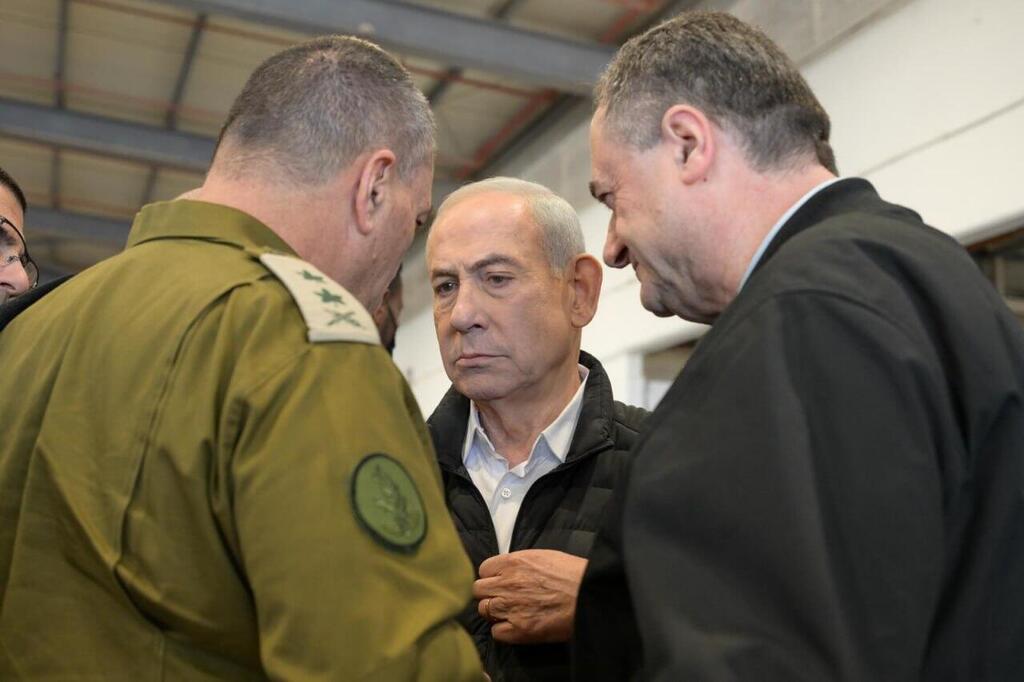
Defense Minister Katz, Prime Minister Netanyahu and IDF Chief of Staff Zamir
(Photo: Maayan Toaf, GPO)
The first fact is that since World War II, the United States has not won a war. From Korea in the early 1950s to the current war with Iran, apart from a few brief operations in South America, the U.S. has either been defeated or badly entangled. There are two main reasons.
The first is that America’s enemies were driven by ideological, often religiously fanatical motivation, allowing their leaders to ignore heavy losses among their fighters and the suffering of the civilians among whom they lived and fought. That allowed them to wage prolonged guerrilla wars even after they appeared to have been defeated on the battlefield.
The U.S., by contrast, is highly sensitive to casualties. Since the Vietnam War, the media and roughly half the American public have held a basic distrust of the administration. As a result, casualties and economic damage have a major effect on domestic, and even global, politics.
The second reason is that the U.S. wages wars under increasingly strict humanitarian rules. Some are justified, others reflect purity for its own sake, but they often force commanders and soldiers to fight with one hand tied behind their backs.
Against that background, President Donald Trump must be assessed as both a person and a leader. As a person, he is volatile and acts according to instincts and personal interests. At times, he also acts in the interest of the United States, as long as that interest does not clash with his own instincts and personal calculations.
That means Israel cannot rely on a long-term personal relationship with him. But Trump is the president of the United States, and Israel currently depends on the U.S. in every respect. Preserving the relationship with America is therefore a supreme Israeli interest, regardless of who sits in the Oval Office.
In Israel, the public mood resembles that of the United States. There is a high sensitivity to casualties among soldiers and civilians, and at present there is also a sharp crisis of trust between more than half the public and the government. That mistrust is reflected in claims of abandonment and incompetence by large parts of the population that serve in the reserves and pay taxes.
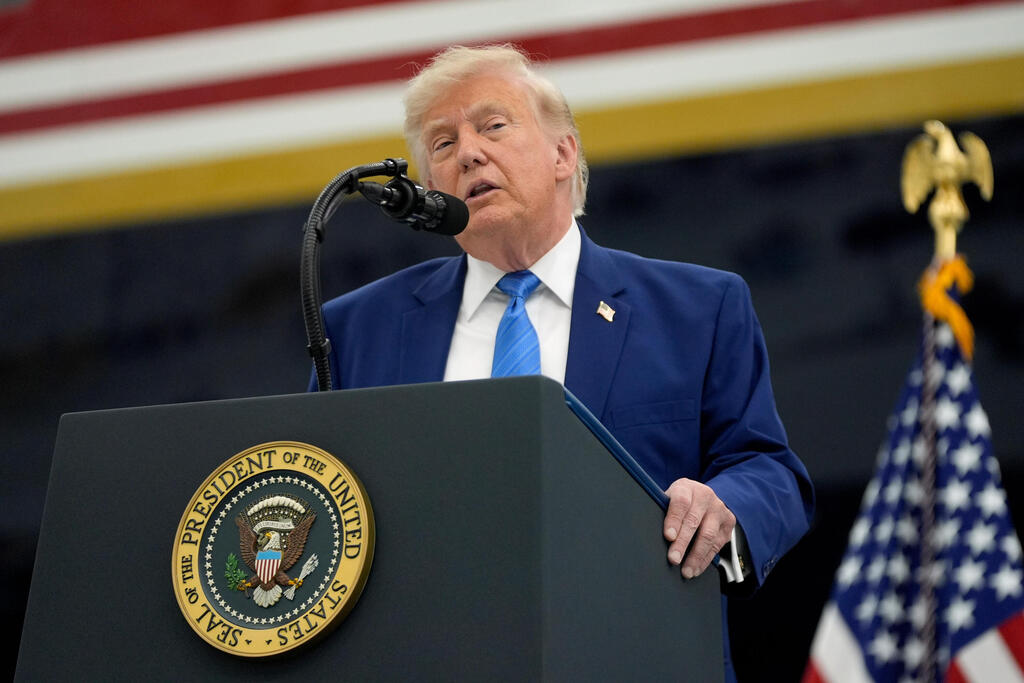
We cannot build on long-term personal relations
(Photo: AP Photo/Manuel Balce Ceneta)
This distrust is destructive to national security. It is worsening because the government has completely neglected public diplomacy. Prime Minister Benjamin Netanyahu’s media appearances mainly serve his own image and political survival. Neither he, nor his ministers, nor the government’s spokespeople have managed to explain to the public the diplomatic, strategic and military logic behind the actions being carried out by the IDF and the political leadership. Perhaps the reason is that there is no such logic to explain.
Either way, the absence of an effective message at home and abroad means Israel is failing to convince even its friends in Washington and Europe that Hezbollah is the side that has not stopped firing, and that it is doing so because of Iranian demands and in an effort to protect its fighters trapped in tunnels beneath the village of Tebnit.
Israel is also failing to convince its allies that northern Israel cannot be secured as long as Hezbollah’s main underground infrastructure, from which it is still firing, remains in southeastern Lebanon and in southern Nabatieh.
In this context, Israel must recognize another fact: a “forward security zone,” as it is now defined, just like the “security strip” or “buffer zone” of the past, does not provide security for northern Israel. It cannot stop rockets, UAVs and drones, which are becoming increasingly accurate.
Direct threats such as ground infiltrations and anti-tank missile fire can now be blocked by safer and better means, including mines and technologies developed to counter drones. They do not require the deployment of ground combat forces across a large geographical area, as is currently happening in Lebanon. But when the IDF is deployed across a large, static area, the enemy has time to prepare and strike soldiers, while Israelis once again begin repeating the phrase “a war of attrition in the Lebanese mud.”
Use the change in Lebanon
The operations carried out by the 36th Division on the eastern and southern edges of the Nabatieh plateau are necessary from a security standpoint. That area contains the underground and aboveground infrastructure Hezbollah calls its operational zone facing Israel, the Badr area. Beneath the Ali Taher ridge lies the main headquarters of this zone, and from other tunnel systems in the area, fire has been launched directly from underground toward communities in the Galilee and northern Israel, reaching as far as Haifa and Tiberias.
The situation is reminiscent of the German guns in “The Guns of Navarone” during World War II, hidden in a fortified cliffside position and controlling nearby sea routes. Here, however, the threat consists mainly of rockets, UAVs and drones. Militarily, it is essential to destroy this infrastructure. Once that is done, the IDF can leave the area and, if necessary, reenter with firepower or even ground raids if Hezbollah tries to reestablish itself there.
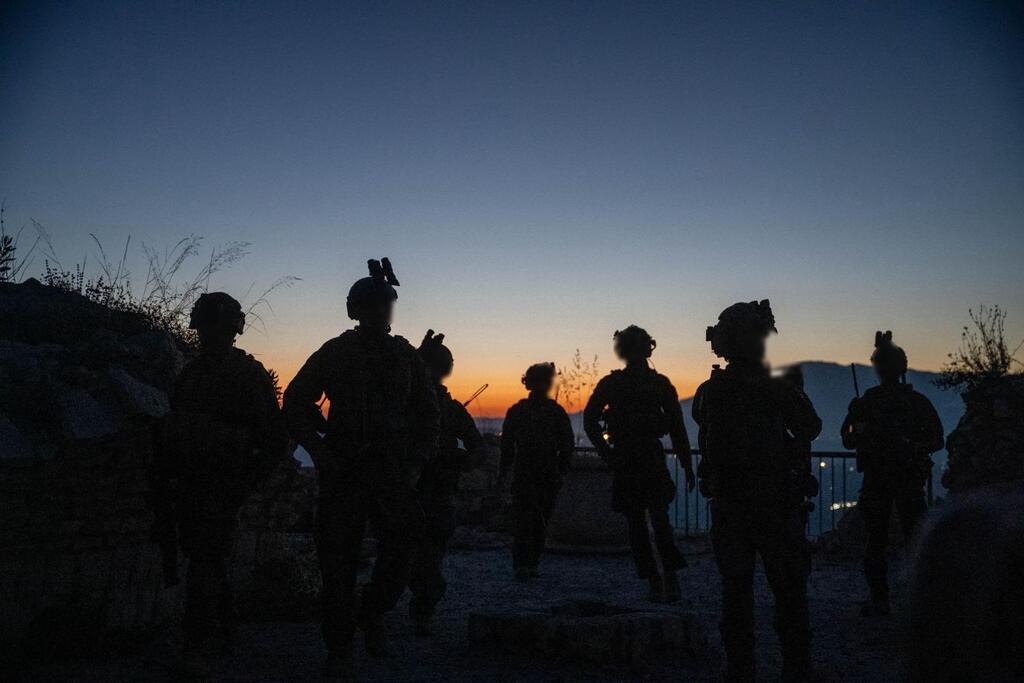
IDF in southern Lebanon
(Photo: IDF)
It is also important to recognize that since Operation Northern Arrows in the fall of 2024, a fundamental change has taken place in Lebanon. The government and most of the public, including parts of the Shiite community, want Hezbollah to disarm, or at least stop fighting Israel at Iran’s demand.
For the first time, a Lebanese government is explicitly saying it wants a permanent non-belligerence arrangement with Israel. This is a dramatic shift that Israel must exploit and do everything possible not to miss, because it undermines the legitimacy Hezbollah claims for itself as Lebanon’s defender.
Another development that has emerged in recent days must also be used. The Iranians have managed to link the arenas and see that as an asset and a bargaining chip in negotiations with the U.S. Israel can use the same linkage in reverse. The Americans can demand in negotiations that Iran force Hezbollah to stop firing. That would allow the IDF to hold its fire as well, while continuing to operate slowly and discreetly in the area currently under its control, without expanding beyond it.
These facts point to a strategic plan of action for Israel that could reduce casualties and damage, improve security in the north and, no less importantly, repair relations with the White House.
Israel can and should act in five areas
First, it must avoid a confrontation with Trump and instead try to coordinate moves with him that may fall far short of “total victory” but could preserve national security, achieve long-term quiet and allow Israel, with U.S. help, to prepare better over time for the possibility that it will once again have to confront Iran and Hezbollah in Lebanon.
Second, Israel should reach an understanding with Trump that he will demand Iran restrain Hezbollah with at least the same firmness with which he demands that Israel hold its fire in Lebanon. To achieve this, Israel can use Secretary of State Marco Rubio, Defense Secretary Pete Hegseth and commanders and officers at CENTCOM, who can explain the military situation to the president. The trust and cooperation built over the past year between the IDF and U.S. Central Command are a diplomatic asset no less than a military one.
Third, the Israeli government must launch a public diplomacy campaign explaining to its own citizens and to the American public what Israel is currently doing in Lebanon and why it matters. But such a step will only be effective if Israel makes clear that it is prepared to withdraw from most of the forward area in southern Lebanon, provided that the security of the Galilee is guaranteed through an arrangement with the Lebanese government, backed by additional diplomatic and economic steps by the U.S., Saudi Arabia, the United Arab Emirates and France.
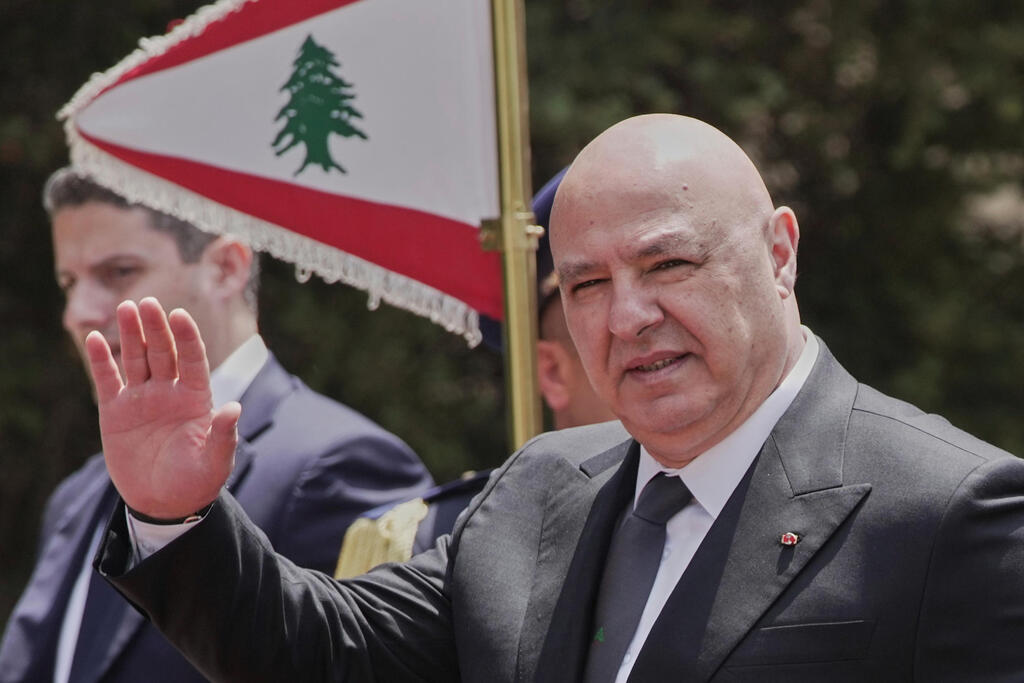
Lebanese President Joseph Aoun
(Photo: AP Photo/Hassan Ammar)
Fourth, Israel must accelerate negotiations with the Lebanese government. It should make clear that if the talks succeed and a realistic plan is formulated to neutralize the Hezbollah threat, Israel will be prepared to withdraw in stages from the territory it has captured. But this must be carried out alongside the dismantling of Hezbollah’s infrastructure and heavy weapons, especially in the Badr area and the Bekaa. Such a move would strengthen Israel’s legitimacy to demand and exercise freedom of military action if Hezbollah acts or tries to rebuild its capabilities.
Fifth, Israel should demand that the U.S., Saudi Arabia, France and the UAE immediately strengthen the Lebanese army through an emergency program and help establish several special units capable of asserting control in areas from which the IDF withdraws. At the same time, Lebanon’s reconstruction must be guaranteed so Iran cannot extend its patronage over the country using funds released to Tehran and the Revolutionary Guards following an agreement with the U.S.
A plan like this, implemented through a focused and well-managed diplomatic and military effort, could allow Israel to climb out of the strategic hole in which it now finds itself.
The question is whether the current Israeli government, whose public voice is represented by Itamar Ben-Gvir, is capable of taking such a complex series of steps and making the concessions required to regain the White House’s trust.