

The persistent threat of long-range missiles from Yemen compels a reassessment of our national and business resilience. While the defense discourse rightly focuses on the remarkable success of Iron Dome and other aerial defense systems, a quieter but equally tangible danger is emerging—one that falls directly onto Israel’s industry. The primary threat is not a direct enemy strike, but the overlooked byproduct of our own success: heavy debris from interceptions that lands unpredictably and can paralyze entire companies.
The most vulnerable point in this new reality is not the hardened server room, but the exposed support infrastructure on the rooftops. These include the chillers cooling critical systems, emergency power generators and communication arrays. A single impact on these often-unprotected systems can trigger an operational collapse and immense economic damage, proving that the real front line is not just in the skies or in cyberspace, but on the rooftops of the industrial and high-tech hubs that underpin Israel’s economy.
Gallery
Shrapnel from Gaza rocket causes damage to border region factory
(Video: Shaar Hanegev Regional Council)
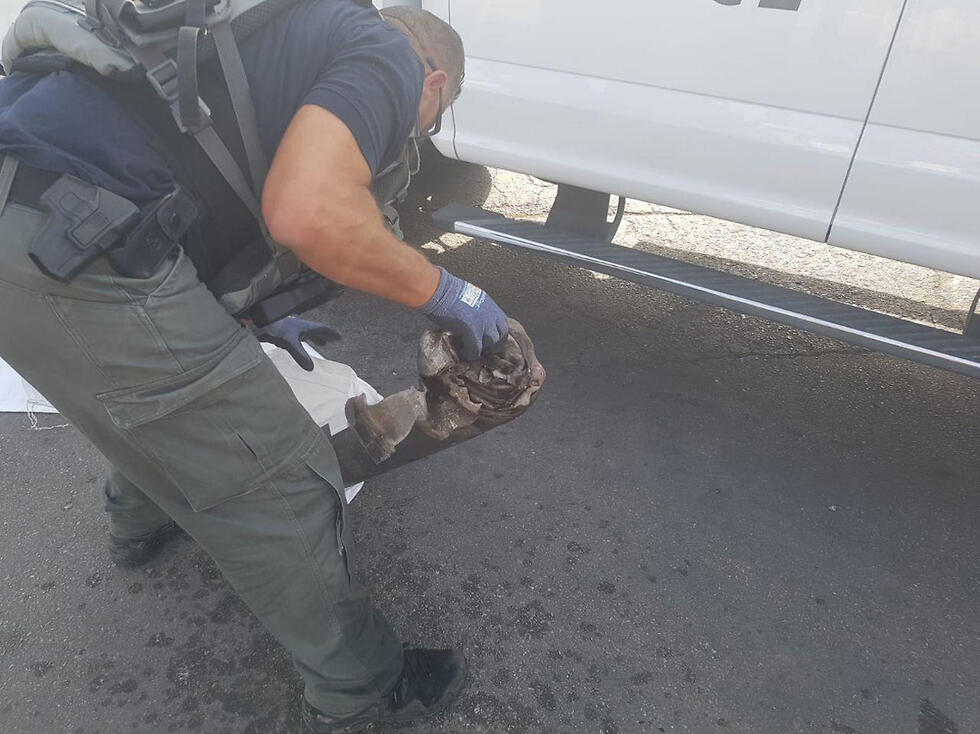
Israel's multi-layered air defense systems are a source of national pride. But this focus on interception statistics risks obscuring a secondary threat: falling debris from both the incoming missile and the interceptor itself.
It's crucial to distinguish between the types of threats. While shrapnel from an Iron Dome interception is relatively small, the fragments from long-range interceptors are far more massive. Falling from great heights, they generate destructive kinetic energy capable of piercing industrial roofs and disabling critical systems. These are hard physical realities that should be factored into any home front defense strategy.
The first and most acute vulnerability lies within our knowledge-based industry. Israel’s economy leans heavily on the stability of its high-tech sector, which depends on the uninterrupted operation of data centers and server farms. The damage a company can incur from a compromised data infrastructure aligns with global models. According to the Uptime Institute, the average cost of data center downtime is approximately $9,000 per minute, and in critical events, losses can exceed $1 million within the first hour.
A shutdown is not merely a temporary pause; it means breaching Service Level Agreements (SLAs)with international clients, losing critical development hours, suffering reputational damage that can affect stock value, and even facing regulatory fines for data loss. This is a vulnerability at the national economic level, not just an organizational one.

Shrapnel from Hezbollah missile causes heavy damage to home in central Israel
(Photo: REUTERS/Nir Elias)
The second risk is even more severe and directly concerns public safety. Israel's civilian and industrial landscape is dotted with thousands of vulnerable points, such as gas storage tanks and facilities containing hazardous materials. Furthermore, other essential civilian infrastructures, such as Israel Electric Corporation substation, Mekorot water pumping facilities and communications hubs, are similarly "soft targets" whose failure could cause a regional systemic collapse.
This risk is not theoretical. During 2014's Operation Guardian of the Walls, dozens of significant debris falls were documented in city centers. In fact, a report by the Meir Amit Intelligence and Terrorism Information Center confirms that shrapnel is responsible for a significant portion of all property damage during rounds of conflict. While a mass-casualty event has so far been averted, largely by chance, relying on luck is not a sustainable risk management policy.
The solution to this gap does not require a massive investment. It demands a conceptual shift: moving from area defense to point defense. We must implement a strategy of "surgical protection" by systematically mapping critical failure points and deploying targeted shielding solutions based on advanced composite materials and tailored threat analysis.
Leading technology and defense companies have already begun to adopt this approach, understanding that an investment of tens of thousands of dollars in point protection can prevent millions in damages, ensure operational continuity and even provide a competitive edge in times of emergency.
 Ortech Defence.Systems CEO Ran Naor Photo: Goren Witkind
Recent events must serve as a wake-up call. Immediate collaboration is needed between the Home Front Command, the National Emergency Management Authority (NEMA) and the private sector to establish new standards for infrastructure protection. Initial steps could include updating regulations to cover strategic infrastructure or offering insurance and tax incentives for companies that invest in point defense. Postponing action until the next disaster strikes would be a costly gamble with the resilience of Israel’s economy.
National resilience is measured not only by our ability to intercept threats from the sky, but just as importantly, by our ability to ensure continuity on the ground the moment the sirens fall silent.
- The author is the CEO of Ortech Defence.Systems