


Since Friday, Qatar has been engaged in mediation efforts between Iran and the United States in what may be the last such attempt for some time. The Qatari delegation, which held talks with Iranian officials in Tehran on Friday and invited an American delegation to continue the discussions in Doha on Saturday, could achieve a breakthrough that would avert a major U.S.-Israeli military strike in the near future.
Qatar's proposal differs from previous mediation efforts in that it calls for measures to restrict Iran's nuclear program and reopen the Strait of Hormuz to be implemented in stages. Each step would be matched by a U.S. measure to gradually lift the blockade and sanctions and release Iranian assets frozen in the West.
Gallery
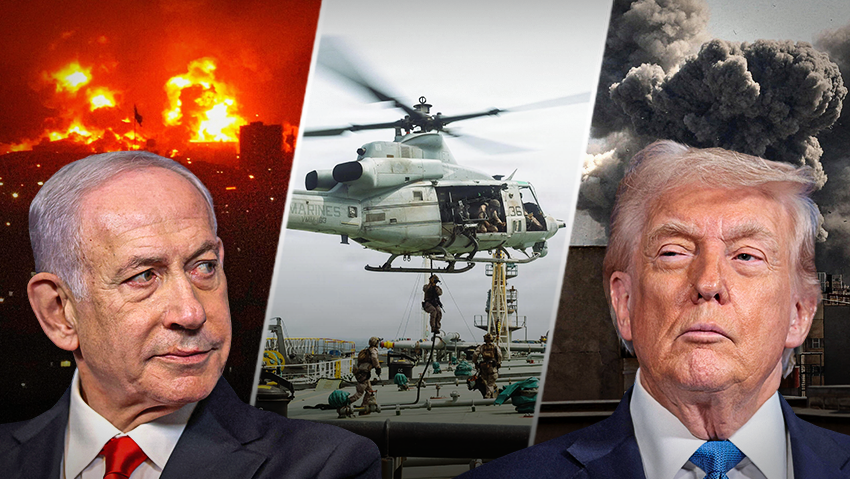
(Photo: Ahmad Hasaballah/REUTERS, Majid Asgaripour/WANA via REUTERS, JOE RAEDLE/AFP, REUTERS/Jonathan Ernst, AP Photo/Vahid Salemi)
A step-for-step arrangement, beginning from the moment the agreement starts being implemented, is a framework Tehran might be willing to accept, according to Qatari and Saudi media outlets and a Lebanese newspaper reporting on the initiative. Until now, the Iranian regime has rejected every mediation proposal presented by Arab, Pakistani and American intermediaries, insisting instead on the seven demands it submitted to the United States in September during the United Nations General Assembly.
Those seven demands would allow the Strait of Hormuz to reopen within seven days, but require the United States to commit to lifting the blockade and sanctions and ending the war before discussions on restrictions to Iran's nuclear program could even begin. The new proposal, based on small reciprocal steps, would allow negotiations on the nuclear program and the reopening of the Strait of Hormuz to proceed simultaneously, while Washington gradually lifts the blockade and sanctions.
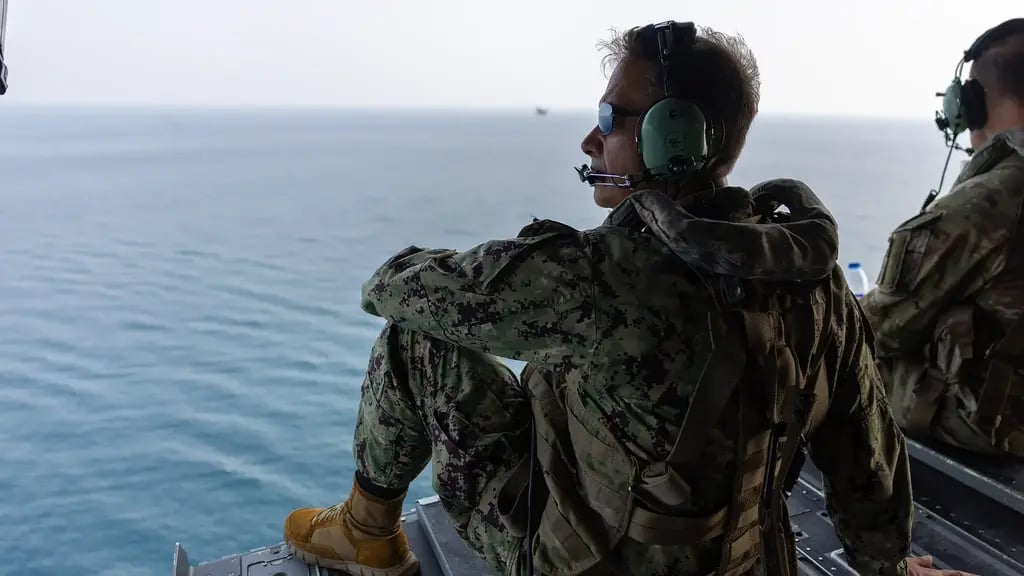
Adm. Brad Cooper, commander of US Central Command, in the Strait of Hormuz; US and Israeli military planners must divide responsibilities in a way that also meets some of Israel's demands
(Photo: CENTCOM)
Another important element of the new Qatari proposal is that Russia and China, or possibly China alone, would serve as guarantors of the agreement's implementation.
Tehran has yet to issue an official response to the Qatari proposal. However, if an Iranian delegation arrives in Doha on Saturday to continue negotiations, alongside an American delegation, it would be a clear indication that the mediation initiative has a chance of succeeding and that the United States and Israel would refrain from launching strikes. For now, however, it remains unclear whether Iran is prepared to continue discussing the Qatari proposal or whether it is still entrenched in its position and insisting on its seven demands.
Ready for action, but with different objectives
Meanwhile, Trump continues to issue contradictory statements, as is his habit. This is his negotiating method, intended to confuse his adversary, but it has the same effect on his partners, including Israel, the Arab Gulf states and the global energy market.
The Iranians are employing a similar tactic designed to confuse the other side. They send representatives of the regime's pragmatic camp, such as Foreign Minister Abbas Araghchi and parliament Speaker Mohammad Bagher Ghalibaf, to negotiate with the Americans. But decisions about what actually happens are made by the commanders of the Islamic Revolutionary Guard Corps, under the leadership of the hard-line and uncompromising supreme leader, Mojtaba Khamenei.
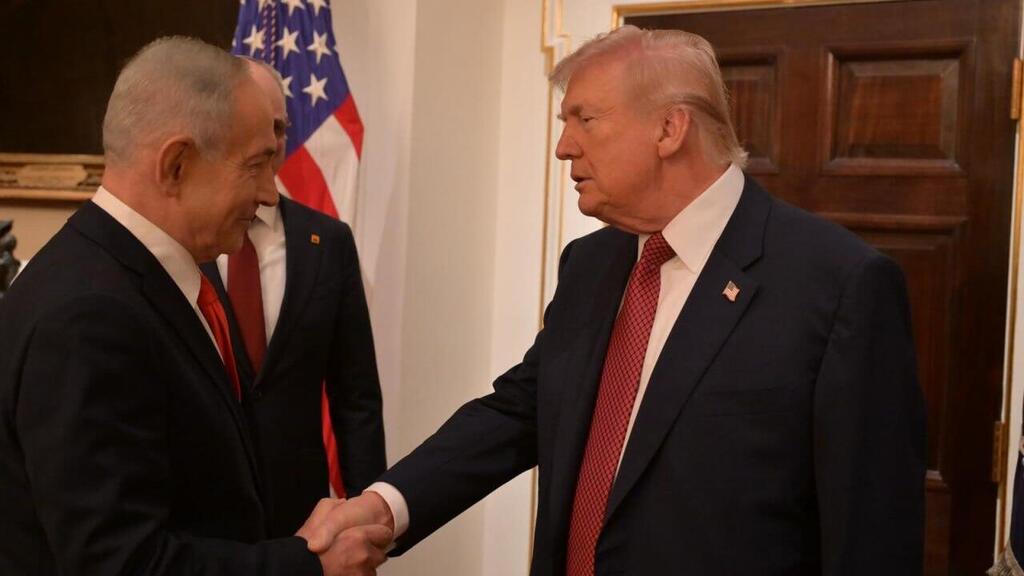
Netanyahu and Trump; the Americans have three military objectives, but overthrowing the regime is not one of them
(Photo: Avi Ohayon/GPO)
It is therefore necessary to examine what the parties actually want and what they are doing to assess what may happen in the Middle East, not just the Persian Gulf, in the coming weeks.
From a military standpoint, it appears fairly clear that U.S. and Israeli forces could be ready within days to launch major strikes against Iran in an operation intended to be short, lasting only a few days, but highly intensive. The targets would include Iranian infrastructure facilities of a kind that the United States and Israel have either not struck before or have damaged only to a limited extent.
CNN, for example, has reported that U.S. Central Command forces are now prepared to act within 96 hours of a presidential decision. CENTCOM commander Adm. Brad Cooper presented Trump on Thursday with operational options that he and his staff developed jointly with the Israel Defense Forces. The American president would have to choose among them if he decided to launch an attack.
It is important to emphasize that there is a strong likelihood the IDF would be a full partner in any American strike. However, the objectives that the U.S. president and the White House would seek to achieve through such an operation are not identical to those Netanyahu has publicly set for Israel and the IDF in the next round of attacks.
Trump wants to use a military strike to bring Iran back to the negotiating table in a position where it would be willing to compromise on U.S. demands concerning its military nuclear program and the reopening of the Strait of Hormuz to international shipping. The strike is intended to weaken the Iranian regime and the Revolutionary Guards to such an extent that they would subsequently return to negotiations. If they still refused, the continuing economic blockade would leave the regime considerably weaker and more vulnerable internally by depriving it of revenue.
The goal is to make the regime so vulnerable that it would be unable to pay the salaries of Revolutionary Guard personnel and regular military forces or, more importantly, meet the basic needs of the civilian population.
Under those circumstances, Trump could declare victory, withdraw most of the large naval force he currently maintains in the Gulf at enormous expense and wait for the Iranians to request renewed negotiations.
According to the American approach, the strike would need to achieve three military objectives.
Prevent attacks on ships
The first objective is to prevent Iran from attacking vessels sailing through the southern part of the Strait of Hormuz. The Iranians have developed a new method of attaching small naval mines to the hulls of ships using speedboats. These vessels are moving discreetly through the southern shipping route, close to the coast of Oman, under American protection.
The small naval mines, attached magnetically to ships that U.S. forces are securing and escorting, do not necessarily sink the vessels but can damage and disable them. The Americans would seek to prevent such attacks through airstrikes and possibly by landing troops on Iran's coast and on Iranian islands in the Strait of Hormuz.
Limit attacks on US allies
The second objective is to strike Iran's ballistic missile and drone production and launch capabilities on a large scale. U.S. Central Command would seek to do so to prevent Iran from attacking American allies in the Middle East.
Prevent a return to enrichment for more than five years
A third objective is to inflict more extensive damage on Iran's nuclear facilities, preventing it from resuming uranium enrichment and nuclear warhead development for more than five years.
Regarding the nuclear program, the Americans and Israelis would likely seek to disable the tunnels at Pickaxe Mountain and bury the uranium enriched to 60% even deeper underground. That material is located at three sites: Isfahan, Fordow and an underground facility near Natanz. It is also possible that other secret facilities maintained by Iran as part of its nuclear program, and recently uncovered by intelligence agencies, would be targeted.
As noted, Trump and Israel's political leadership do not share identical objectives. Netanyahu has explicitly declared that his goal is to overthrow the Iranian regime and replace it with one that does not threaten Israel. As we have seen, this is not the objective the White House has set for itself. Washington ultimately wants a better nuclear agreement than the one reached under former President Barack Obama and the reopening of the Strait of Hormuz.
Experts consulted: How to weaken the regime without rallying the public behind it
The differences between American and Israeli strategic objectives require planners from the IDF and CENTCOM to agree on a division of responsibilities, targets and desired outcomes. Such an arrangement would allow the two militaries to operate together while ensuring that both the United States and Israel achieve at least some of their respective objectives.
Naturally, the details of the operational framework ultimately agreed upon cannot be published, particularly because several possible courses of action are under consideration, from which Trump and Netanyahu must choose one or a combination of two. However, it is already clear that the new plan would involve severe damage to Iranian national infrastructure that serves the Revolutionary Guards and the Basij militia, without starving the uninvolved civilian population or subjecting it to severe physical hardship.
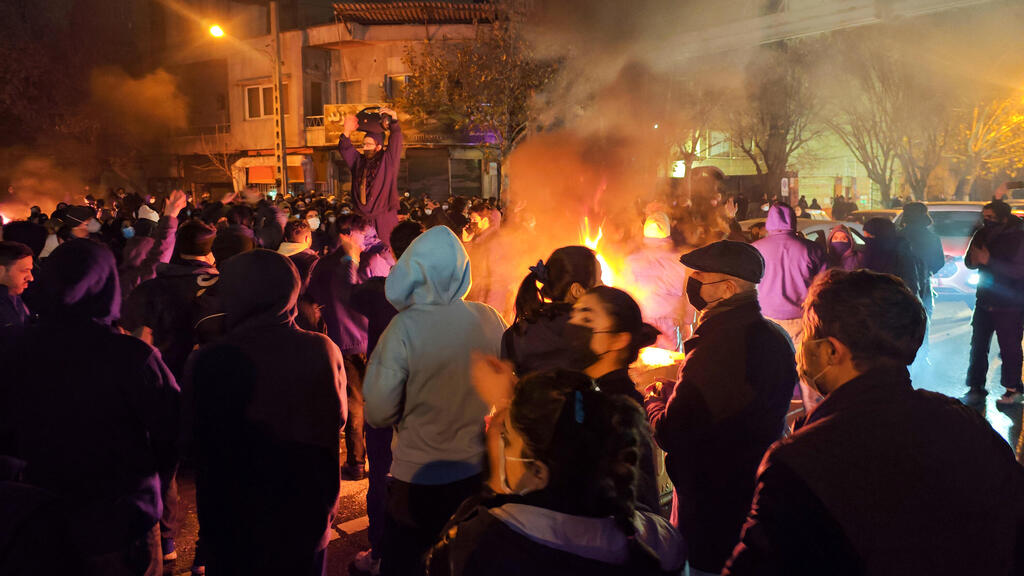
Protests in Iran last January; experts were consulted to help avoid uniting the Iranian people against the 'aggressor'
(Photo: Anonymous/Getty Images)
Both the Americans and the IDF have consulted experts in international law and target selection to help ensure that strikes would be directed against the regime and the military organizations supporting it and carrying out its military nuclear program, rather than against civilians who are not involved in the fighting.
There is also a practical reason for this approach. Israel and the United States do not want the Iranian population's essential needs to be severely affected, because the resulting anger at the attackers could unite Iranians behind the regime instead of encouraging them to rise up against it.
Another practical consideration is that Iran must be able to recover after a change of regime and resume supplying oil and gas to the global energy market if it meets American demands. It can therefore be assumed that the main oil and gas extraction facilities would be spared, with strikes focused primarily on refining, storage, transportation and other facilities involved in the industry. The aim would be to leave the Iranian regime, which is already under considerable pressure, in an even more difficult position following the military strike.
At that point, the United States could maintain pressure with a smaller naval force operating at relatively low cost until the regime agrees to Washington's demands.
It is important to note that the Trump administration has already softened its demands concerning Iran's nuclear program. Vice President JD Vance has said that Iran could be allowed to enrich a limited amount of uranium on its own territory. He has also indicated that Washington could accept an arrangement under which uranium enriched to 60% would either be diluted inside Iran or transferred to Russian custody, rather than handed over to the Americans as Trump initially demanded.
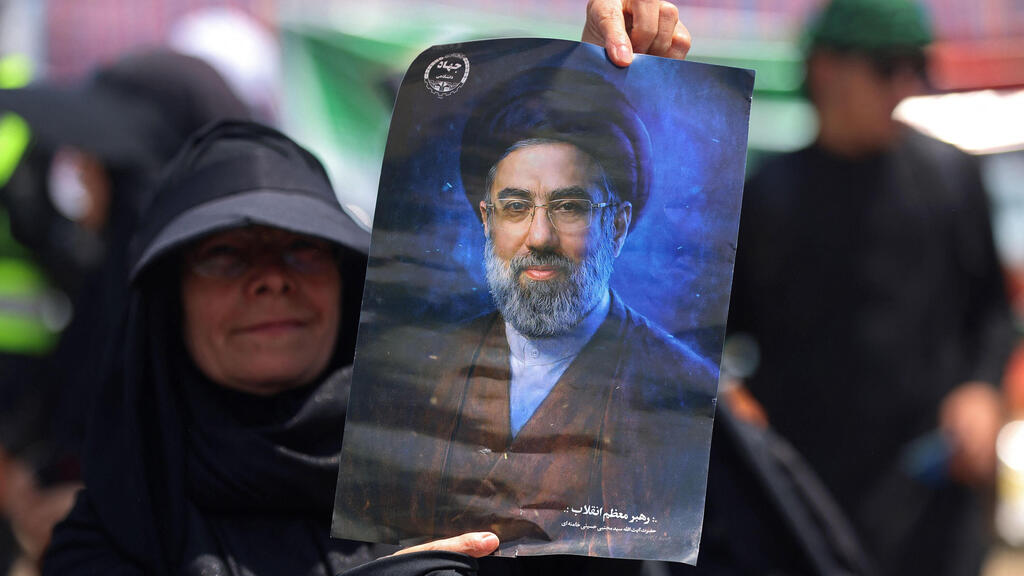
The planned strike will not bring down the regime; a woman holds a portrait of Iranian Supreme Leader Khamenei
(Photo: Ahmed Al-Rubaye/AFP)
There is one issue on which Trump is unwilling to compromise: intrusive inspections by the International Atomic Energy Agency throughout Iran, at all facilities, including those holding enriched uranium. Last week, the IAEA director general appealed to the United Nations Security Council to require Iran to accept such inspections, adding to American pressure.
In light of all this, it is clear that the planned joint U.S.-Israeli military strike would not, by itself, defeat the Iranian regime. But from Trump's perspective, it would be enough to declare an end to a war that is unpopular among Americans on both sides of the political divide. Israel, meanwhile, would achieve another significant blow to Iran's nuclear facilities and missile production capabilities, pushing the regime further away from the military capabilities it had hoped to develop.
As short as possible, with overwhelming force
Israel has a compelling argument of its own, based on an order issued and publicly announced by Mojtaba Khamenei to accelerate the development of "technologies, including nuclear technologies," according to Iran's IRNA news agency.
The implication is that Iran has abandoned, or is about to abandon, the position established by Khamenei's father, under which Iran maintained that it did not seek nuclear weapons. The elder Khamenei even issued a fatwa, or religious ruling, on the matter. His son, however, along with other representatives of the Iranian regime, is now openly discussing the resumption of the nuclear program.
The justification for this shift is that Iran has been shown to be vulnerable to military attacks from abroad and therefore needs nuclear weapons to change that strategic balance. Mojtaba Khamenei's belligerent statements are particularly alarming to Israel, which fears that the current regime, driven by a desire for revenge and a sense of vulnerability, could be far more dangerous than its predecessor.
There are also many in Israel and the United States who question the wisdom of eliminating the elder Khamenei and his associates, who were more pragmatic and more confident in their own position than the current leadership.
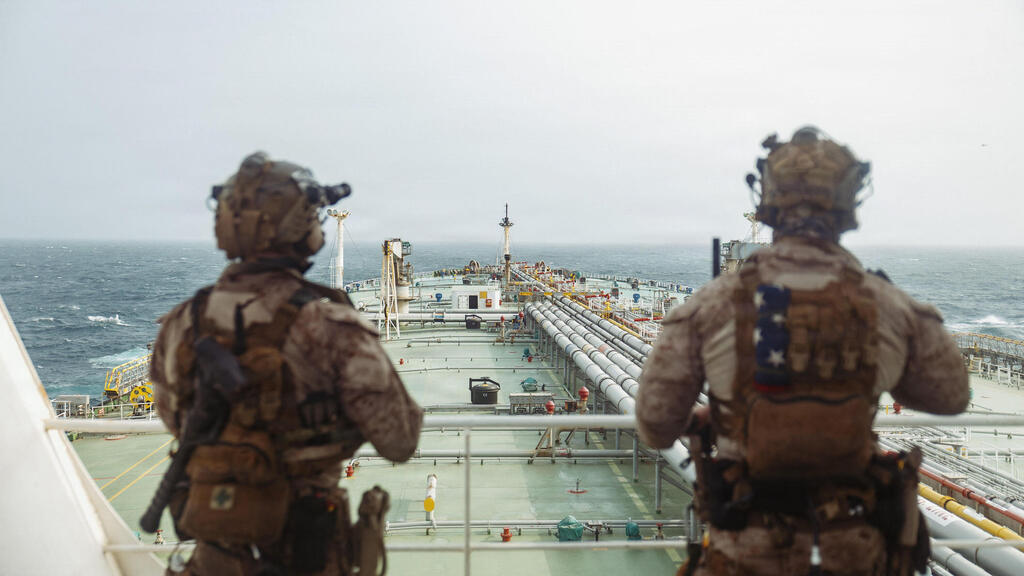
US Marines; Washington wants to keep the military campaign short, while Iran wants to prolong it
(Photo: AFP PHOTO / NAVCENT PUBLIC AFFAIRS / US MARINE CORPS)
It is important to emphasize that the Gulf states are doing everything in their power, using every means of influence available to them, to persuade President Trump not to attack Iran. The United States, however, does not appear ready to abandon the military option. American planners are doing everything possible to protect the Gulf states and Israel from Iranian retaliation while also minimizing potential casualties and damage to U.S. forces.
For that reason, the Americans will seek to keep the campaign as short as possible. They would deploy overwhelming airpower, and possibly a large Marine force, to ensure that the strike is sufficiently intense to achieve its objectives within a few days.
To that end, Trump has sent a third aircraft carrier strike group, centered on the Roosevelt, to the Arabian Sea south of Iran. The aim is to enable a massive simultaneous assault across Iranian territory, alongside the Israeli Air Force, and complete the planned list of targets within a matter of days.
The Iranians, by contrast, will try to prolong the war as much as possible and inflict the greatest possible damage on American military bases in the Middle East and on U.S. allies. They have openly declared this intention, with regime spokespersons saying that if a military campaign begins, Iran will seek to cause such extensive damage to American forces, U.S. interests and the global energy market that Washington and Jerusalem will be deterred from attacking Iran again for the foreseeable future.
This is how both sides are preparing. Over the coming week, once the outcome of negotiations with Iran and the results of the U.S. midterm elections become clear, Israelis should have a better idea of whether they need to prepare for another return to their safe rooms or can continue focusing on the political deadlock dominating domestic affairs in both Israel and the United States.