

In political and media discourse across the Middle East, a recurring narrative suggests that wealthy Gulf states owe part of their prosperity to the support and sacrifices of the wider Arab world. This belief is often invoked in debates about regional solidarity, economic cooperation, and political loyalty. However, a closer examination of historical, economic, and political realities reveals a far more complex—and often contradictory—picture.
The rapid rise of Gulf nations such as Saudi Arabia, the United Arab Emirates, Qatar, and Kuwait was not the result of sustained or coordinated backing from other Arab countries. Instead, their development has largely been driven by internal resources, strategic governance decisions, and partnerships with global—not regional—actors.
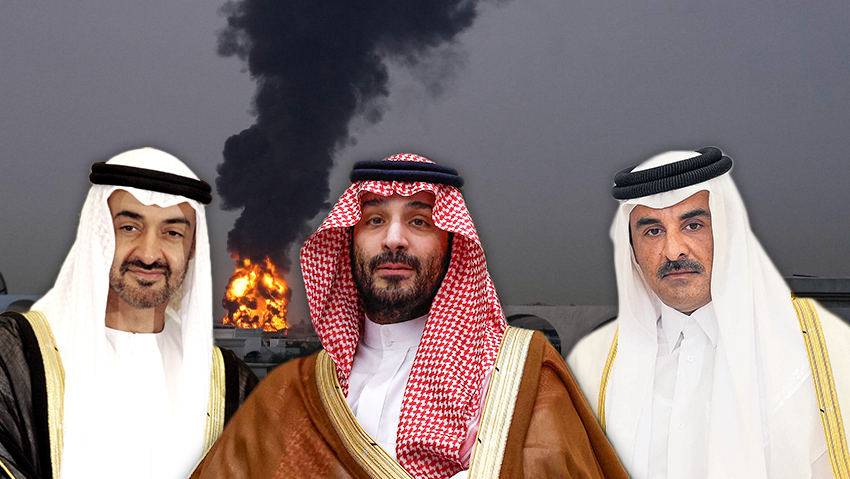
(Photo: Alex Brandon/AP, Evelyn Hockstein/POOL/AFP)
Oil wealth and independent development
The foundation of Gulf prosperity lies primarily in the discovery and exploitation of vast oil and gas reserves. Beginning in the mid-20th century, these natural resources transformed relatively modest economies into global energy powerhouses. Revenues generated from hydrocarbons allowed Gulf states to invest heavily in infrastructure, education, healthcare, and sovereign wealth funds.
Crucially, this transformation was not financed or enabled by Arab states outside the Gulf. Rather, it was facilitated by agreements with international energy companies, Western technology, and global markets. The expertise, capital, and logistics required to extract and export oil came predominantly from outside the Arab world.
Foreign labor vs. Arab contribution
Another commonly cited argument is that Arab workers contributed significantly to Gulf development. While it is true that many Arabs migrated to Gulf countries in search of employment, they were part of a broader expatriate workforce that included millions from South Asia, Southeast Asia, and beyond.
In fact, over time, Gulf economies became less dependent on Arab labor and more reliant on non-Arab workers, who often accepted lower wages and filled a wider range of roles. This shift further weakens the claim that broader Arab societies played a decisive role in building Gulf prosperity.
Financial flows: a reverse dynamic
Contrary to the notion that Gulf states benefited economically from the Arab world, the financial relationship often flowed in the opposite direction. Wealthy Gulf countries have long been major providers of aid, investment, and financial support to other Arab nations.
From direct government aid to infrastructure investments and remittances sent by migrant workers, Gulf states have contributed billions of dollars to struggling economies across the Middle East and North Africa. These financial flows have been especially evident during times of political instability, economic crisis, or conflict in countries such as Egypt, Jordan, and Lebanon.
Political tensions and limited solidarity
If Arab support had been a decisive factor in Gulf success, one might expect strong and consistent political alliances. However, the historical record shows frequent tensions, disagreements, and even hostility between Gulf states and other Arab governments.
During critical moments—such as regional conflicts, ideological clashes, or diplomatic disputes—Arab unity has often proven fragile. Gulf countries have at times faced criticism, political pressure, or lack of support from their supposed regional allies. These realities challenge the narrative of a cohesive Arab bloc working collectively toward shared prosperity.
Global alliances over regional dependence
Another key factor in the Gulf’s rise has been its strategic alignment with major global powers. Security arrangements, economic partnerships, and technological cooperation with countries such as the United States and European nations have played a central role in ensuring stability and growth.
These international relationships provided the Gulf with military protection, access to advanced technology, and integration into global financial systems. In contrast, intra-Arab cooperation has often been limited in scope and impact.
Reassessing the narrative
The idea that the Arab world as a whole significantly contributed to the success of Gulf states is more myth than reality. While cultural ties and shared identity remain important, they have not translated into substantial economic or political support capable of driving Gulf development.
Instead, Gulf prosperity has been shaped by a combination of natural resource wealth, forward-looking leadership, global partnerships, and internal policy decisions. Meanwhile, many non-Gulf Arab countries have faced structural challenges that limited their ability to contribute meaningfully to regional economic growth.
Conclusion
Understanding the true drivers of Gulf success is essential for fostering realistic expectations about regional cooperation and responsibility. Rather than relying on simplified narratives of collective Arab achievement, policymakers and analysts should recognize the distinct paths taken by different countries.
Acknowledging these differences does not diminish the importance of regional ties, but it does highlight the need for more practical, results-oriented approaches to cooperation. Ultimately, the story of Gulf prosperity is less about external support and more about internal strategy and global engagement.
Rami Al Dabbas is a writer/commentator known for opinion pieces on Middle East politics, critiques of Islamist movements, advocacy of political realism and engagement and a controversial presence on social media.