

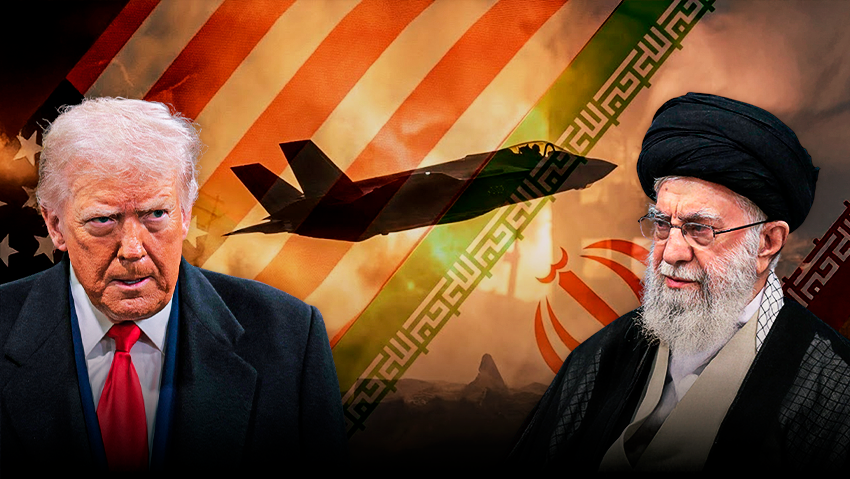
The war that erupted Saturday against Iran is being presented to the public in Israel and the United States primarily as the “removal of a nuclear threat.” But anyone who looks at the wider picture quickly sees that the nuclear file is only the official headline. Beneath it lies a broader logic of power, energy and global economics; above all, a contest over the pace of China’s growth and the leverage the United States can still exert over the world system.
By most accounts, this is an unusually large-scale U.S.-Israeli operation, following a period of heightened tension and military preparation, while Iran signals it is prepared to turn the Strait of Hormuz into the decisive arena.
Even when Tehran avoids issuing an unequivocal formal declaration, the threat alone, aimed at the world’s most sensitive energy corridor, is enough to put markets and capitals on high alert. The Strait of Hormuz is not “just another front.” It is the bloodstream of the global energy system. Any disruption there is immediately translated into a risk premium, higher oil prices and inflationary shockwaves that reach all the way to everyday household bills.
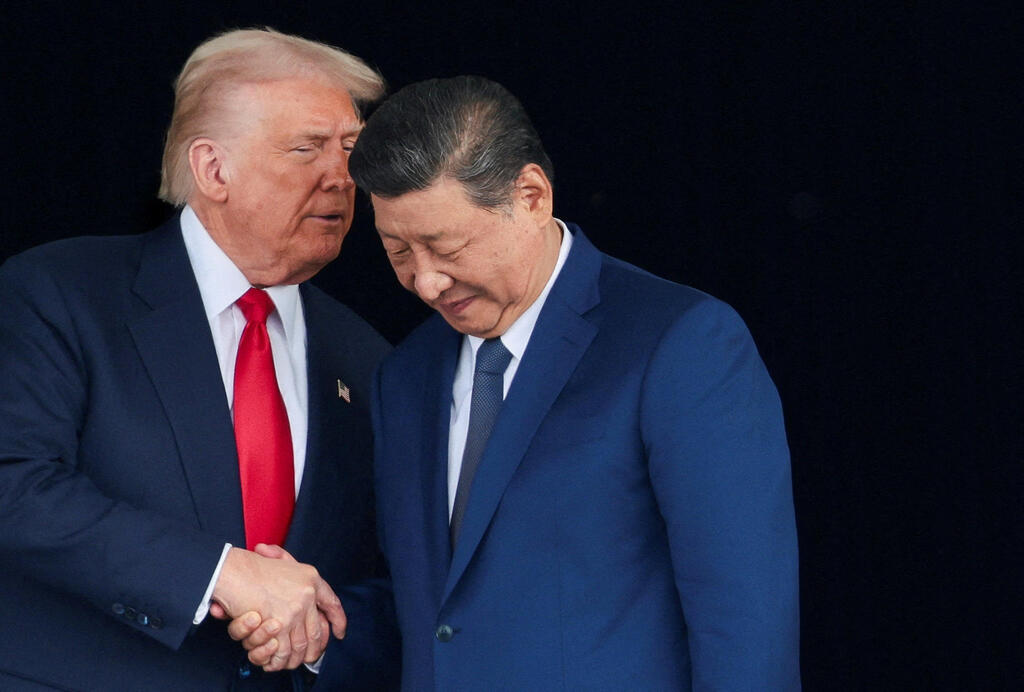
This is where the core argument begins: the Iranian threat is not “nuclear only.” From Washington’s perspective, Iran is also an economic junction that feeds the real strategic rival - China. For years, under sanctions and an ecosystem of gray logistics, Iran has managed to keep exporting oil. A substantial share of that flow has reached Chinese buyers, often at discounted prices that give Beijing a structural advantage: cheaper energy means more competitive industry, lower inflation and greater resilience during global slowdowns.
In this reading, America’s deeper objective is not merely to “reduce nuclear risk,” but to disrupt the oil triangle linking Iran, China and global markets. If Iran struggles to sell to China because infrastructure is hit, export routes are constrained or escalation drives up shipping and insurance costs, Beijing will be forced to replace those barrels.
But substitutions are rarely immediate, and alternative supplies are not always as cheap or as reliable. The American hope (even if it is not framed this way publicly) is therefore to press on a weak point in China’s model: production costs, industrial competitiveness and growth momentum, precisely at a moment when China is already contending with structural headwinds in real estate, demography and technological rivalry.
That is also why this war feels less like a “regional episode” and more like another chapter in the new Cold War: a struggle in which energy is ammunition, shipping lanes are the battlefield and sanctions can function as a weapon almost as consequential as an aircraft squadron.
Iran, for its part, understands the lesson well: to hurt the West, it need not strike only military assets. It can strike the price system, the maritime plumbing of trade and the world economy’s ability to breathe in a steady rhythm.
 Dr. Bella Barda Bareket Photo: Lia Yaffe
And amid all this, the humanitarian question, the fate of the Iranian people, recedes to the margins. Trump may speak of “regime change” or “standing with the people,” but historically, when the overriding interest is strategic and economic, morality tends to appear chiefly as rhetoric. If the president had truly regarded the liberation of Iranians as a first-order priority, one could argue he would have acted far more decisively during his previous term, rather than allowing the Iranian file to remain a lever pulled mainly when it serves larger power aims.
The greatest danger is that a war launched as a seemingly focused operation will slide rapidly into a spiral of retaliation: strikes on American bases, the expansion of fighting into additional arenas, damage to energy infrastructure and sustained disruption of trade routes. If that happens, the cost will not be paid only in Tehran and Tel Aviv, but also in European capitals and Asian markets.
This is the moment to say, calmly and clearly: even if the nuclear issue is the trigger, economics is the engine. And once such an engine is running, it is extraordinarily difficult to shut it down without paying a global price.
- Dr. Bella Barda Bareket is a global trends analyst specializing in the intersection of economics, geopolitics and technology.