

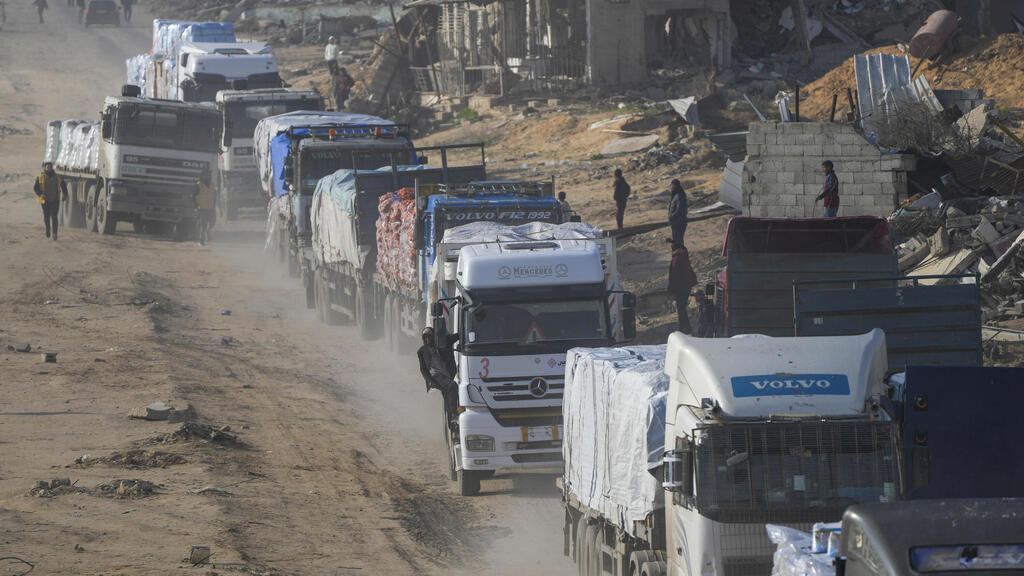
It is January 1st. Israel’s new NGO registration rules are now in effect. And nothing happened. There is no humanitarian collapse in Gaza. No sudden famine. No aid vacuum. No mass withdrawal of trucks. No emergency summits triggered by reality on the ground. Aid is moving. Personnel are present. The system is operating.
The sky did not fall. That fact alone is the story.
Just days ago, a letter from the foreign ministers of the United Kingdom, France, Canada, Japan, Sweden, Norway, Denmark, Finland, Switzerland, and Iceland warned in grave tones that Israel’s move would endanger humanitarian life in Gaza. The language was apocalyptic. The urgency absolute. The implication unmistakable. Regulate NGOs and catastrophe would follow.
UN bodies, led by UNRWA and echoed by OCHA, issued statements in late December warning that Israel’s NGO registration rules would have “devastating consequences,” would “undermine humanitarian operations,” and would “risk collapse of aid delivery” in Gaza. The rhetoric escalated rapidly from procedural concern to existential threat. Phrases like man made catastrophe, aid system under threat, and humanitarian space shrinking were pushed aggressively, despite the fact that the rules had not yet taken effect and no operational impact had occurred.
Major international NGOs followed in lockstep. Groups such as MSF, Oxfam, CARE, NRC, and World Vision warned they might be forced to halt operations, claimed the requirements were politically motivated, and suggested staff safety and humanitarian neutrality were at risk. Several hinted at collective withdrawal and framed regulation itself as punishment rather than compliance.
What none of them could demonstrate then, and what January 1st has now made impossible to claim, was actual harm. No drop in aid volume. No disruption of logistics. No collapse of operations. No famine. No emergency.
Instead, regulation began, and the world kept turning.
Our conditioned response is to move on. The news cycle shifts. Another very loud, very public prediction accusing Israel of manufacturing future atrocities quietly fails to materialize, and everyone pretends nothing happened.
But this is precisely the moment to stop and ask the questions that should have been asked from the beginning. What exactly was all that noise about? Why did so many leaders stake their credibility on a prediction that was so obviously untrue? Why such fury over such a basic demand: that NGOs disclose funding and submit to standard oversight?
This is where the real story begins.
For two years in this war, and for more than two decades before it, the Gaza narrative machine has operated with ruthless efficiency. Hamas supplied the kinetic trigger. Israel responded militarily. Visuals followed. NGOs translated images into moral urgency. UN bodies amplified. Diplomats echoed. Media synchronized. Each layer fed the next. It felt organic because it was always anchored to something burning.
This time, nothing burned.
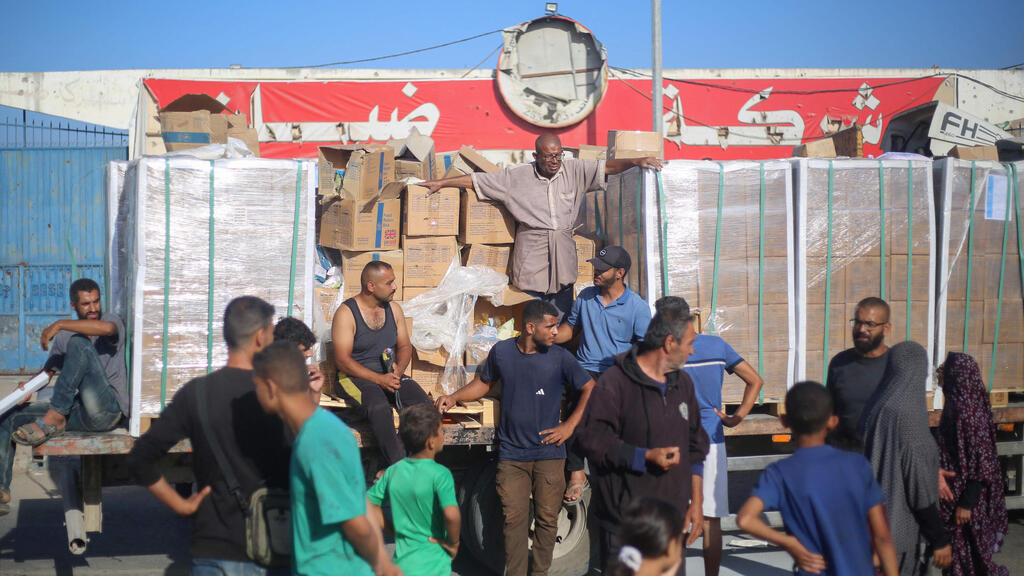
Aid trucks entering Gaza
(Photo: Eyad BABA / AFP)
Israel did not strike a building. It touched a filing cabinet. It asked who is registered, who is transparent, and who is subject to law. Aid kept flowing. Trucks kept moving. Personnel stayed in place. The only thing interrupted was immunity.
And the system lost its mind.
The reaction was not proportional to reality because it was not reacting to reality. It was reacting to exposure. Without a kinetic event to anchor outrage, the system inflated consequence in advance. Predictive catastrophe replaced evidence. Language about chilling effects and existential threats substituted for facts. The tone was urgent, the claims vague, and the timing instant.
That is what a machine does when it fires without a trigger.
Now that the rules are in force and the predicted disaster has failed to materialize, the hysteria looks almost comical. The organizations that screamed loudest were marginal to begin with. Some delivered virtually no aid. Some delivered none at all during the current and previous ceasefires. Aid volumes are unchanged. Life in Gaza today is no different than it was yesterday.
Oversight is routine everywhere else on earth. The claim that humanitarian life hinged on a handful of unregistered actors evaporated the moment the calendar flipped.
This is the tell.
A neutral humanitarian system would say fine, here is our paperwork. A professional operation would welcome clarity. What we saw instead was panic. Because this was never about logistics. It was about exemption. It was about the quiet assumption that certain actors exist above sovereignty, beyond law, and immune from scrutiny because their narrative utility outweighs their operational relevance.
Hamas understood this arrangement perfectly. Its ground strategy was designed to manufacture content. Dense terrain. Embedded infrastructure. Human shields. Hostages. Every Israeli response produced raw material. The cognitive system harvested the output and converted it into pressure. That partnership required constant shock to remain hidden.
Israel’s regulatory adjustment removed the shock.
By acting non kinetically, Israel denied Hamas visuals and denied the narrative apparatus its fuel. With no rubble to point at and no bodies to display, the system turned inward to protect itself. It screamed before anything happened. It forecasted doom that never arrived. It tried to portray paperwork as persecution. In doing so, it exposed its own wiring.
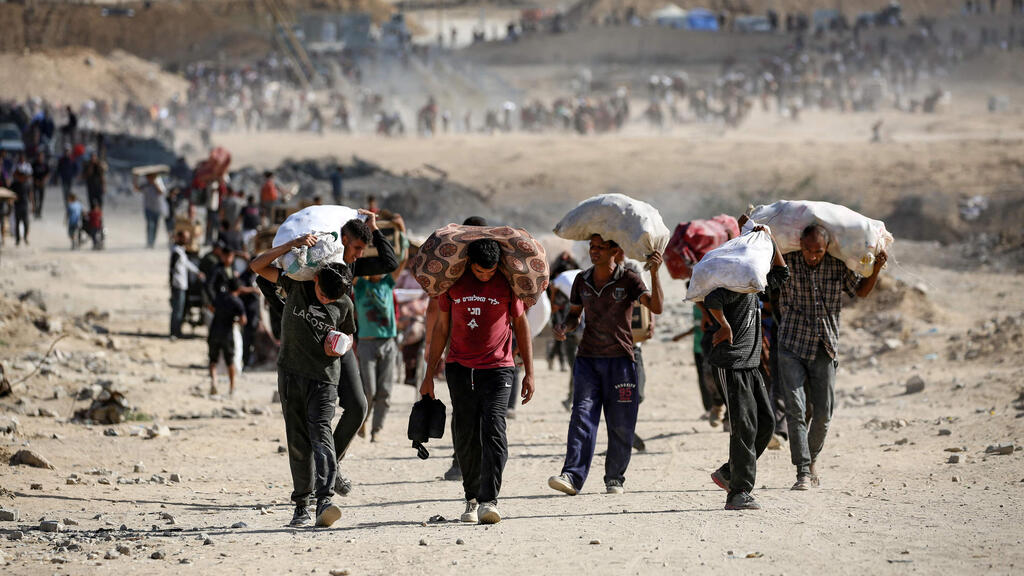
Palestinians walk away after receiving humanitarian food aid
(Photo: Eyad BABA / AFP)
There is a slight smirk to be had here, not because the issue is trivial, but because the reaction was so naked. The system was not being bombed. It was being asked for ID. The outrage was never proportional to the act. It was proportional to the threat of what would be revealed.
Now that the rules are live and Gaza has not collapsed, the spectacle dissolves. What remains is the uncomfortable truth that much of the international outcry was never about aid. It was about preserving a system designed to perpetuate the crisis it needs to function. A system that has mastered the manufacture of constant emergency, catastrophe, and atrocity to justify its own existence.
And this is where the moment becomes historic.
For years, the Palestinians and their allies fought on two fronts while Israel fought on one. Hamas provoked kinetic responses that activated a ready made diplomatic and narrative machine. Israel won battles and lost framing. Over and over again.
This time, Israel stepped sideways.
It did not rush back into escalation. It enacted a lawfare offensive that normalized scrutiny and exposed corruption. It resisted pressure to provide new images. It refused to feed the machine bodies. It went after the infrastructure that made the reflex possible in the first place.
That is not symbolic legislation. That is adaptation.
Israel finally recognized the non kinetic battlefield and responded with precision. With the stroke of a pen, through a perfectly ordinary regulatory act, it exposed something far larger than any single NGO. It revealed a moral economy built on exemption, opacity, and permanent emergency.
Today it looks like a quiet administrative event. Tomorrow it may be remembered as the moment the Palestinian strategy began to unravel, not because Hamas lost another tunnel or commander, but because the ecosystem that converted its tactics into global leverage was finally exposed and interrupted.
First published: 09:38, 01.02.26