

When I returned from a tour of the West Bank following in the footsteps of Jewish rioters whose attacks on local Palestinians the prime minister insists on describing as the work of “a handful,” I was asked what had surprised me most.
It took me a moment to understand and absorb the answer: nothing.
Security forces turning a blind eye to civilian violence, not to mention various forms of complicity – when it suits the authorities to turn a blind eye, anything is possible. Shocking? Yes. Infuriating? Absolutely. Dangerous? Without a doubt. Surprising? No.
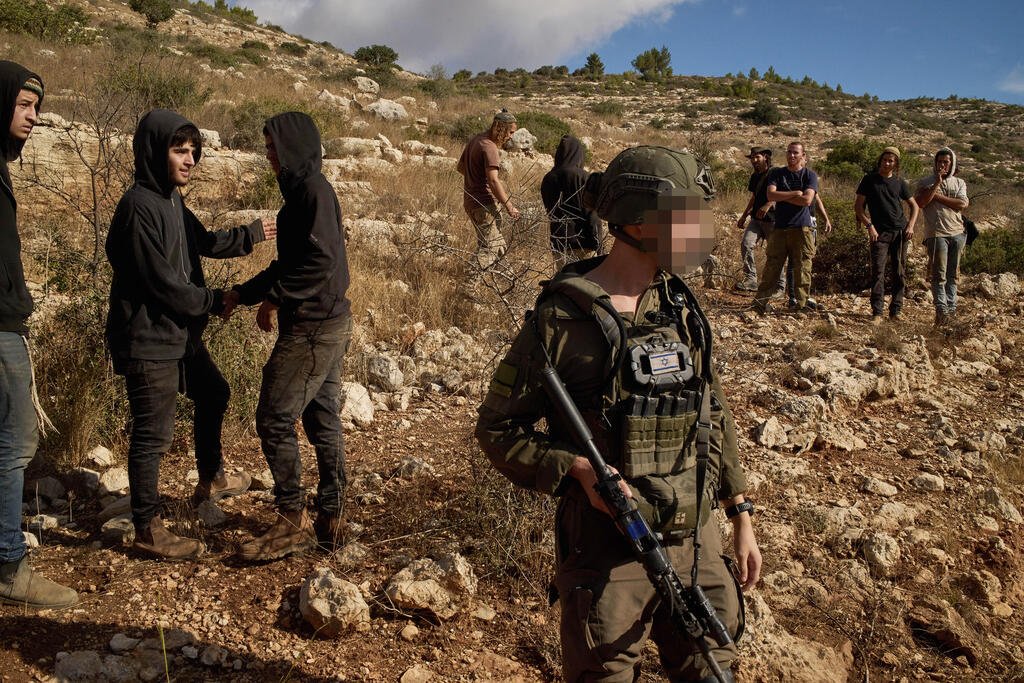
IDF soldiers and Israeli settlers near an olive harvest in the West Bank village of Deir Abu Mash'al
(Photo: AP Photo/Leo Correa)
I realized that I had grown accustomed to living in a country where all too often, there seem to be few boundaries. I also realized that Israel’s next election will not be only about right and left, religious and secular, or any other familiar division. It will be about a fundamental question: will Israel abide by standards that allow its institutions to function, and enable the country itself to survive?
The Qatar affair is a case in point. It emerged that some of the prime minister's closest advisors had not obtained security clearances. We also learned that they had simultaneously served Qatar, the sponsor of Hamas, during the war. Moreover, the most prominent of them, Yonatan Urich, continues to serve the prime minister, and enjoys his backing and patronage, as though the situation is quite normal. We may be angered, but we are hardly surprised.
Who is truly surprised when ultra-Orthodox politicians who vote on war and peace, life and death, boast that their own children and grandchildren are draft dodgers? Or that due to coalition considerations, one man serves simultaneously as minister of tourism, minister of construction and housing, minister of health, and minister of welfare and social affairs, as though these were all part-time jobs? That the minister responsible for law enforcement has a criminal record? Or that the minister of education attempts to suppress data on the deterioration of assorted comparative test results?
Even those who respond with a flurry of exclamations that “This cannot be true!!" know perfectly well that it can. The proof is before our eyes - all of this has happened. And if this government remains in office, it will all continue, with greater intensity.
Near the beginning of Israel’s judicial overhaul, a friend who had immigrated from the United States told me: “Well, at worst, Israel will become just another corrupt country in the Middle East.”
But that is precisely the point: it will not. Israel cannot indefinitely rely on its existing strengths, while allowing the standards and institutions that sustain them to erode. When there are no boundaries, no rules, no norms, how can Israel preserve the advantages that have brought it this far? How can it survive?
We must face the truth. Corruption, negligence, and a lack of professionalism are eating away at everything of value. Israel will not be just another corrupt country in the Middle East. It simply will not be.
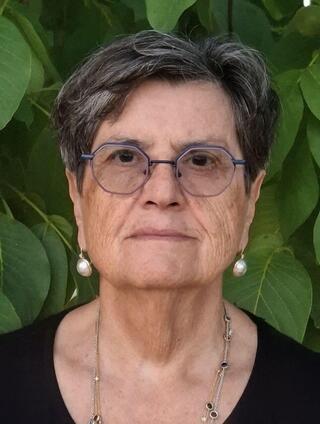 Tova Herzl Photo: Courtesy
So, when Israelis go to the polls, each of them must ask themselves not which camp they belong to, how they view the future of the territories, and if they approve of public transportation on shabbat. There is one question that takes precedence over all the others: do they want to live in a country where the main standard is what serves those in power?
That brings us to the crucial question: which candidates understand how essential rules and norms are, and who among them will act to enforce them. So that in the future, if and when those standards are ignored, when norms are flouted, we will once again find ourselves genuinely surprised.