

Just days before Israelis head to the polls, US President Donald Trump has abandoned any pretense of neutrality, throwing his full political weight behind Prime Minister Benjamin Netanyahu. But the timing of his endorsement may have less to do with Israel's election itself and more to do with a much larger diplomatic objective: bringing Saudi Arabia into the Abraham Accords.
Trump's declaration was unusually explicit. He offered Netanyahu his complete support while warning Israeli voters that choosing another leader would leave Washington facing the confrontation with Iran on its own, a prospect the president made clear he had little appetite for. The message went beyond an ordinary endorsement, connecting the outcome of Israel's election directly to American strategic interests.
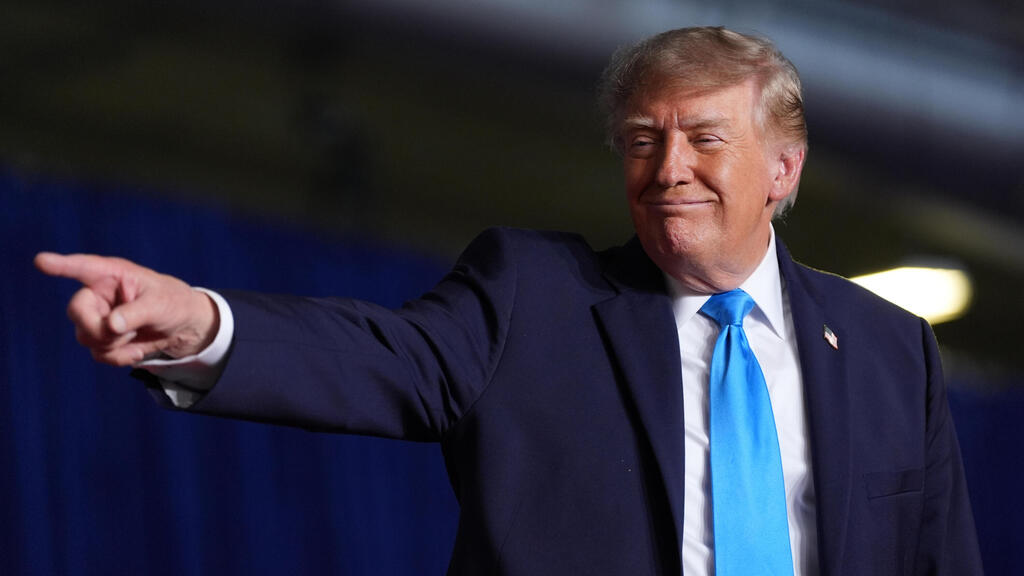
Trump backs Netanyahu, but the real prize may be Saudi peace
(Photo: AP/ Alex Brandon)
Foreign involvement in Israeli elections is hardly unprecedented. In July 2016, a bipartisan US Senate investigation examined the relationship between State Department funding under the Obama administration and the organization OneVoice, whose infrastructure was later used by the V15 campaign ahead of Israel's 2015 election. The investigation found that OneVoice had not directly used the American grant money to influence the election, but that resources developed partly through those grants subsequently supported the political campaign against Netanyahu.
On the Republican side, Trump's willingness to intervene openly in elections abroad has become a recurring feature of his political approach. In Argentina, he explicitly linked an American economic rescue package to the electoral fortunes of President Javier Milei's party, warning voters that Washington would withdraw its generosity if the political outcome went against his preferred candidate.
A similar combination of support and pressure appeared in Honduras, where Trump threatened reductions in American assistance if the conservative candidate failed to win. In Hungary, he tied the prospect of full American economic support to Viktor Orbán remaining in power. In Brazil, he used punitive tariffs as leverage against the left-wing government of President Luiz Inácio Lula da Silva.
The pattern, then, is familiar. What makes the Israeli case particularly interesting is the timing and its potential connection to Trump's broader plans for the Middle East after the election.
In previous election campaigns, Netanyahu relied on enormous billboards featuring photographs of himself alongside Trump to reinforce the message that his international standing placed him in a different league from his political opponents. This time, Trump has gone considerably further. Rather than merely allowing Netanyahu to benefit from their association, the sitting American president has personally intervened, openly urging Israeli voters to keep him in office.
The question is why Trump decided to do so now, and what he might expect in return.
In a column I published on ynet over the weekend, I suggested that Trump could summon three prominent Israeli political figures after the election: Naftali Bennett, Benjamin Netanyahu and Gadi Eisenkot. His objective, I argued, could be to encourage the formation of a broad government capable of advancing what might be called Abraham Accords 2.0, a new round of normalization agreements centered on Saudi Arabia.
Such a government would require Netanyahu to look beyond the narrow right-wing coalition on which he has relied. Significantly, Netanyahu himself has recently and repeatedly emphasized his desire to form a broad national government, one capable of making the diplomatic decisions necessary to meet Saudi Arabia's preliminary demands.
Those demands must also be considered in the context of Netanyahu's current coalition partners. His outgoing right-wing government includes ministers whose statements and actions have been deeply offensive to the Saudi royal family.
Finance Minister Bezalel Smotrich's remark about Saudis riding camels in the desert is one example. Another is National Security Minister Itamar Ben-Gvir's repeated visits to the Temple Mount in Jerusalem, including his pledge to establish a synagogue at the site, a proposal associated with aspirations surrounding the Third Temple.
With Smotrich and Ben-Gvir serving as central partners in a fully right-wing government, advancing a historic peace agreement with Saudi Arabia in the aftermath of October 7 would be extraordinarily difficult, if not practically impossible.
This is where Trump's endorsement takes on another possible meaning.
On Friday, the American president declared that normalization between Israel and Saudi Arabia was once again on the table. The statement suggested that the administration sees a renewed opportunity for a diplomatic breakthrough that has remained elusive.
It is therefore possible that Netanyahu has privately assured Trump of his intention to pursue what he has also been discussing publicly: forming a broad government after the election that would create the political conditions needed for a breakthrough with Riyadh. Such an understanding, if reached, could help explain why Trump suddenly offered the prime minister the endorsement he had long sought.
 Dr. Kobi Barda Photo: Tal Givoni
There is another development that makes this interpretation worth considering. On Sunday, Ben-Gvir claimed that Netanyahu intended to establish his next government without him and had even conveyed assurances to that effect to officials in European Union countries. Likud rejected the allegation, insisting that Netanyahu remained committed to the core parties of his current coalition.
Nevertheless, the fact that Ben-Gvir raised the possibility so publicly, immediately after Trump's endorsement, underscores the political tensions surrounding the composition of Israel's next government.
The underlying calculation may therefore be much larger than Netanyahu's immediate electoral prospects. Trump wants to achieve a historic normalization agreement with Saudi Arabia, one that would dramatically expand the Abraham Accords and reshape the Middle East. To do that, he may need a different Israeli governing coalition from the one currently in power.
Seen in this light, Trump's endorsement need not be interpreted simply as a personal favor to Netanyahu or an attempt to influence Israeli voters. It could also be an investment in the political framework Trump believes will be necessary to secure his next major diplomatic achievement.
That, in my assessment, is the Saudi price behind the unprecedented presidential endorsement: support for Netanyahu now, in the expectation that a different coalition after the election could finally open the door to normalization with Riyadh.
Dr. Kobi Barda is a lecturer at HIT and a senior researcher at the Jewish People Policy Institute (JPPI).