

As the campaign in Iran and Lebanon drags on, more voices in the media, on social networks and among public figures are questioning the ability to achieve victory. Much of the criticism targets Netanyahu’s talk of “total victory” and Trump’s declarations of Iran’s defeat.
Many of these claims point to the continued missile fire from Iran and Lebanon into Israel’s rear, as well as Iran and its proxy groups’ refusal to surrender. Critics also question whether it is possible to disarm Hezbollah or dismantle Iran’s nuclear program.
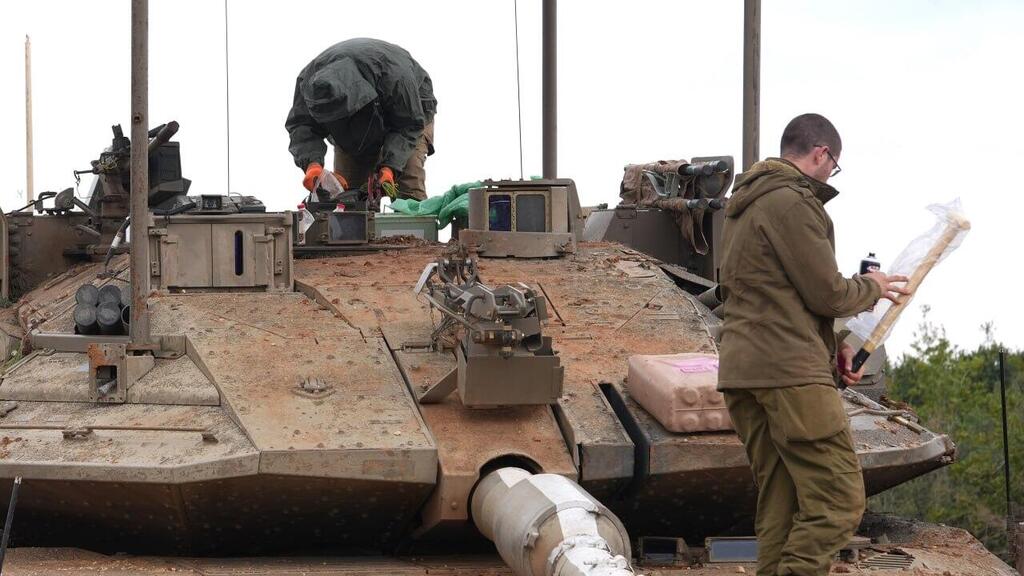
(Photo: Efi Sharir)
These arguments require a reexamination of the concept of victory and an understanding that its modern meaning cannot rely on past paradigms — such as a formal surrender or the total destruction of the defeated side.
The parameters for defining victory must be assessed over time, based on changes in the regional and geopolitical reality created by the war, not solely on whether the enemy retains the ability to cause harm.
A new definition of the campaign’s outcome
To clarify, I propose a new definition for the current campaign: a “decisive victory.” This type of victory rests on three components — military success, a favorable political and strategic shift, and a cognitive change that replaces an existing narrative with a new one.
By these measures, Israel and the United States are clearly prevailing in the current campaign:
From a military perspective, Iran and its proxies have suffered a severe blow across all fronts. Leadership chains in Iran, Hezbollah, Hamas and the Houthis have been eliminated. Weapons stockpiles and nuclear, naval, air and ballistic capabilities have been significantly damaged. Areas used to launch ground attacks against Israel are now under IDF control. The central achievement is the disruption of Iran’s ability to carry out its plan to destroy Israel through nuclear and large-scale ballistic capabilities, along with proxy plans to seize parts of the country.
Military historian Basil Liddell Hart argued that victory is achieved not by destroying enemy forces, but by disrupting their plans. There is little doubt that Israel and the United States have disrupted — and even prevented — Iran from executing its strategy.
From a political and strategic perspective, the war against Iran has removed much of the Gulf states’ fear of the Islamic Republic and exposed its true nature to the world as a terrorist state led by a fundamentalist regime. Post-war Iran will be militarily, economically and diplomatically weakened — a reality that could eventually lead to the regime’s downfall by its own people.
In the coming years, a U.S.-led economic and political axis is expected to take shape, with Washington reasserting its position as the world’s leading power. Within a planned economic corridor stretching from India through the Middle East to Europe, Israel is set to become a central — perhaps the most important — partner. Gulf states, some of whose officials are already calling on the United States to complete the defeat of Iran, are likely to join this axis and expand the Abraham Accords. This dramatic shift may also bring the long-standing Sunni-Shiite divide back to the forefront, replacing the anti-Israel Islamic coalition.
Cutting off the lifeline
Iran’s isolation will choke off the flow of funds and weapons to its proxy organizations. These groups are already facing growing delegitimization among populations in Lebanon and Gaza. Without Iranian backing, Hezbollah and Hamas are likely to weaken significantly — enabling the Lebanese state to assert control over Hezbollah and the IDF to bring about Hamas’ collapse.
 Danny Van Biran
From a cognitive perspective, the narrative of Iran as an untouchable regional power has been shattered. It is being replaced by a narrative of Israel as a regional power, commanding respect and deterrence among its neighbors and demonstrating resilience.
This perception must be preserved — both after the war and alongside recognition of the many shortcomings that have been exposed.
There is no room for arrogance, but even more dangerous is defeatism and self-reproach.
Brig. Gen. (res.) Danny Van Biran is chairman of Nikraim Ladegel and a former chief reserve officer.